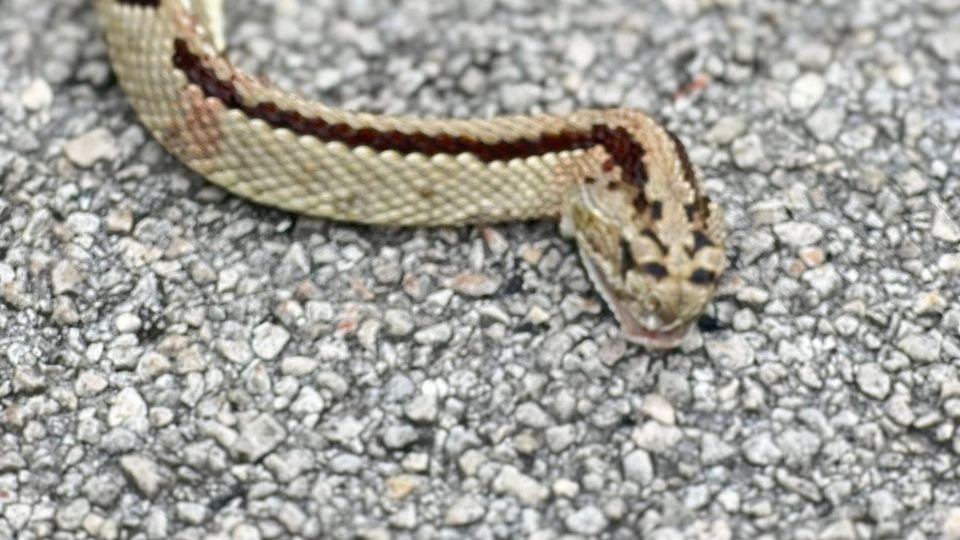
Quintana Roo, Mexico — Rapid urban growth, expansion of productive activities, and increased human presence in natural areas have placed Quintana Roo in a higher risk scenario for snakebite accidents during 2025. According to official health sector figures, 70 people were bitten by snakes in the state last year, representing a 241 percent increase compared to the previous year when reported cases were considerably lower.
The data confirms that although Quintana Roo is no stranger to wildlife presence, increased interaction between people and snakes has become more frequent. Of the total accidents recorded in 2025, five corresponded to coral snake bites, seven to rattlesnake bites, and 58 to other types of snakes. These figures were supplemented by five cases of traumatic contact with poisonous animals and plants, situations that also required specialized medical attention.
Health authorities specified that most accidents occur when people carry out activities in the countryside, jungle areas, or areas near bodies of water. Cases are also reported in urban peripheries where the growth of subdivisions and roads invades former natural habitats, causing increasingly frequent encounters with wildlife.
Five Medically Important Snake Species
Specialists warn that prevention is key to reducing snakebite accidents. In Quintana Roo, there are at least five species of snakes considered medically important. These include:
- Yucatecan cantil (Agkistrodon russeolus)
- Nauyaca or four-nosed snake (Bothrops asper)
- Yucatecan rattlesnake (Crotalus tzabcan)
- Southeastern coral snake (Micrurus apiatus)
- Yucatecan hog-nosed nauyaca (Porthidium yucatanicum)
All these species inhabit different regions of the state and represent a potential risk if prevention measures are not taken.
Increased Pressure on Territory
Researcher María Luisa Villarreal Sonora explained that the increase in snakebites does not respond to a “snake invasion” but rather to greater pressure on the territory. She noted that Quintana Roo is a highly biodiverse state and that snakes have always been present, even within urban areas. The difference, she affirmed, lies in the combination of several factors: deforestation, road opening, city growth, and the arrival of more people to the countryside without adequate preparation.
The specialist indicated that day laborers, tourist guides, and new settlers enter natural areas without basic knowledge about how to move in the jungle or identify risks. This is compounded by the loss of local knowledge, as many traditional practices for moving cautiously in the wild have been disappearing. Additionally, there is now greater recording of cases, which allows visibility of a problem that previously went unnoticed.
Immediate Medical Attention Required
Snakebites require immediate medical attention to avoid serious complications. Villarreal Sonora warned that a snakebite can represent a serious sentence if timely attention is not received. She explained that venoms do not act in the same way: rattlesnake and nauyaca venoms are hemolytic and destroy tissues progressively, while coral snake venoms are neurotoxic and can cause respiratory arrest. Although antivenom serums and hospitals with greater response capacity exist today, the risk remains present.
For his part, Víctor Rosales, leader of the wildlife conservation and rescue association Proyecto Aak, specified that the correct term is “snakebite accidents,” since snakes do not attack deliberately but defend themselves when they feel threatened. He explained that many accidents occur due to improper handling, when people try to grab or move specimens without proper knowledge or equipment.
Prevention as the Best Tool
Rosales emphasized that prevention remains the best tool. He recommended:
- Avoiding contact with wildlife
- Not putting hands in holes or areas without visibility
- Using quality lamps during nighttime tours in wetlands, grasslands, or natural areas
He stressed that watching videos on social media does not substitute for the experience or knowledge necessary to handle snakes.
Authorities and experts call for respecting wildlife and avoiding its handling. In case of a bite, the specialist emphasized that the most important thing is to go immediately to a medical center, without resorting to home remedies or traditional practices that lack scientific backing. The timing of attention is decisive to avoid irreversible injuries or death. Although in some communities they choose to kill the specimen to identify it, doctors have protocols to assess the type of bite and apply appropriate treatment.
Discover more from Riviera Maya News & Events
Subscribe to get the latest posts sent to your email.