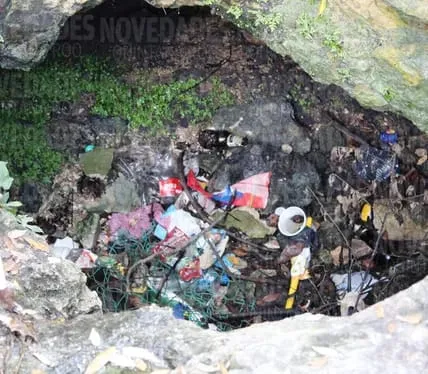
Chetumal, Quintana Roo — Faculty and researchers from the University of Quintana Roo (UQROO) are developing an innovative project called the “pollution traffic light for cenotes,” whose objective is to establish an updated registry of these water bodies and determine their environmental health status, with the aim of generating scientific information that allows for their conservation and more responsible management, according to UQROO researcher José Antonio León Borges.
One of the Country’s Main Freshwater Reserves
The academic explained that Quintana Roo has thousands of cenotes and underground systems that represent one of the country’s main freshwater reserves, in addition to having high ecological, cultural, and touristic value. However, he warned that many of these water bodies face different levels of pollution stemming from urban growth, tourism activity, the use of agrochemicals, and the lack of adequate wastewater treatment systems.
He detailed that the pollution traffic light will function as a simple and accessible diagnostic tool, through which each cenote will be classified into different levels—green, yellow, and red—according to its degree of pollution and its conservation status.
To achieve this, physical, chemical, and biological sampling will be conducted to identify the presence of pollutants, bacteria, nutrients, and other key indicators of water quality.
Will Form a State Registry of Cenotes
León Borges indicated that, in addition to measuring scientific parameters, the project seeks to integrate geographic and social information, so that a state registry of cenotes can be formed that includes their location, current use, level of environmental risk, and human pressure. This database, he said, will be fundamental for decision-making by environmental authorities, municipalities, and organizations dedicated to the protection of natural resources.
“The objective is not only to point out the cenotes that are at risk, but to have a clear diagnosis that allows for the design of prevention, restoration, and sustainable management strategies. We want to know how many cenotes there are, what condition they are in, and which ones require priority attention,” emphasized the researcher.
Furthermore, he highlighted that the project contemplates collaboration with local communities, ejidos, and tourism service providers, who will be provided with information about the importance of maintaining these ecosystems in good condition and the practices that help reduce pollution.
Will Be a Tool for Social Awareness
In this way, the traffic light will also function as a tool for social awareness.
The academic advanced that the first results could be presented in the coming months and will serve as a reference to promote public policies oriented toward the protection of the Yucatán Peninsula aquifer, considered one of the most vulnerable in the country due to its karstic nature.
José Antonio León Borges emphasized that the conservation of cenotes is a strategic issue for the future of Quintana Roo, since the water supply, biodiversity, and sustainability of one of the state’s main economic activities, tourism, depend on these water bodies.
Discover more from Riviera Maya News & Events
Subscribe to get the latest posts sent to your email.