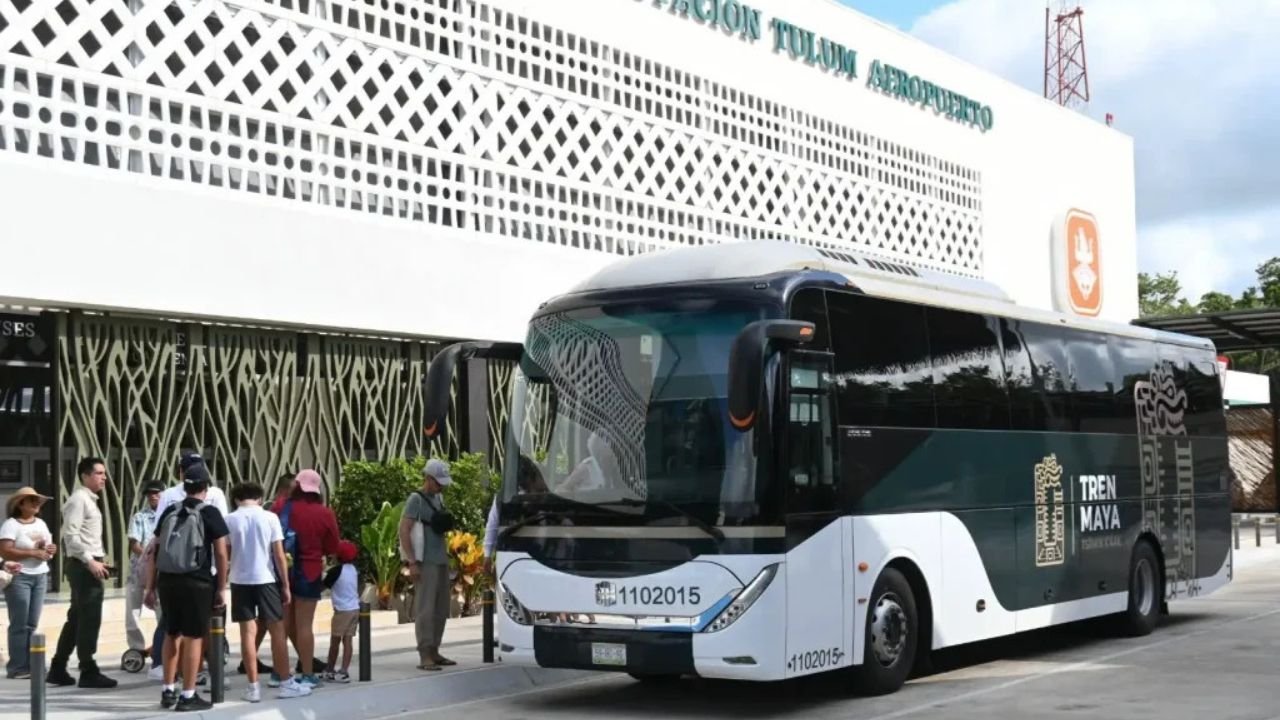
Tulum, Quintana Roo — The government of Quintana Roo, in coordination with federal authorities, will implement a comprehensive mobility plan for Tulum that includes regulating taxi fares, introducing a modern public transport system, and reorganizing traffic on the municipality’s main tourist corridors.
Governor Mara Lezama Espinosa said the strategy is being developed jointly by the Ministry of Infrastructure, Communications and Transport (SICT) and the Quintana Roo Mobility Institute (Imoveqroo) under the state program “Tulum Renace.”
“What we want is a pleasant experience, not only for tourists but also for the people who live in Tulum,” Lezama said.
New Electric Routes and Parking at Jaguar Park
As part of the urban planning effort, a strategic parking lot will be built in the southern area of Jaguar Park to prevent congestion and limit vehicle access to the protected natural area. From that checkpoint, visitors will travel to beaches and park facilities using 100% electric transport, bicycles, or pedestrian walkways.
The social fare for internal transport will remain at 20 pesos for adults and 10 pesos for children. The park will also receive upgrades including new restrooms, public drinking fountains, bilingual signage, free turnstile access, and a separate ticket booth for visitors to the Tulum Archaeological Zone.
Free Beach Access and Archaeological Zone Fees
Lezama noted that these actions stem from agreements with the federal government led by President Claudia Sheinbaum Pardo, which guarantee free general access to Jaguar Park. Official fees apply only for entry to the archaeological zone managed by the National Institute of Anthropology and History (INAH): 265 pesos for foreign visitors and 80 pesos for Mexican nationals.
Those visiting only the public beaches will not be charged, Lezama said, adding that supervision tours along the coastline have been conducted to ensure constitutional free transit and prevent illegal charges to tourists and residents.
Rapid Growth Demands Order
Quintana Roo Tourism Secretary Bernardo Cueto Riestra said the mobility infrastructure has been overwhelmed by the destination’s rapid growth over the past decade. Official data shows the traditional hotel supply rose from 7,000 to more than 12,000 rooms, plus over 10,000 lodging options on digital platforms.
This surge in tourist traffic has increased demand for public services, security, and transport. The “Tulum Renace” strategy aims to coordinate existing infrastructure with federal megaprojects such as the Tulum International Airport, the Maya Train, and Jaguar Park.
Cueto Riestra said consolidating Tulum’s development requires partnerships between the private sector and all three levels of government to ensure competitive, sustainable tourism with shared economic benefits.
More Government
- Aeromexico Eyes New U.S. Routes After Mexico City Limits End
- Mexico Files New Complaint Over Migrant Death in ICE Custody
- Mara Lezama Hands Out 100 Sewing Machines in Chetumal to Boost Women’s Self-Employment
- Crystal Meth Addiction Surges in Quintana Roo, Fuels Nearly 90% of Homicides
- Quintana Roo Leads Yucatan Peninsula in Rape and Sexual Abuse Cases
More Tulum
- Tulum Records Over 6,000 Sea Turtle Nests as Beach Furniture Threatens Hatchlings
- Free Mammograms Offered in Three Quintana Roo Municipalities
- Anyma Brings ÆDEN to Zamna Tulum for 10th Anniversary Show on January 4
- Tulum Pivots to Luxury as Airlines Cut Flights, Occupancy Drops
- Cancún Seaweed Firm Ensol Caribe Eyes Expansion Into Dominican Republic and Belize