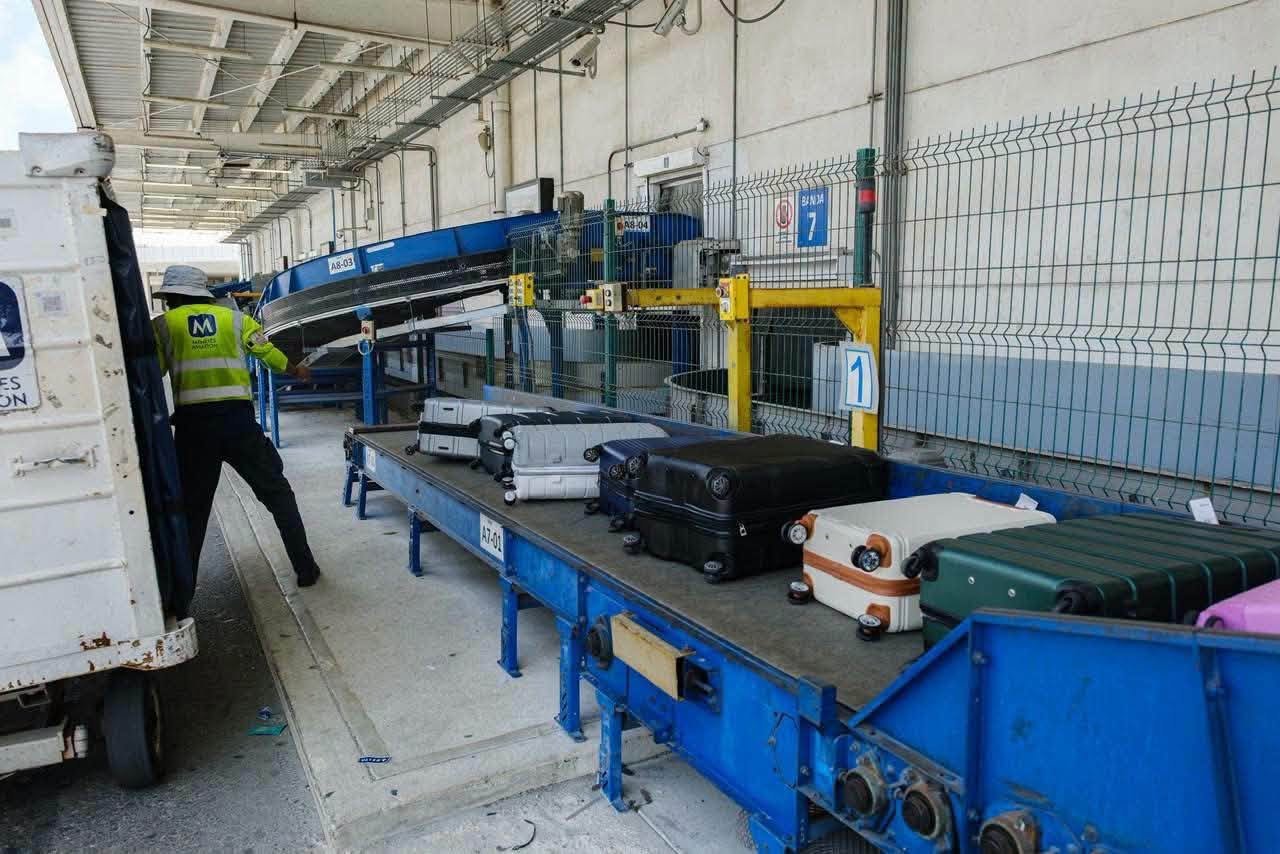
Cancún, Quintana Roo — For travelers arriving in the Mexican Caribbean, the last hurdle before reaching a hotel or heading home can be a request to open a suitcase at customs. Sergio González Rubiera, president of the Mexican Association of Inbound Tourism Agencies (Amatur), wants Mexico to end manual baggage searches at its airports, arguing that they leave visitors with an unnecessarily frustrating first impression.
“You’re tired, you just want to arrive, and they tell you, ‘Come through here, put your suitcase up, open it,’” he said, describing a recent inspection of his own luggage. He called the experience embarrassing and argued that bags have already passed through X-ray scanners before travelers collect them.
His proposal is a call for change, not a change to the arrival process. For someone flying into Cancún to visit Playa del Carmen, Puerto Morelos or Tulum, fewer physical inspections could mean less time at the airport and a more predictable start to a trip. González Rubiera said changing the system would require action by the federal government or Congress. He also blamed some airport delays on poor service by companies involved, although he did not provide figures showing how much time customs searches add to arrivals.
Why Customs May Still Open a Bag
An X-ray image does not answer every question customs officers are responsible for asking. Mexico’s National Customs Agency explains that passengers may bring personal baggage and, separately, up to US$500 worth of additional merchandise without paying import taxes. Officers may need to determine what an item is, its value and whether it must be declared. Customs checks are distinct from immigration processing and the security screening passengers undergo before a flight.
That is the central argument against ending physical inspections altogether: a scan can help identify something worth examining, but it cannot always establish whether a traveler has accurately declared it. Removing officers’ ability to open a bag could make it harder to enforce import rules or investigate prohibited goods.
González Rubiera said such searches put Mexico out of step with other countries, claiming that “in no other country do they search your suitcase.” That claim is too broad. Customs authorities elsewhere also retain the power to inspect luggage. The more practical question is how often travelers should be selected and what should prompt a search.
International guidance points toward a possible middle ground. The World Customs Organization’s guidance on risk management calls for customs authorities to focus controls on higher-risk goods, expedite lower-risk cases and avoid arbitrary discrimination, while allowing some random checks. Applied to arriving passengers, that approach could reduce unnecessary bag openings without eliminating inspections where officers have a reason to look more closely. No such change has been announced for Cancún or Tulum.
A Wider Debate About the Arrival Experience
González Rubiera said immigration processing has improved and harassment by informal vendors has declined, but he considers customs the main remaining problem at Mexican airports. He also compared the cost of services at Cancún’s airport unfavorably with Madrid’s, describing Cancún as extremely expensive. That comparison reflects his assessment; he did not provide a like-for-like price study.
For visitors, the immediate advice remains straightforward: allow time for customs when arriving from abroad, check Mexico’s baggage and merchandise rules before packing, and compare flight schedules and ground transportation costs when choosing between Cancún and Tulum airports. González Rubiera’s proposal has opened a debate about making arrivals easier; it has not yet changed what travelers must do when they land.
More Tourism
- Mexico Posts Largest Air Passenger Drop in Latin America and the Caribbean
- Devotion to the Virgin of Kantunilkín Costs Organizers Up to 180,000 Pesos
- Punta Allen Cooks Turn to Seafood Cuisine to Win Back Tourists After Slow Season
- Cancún Hotel Zone Sees Surge in Tourists at Beaches and Nightclubs
- Grupo Xcaret Plans Budget Xcaret Inn Hotel in Playa del Carmen for Mexican Families
More Cancun
- Two-Car Crash on Playa del Carmen-Cancún Highway Leaves Several Injured
- Activists Hang Banners in Cancún Protesting Judiciary and Governor Mara Lezama
- Mexican Authorities Seize Suspected Drugs and Pickup Truck in Two Raids in Quintana Roo
- FGR Raids Cancún Property in Supermanzana 68, Detains Several Suspects
- Three Family Members Abducted in Cancún After Vehicles Block Their Path