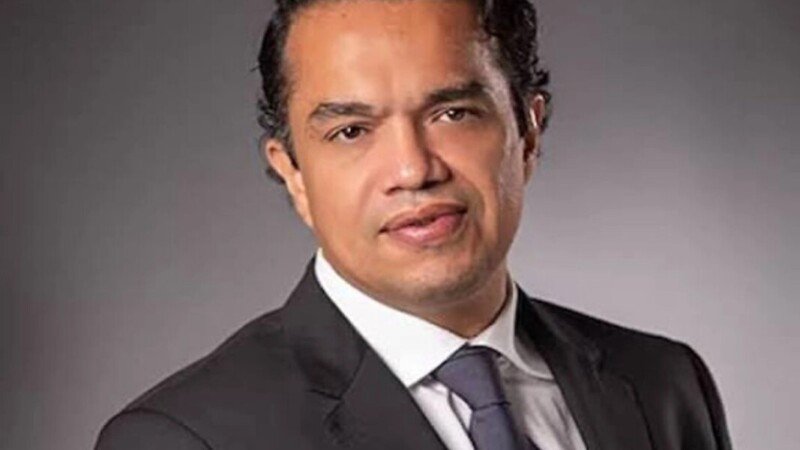
Houston, Texas — A federal jury in Houston convicted a Mexican businessman on Friday for his role in a scheme to bribe Mexican government officials at Petróleos Mexicanos (Pemex) and Pemex Exploration and Production (PEP), obtaining benefits of at least $2.5 million, according to a statement released by the Department of Justice.
“Alexandro Rovirosa orchestrated a plan to bribe Mexican officials for the benefit of himself and his companies,” said Acting Assistant Attorney General Matthew R. Galeotti of the Justice Department’s Criminal Division.
“Bribing officials to obtain business undermines fair competition and unjustly enriches those who act wrongly,” the prosecutor determined, adding that “we will not tolerate bribery and corruption schemes carried out from the United States, whether the bribes are paid here or abroad.”
According to court documents and evidence presented at trial, Ramón Alexandro Rovirosa Martínez, a 46-year-old Mexican citizen and legal permanent resident living in The Woodlands, Texas, paid more than $150,000 in bribes to PEP officials to retain contracts and payments from Pemex and PEP and obtain other improper advantages for companies related to him.
The trial evidence showed that between 2019 and 2021, Rovirosa and his accomplices, including 61-year-old Mario Alberto Ávila Lizarraga of Spring, Texas, also a Mexican citizen and legal permanent resident in the United States, delivered bribes in cash, luxury items, and other valuable items to at least three Pemex and PEP officials so they would help companies associated with Rovirosa obtain and retain business worth at least $2.5 million, the verdict indicated.
The jury convicted Rovirosa on one count of conspiracy to violate the Foreign Corrupt Practices Act (FCPA) and two counts of violating the FCPA. It found him not guilty of a fourth count of violating the FCPA. Rovirosa faces a maximum sentence of 15 years in prison, while his accomplice, Mario Ávila, is a fugitive.
“Alexandro Rovirosa violated U.S. laws through a network of corruption and deception. Rovirosa believed his residence in Houston protected him from the consequences of bribing foreign officials. However (…) his plan not only cost him a luxurious lifestyle in Texas, but also his freedom,” said Douglas Williams, special agent in charge of the FBI’s Houston field office.
“The conviction in this case holds the defendant accountable for participating in a scheme to bribe Mexican government officials for the benefit of himself and the companies associated with him,” accused Special Agent in Charge Jeffrey D. Pittano of the Federal Deposit Insurance Corporation, Mid-Atlantic Region.
The PAN Member Who Bribed with Louis Vuitton Bags and Swiss Luxury Watches
A Texas court is handling a process for the accusation that the U.S. Department of Justice filed against two residents in that country: Ramón Alexandro Rovirosa Martínez and Mario Alberto Ávila Lizárraga, who allegedly delivered bribes to Pemex officials and its subsidiary Pemex Exploration and Production (PEP), so that audits their companies faced for irregularities in their contracts would be closed, and to obtain new contracts worth millions of dollars, preferential deals, and other benefits.
U.S. authorities have charged them with four counts of conspiracy and corrupt practices abroad, for violating the Foreign Corrupt Practices Act and the Foreign Extortion Prevention Act.
On August 11, when making the accusation public, the prosecution stated that at least between 2019 and 2021, Ávila and Rovirosa allegedly bribed at least three Pemex and PEP subsidiary officials with luxury items, including Louis Vuitton bags and watches from the Swiss luxury brand Hublot, cash payments, and other valuable items, in exchange for them taking certain actions to help companies associated with Rovirosa retain business with the oil company, manipulate the bidding process, and obtain new contracts worth millions of dollars and other advantages for their personal enrichment, to the detriment of the fair market.
In the case documentation, presented to the court on August 6, although the names of those bribed are not identified, it is recorded that they held the positions of senior internal audit manager assigned to PEP; another who was a procurement coordinator; and another in the area of services related to land infrastructure.
From the case documentation, it emerges that Ávila Lizárraga was in charge of negotiating, managing, and operating the bribes in the mechanism in which at least three other co-conspirators participated: an assistant to Ávila, and two relatives and employees of Rovirosa.
Rovirosa, who is a lawyer linked to controversial Pemex contractor companies for decades, was initially presented before the Texas court and bail was set for him, while Ávila is a fugitive.
Ávila operated his corruption connections from the years when he himself arrived as an executive at Pemex during the Calderón administration, and since he served as an executive at the oil company, he became involved in frauds and scandalous losses.
Originally from Campeche, the man whom U.S. authorities point to as operating and managing the bribes is a member of the National Action Party promoted by his party as a candidate for Governor of Campeche, and who also had the sponsorship of other influential PAN members.
To explain Ávila Lizárraga’s history and the corruption networks with which he has operated in Pemex, one must refer to the years when he worked at a car dealership in Campeche, and Juan Camilo Mouriño and his family integrated him into the groups that promoted voting for Vicente Fox.
Carlos Mouriño Atanes — a Pemex contractor and gasoline station franchise owner — was the coordinator of Friends of Friends of Fox throughout the southeast, with his sons Juan Camilo and Carlos joining that collection from businessmen, and Mario Ávila as his assistant.
In return, they obtained government positions, in addition to all the capitalization given to their businesses through government contracts and subsidies to their franchises.
Juan Camilo was made a federal deputy through the proportional representation route, then Undersecretary of Energy with Calderón, later Chief of the Office of the Presidency, and then Secretary of the Interior.
Mario Ávila was placed as delegate of the Ministry of Social Development (Sedesol) in Campeche, and he held that position from June 2002 to January 2009, that is, during the Fox administration and the first three years of Calderón’s.
In Campeche, it was public knowledge that Ávila operated as an employee of the Mouriños, so it was not surprising when, in 2009, they were the ones who imposed him in the PAN as a candidate for state governor. Juan Camilo had died a few months earlier, and Mario Ávila used his image and evoked his name in his campaign events, which formally began with the Mouriños accompanying him, as they would do during his campaign events, to which PAN officials from the federal government also arrived.
There was such support that, since the internal party election, other PAN members had denounced the use of social programs that Ávila had made from the Sedesol delegation to promote himself.
Furthermore, the press denounced the offers made for a campaign in the local press in favor of Ávila that would be paid for by the National Lottery. Those to whom the offer was made denounced it themselves.
It was repeatedly accused that the Calderón administration sought a state election in Campeche.
Despite the PAN support sent from Los Pinos, in that election on July 5, 2009, Ávila lost to the PRI candidate, Fernando Ortega Bernés.
The electoral authority verified irregularities, omissions, and exceeding the spending limit in Ávila’s campaign, imposing a fine on his party.
Months later, in what seemed like a “consolation prize,” they gave him a position at Pemex Exploration and Production. But it was much more than winning the lottery, because the position assigned to him: deputy director in the Coordination of Marine Services, is the most relevant for the operation of contracts and bidding for offshore work and services, which are among the most expensive and coveted in Pemex, because they handle the contracting for leases and services in marine regions, ships, and platforms.
Starting in March 2010, from the offices in Ciudad del Carmen, Ávila began managing financial resources, and the bidding and awarding of goods and services contracts.
In the oil sector, it was always known that Ávila represented the Mouriño group and its influence in the federal government. And indeed, Calderón’s relationship with them did not end with Juan Camilo’s death; even the Michoacán native was seen on weekends vacationing in Campeche with the owners of the Grupo Energético del Sureste (name of the Mouriño family corporate). There are some photographs showing Calderón and his family with the Mouriños on their luxurious yacht “El Delfín.”
As an executive at the oil company, Ávila operated contracts that led to fraudulent maneuvers, to favor several contractors, one of them the controversial Oceanografía. Such anomalies were proven in the judicial investigation against Oceanografía, and in 2015 the Ministry of Public Function disqualified Ávila for a period of 10 years (a disqualification that was in effect from August 12, 2015 to August 8, 2025).
Although formally out of Pemex, residing in Texas since 2016, he continued to pull from the networks he wove in the oil company to become a contractor and contractor manager.
The criminal accusation, which is ongoing in U.S. courts, details mainly the conversations between Ávila and the head of internal audit assigned to PEP.
In written messages and WhatsApp audios, Ávila instructed him on how to favor companies that appear in Rovirosa’s name, which were under audit after irregularities were detected in one of the contracts for pipeline maintenance, a contract that had been awarded to them in 2013 extending until 2018.
In early 2019, the internal audit department at the oil company began a review of that contract. While being audited, Rovirosa’s companies could not receive payments from the oil company or participate in other contracts, so bribes were given so that the audit would favor the company.
With those resolutions, they would have no restrictions to receive payments from Pemex and obtain additional business. In exchange for this, Ávila offered him a Vuitton bag for his wife and Hublot watches, in addition to cash payments and other luxurious items.
At least three Pemex officials, who are now under investigation, allegedly received bribes. They are also linked to operations for a contract for works on roads and platforms; and to influence the awarding of a mechanical integrity contract that was up for bidding.
According to court documents, for several years, including the periods from 2019 to 2021, Ávila and Rovirosa, along with their co-conspirators, participated in the bribery scheme in which they offered, paid, promised to pay, and authorized the payment of bribes in cash, luxury items, and other objects of value, totaling at least $150,000.
The court documentation details the exchange of messages when Ávila offers the auditor the luxury Louis Vuitton bag to give to his wife in exchange for resolving the audits in his favor, which the auditor did. And even indicating the amount that should be resolved in the audit, Ávila sent him a message with a new promise: “A Hublot as commission haha,” with photographs of the watch he was about to acquire to send it to him “as commission.”
Then, when the auditor operated so that the audit would be favorable, Rovirosa wrote to Ávila to inform him of the final result, with a “Mission accomplished!” in a voice message.
The auditor confirmed receipt of the Louis Vuitton bag by sending a WhatsApp message to Ávila, and he responded: “You’re welcome, friend; you’ve earned it.”
Later, they negotiated other bribes so that the official, together with others, would operate for at least two contracts.
There are messages that show that practically the internal audit official assigned to PEP behaved like an employee of Rovirosa and Ávila. When the contract for works on roads and platforms was in the bidding process, in January 2020, Ávila complained to the auditor that Rovirosa was not receiving new contracts due to ongoing audits. The official responded that he should assure Rovirosa that he would resolve the audits for him: “Tell Alex that I am investigating it” and “I have ordered that audit finding to be resolved as soon as possible” so that “they no longer have the audit as a pretext not to give them work,” he said in a message.
The auditor managed the contract for works on roads and platforms, including pressuring PEP officials regarding the technical evaluation of company bids.
With Ávila, he had an exchange of messages to inform him of the meetings where the contracting was discussed.
Ávila wrote other messages asking for account numbers and confirming transfers, and the delivery of cash in Campeche.
In other messages, Ávila wrote to him that “he deserved a gift… what we agreed.”
The bribes were related to a third contract, for Mechanical Integrity, which was put out to bid in 2019.
To obtain the contract in August, Ávila sent him a WhatsApp message to tell him that Rovirosa would submit a bid indicating that he wanted it awarded to him. In another message, the oil company official responded: “I am studying it. But I need to start seeing some affection already…”
Subsequently, Ávila offered two Hublot watches. He also bought and sent him a treadmill costing approximately 26,000 pesos.
The accusation details conversations with phrases like “opening the champagne” in reference to the award date; along with many more messages that the prosecution includes as part of its accusation, and that account for the modus operandi of Ávila Lizárraga with Rovirosa to — as U.S. authorities accuse them — conspire to offer, promise, and pay bribes to PEP officials, the same subsidiary where Ávila was an official.
Discover more from Riviera Maya News & Events
Subscribe to get the latest posts sent to your email.