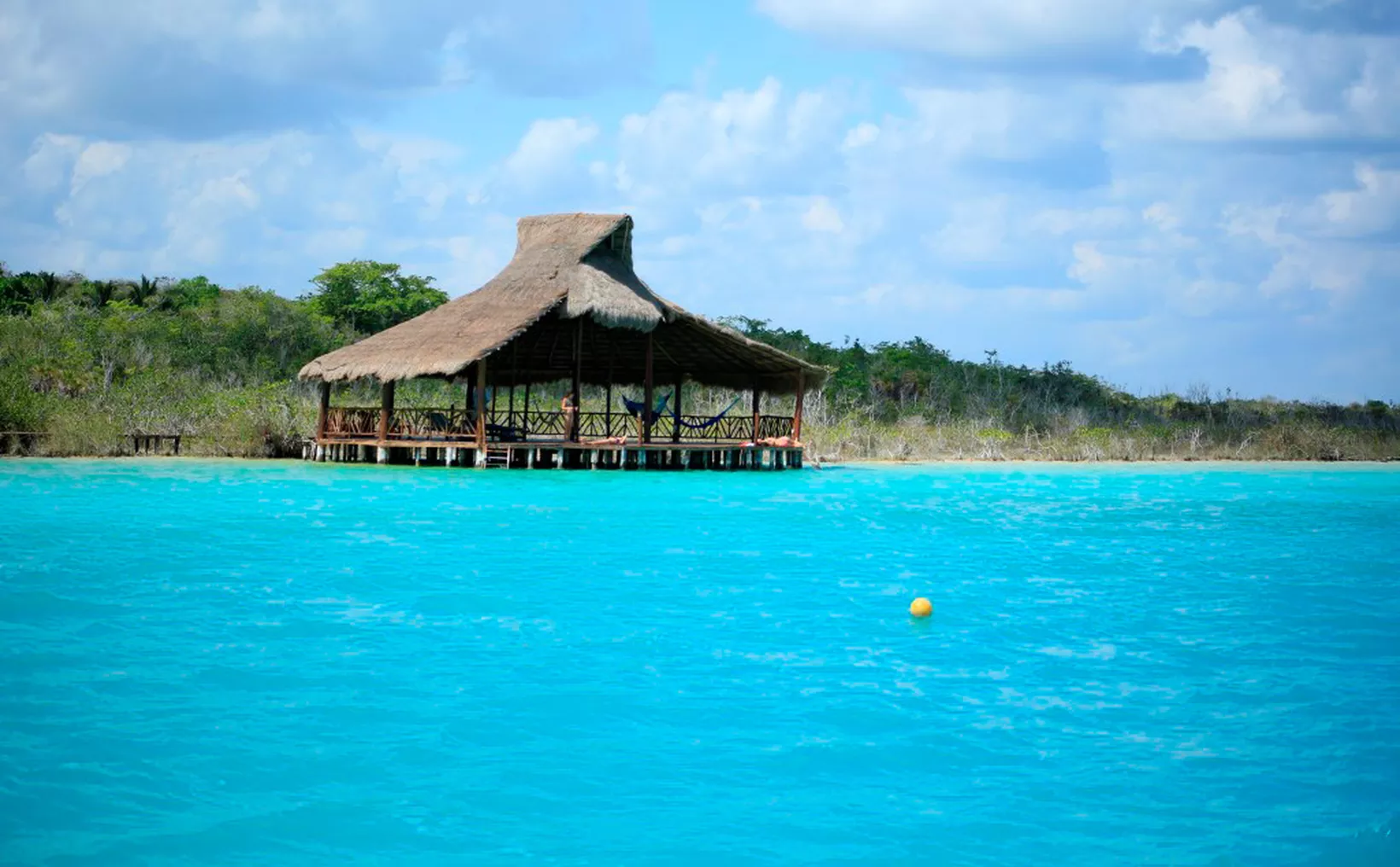
Bacalar, Quintana Roo — The mangroves and wetlands of Bacalar have suffered significant environmental degradation with the loss of at least 270 hectares in recent years. This destruction translates to an estimated economic impact of over 10 million dollars annually due to the disruption of the ecosystem services these spaces provide, which are essential for ecological balance and tourism attraction.
The deterioration of the landscape is so noticeable that visitors no longer find the iconic beauty of the lagoon seen in historical photographs, underscoring that the loss of these ecosystems is not an isolated event, but a transformation that compromises the area.
Researcher Erika Betzabé Palafox Juárez, from the College of the Southern Border (Ecosur), in her study “The Value of Conservation: Environmental and Economic Impacts in the Wetlands of Bacalar, Quintana Roo,” has quantified the severe degradation of ecosystems in the region.
The researcher indicated that between 1999 and 2021, 277 hectares of inland wetlands and mangroves were lost in Bacalar. The majority of this loss (243 hectares) corresponds to inland wetlands, located mainly on the west coast, an area conducive to real estate development.
“This destruction translates into an economic loss of more than $10.5 million international dollars per year in ecosystem services. This monetary value represents what it would cost society to artificially replace the functions that nature performs for free,” she highlighted.
She said that the loss of ecosystems drastically reduces their capacity to provide essential regulation services such as water filtration, flood control (moderation of extreme events), and carbon storage, in addition to the provision of water and raw materials.
She indicated that with the losses, a decline is perceived in recreation activities, nature tourism, and existence value (the value people assign to the mere existence of the ecosystem, even if they do not visit it).
The researcher said that the accelerated tourism development in Bacalar, driven after its designation as a Pueblo Mágico and the impact of sargassum on the northern coasts of Quintana Roo, has pressured the substitution of these natural ecosystems with infrastructure, compromising the ecological functionality of the Laguna de Bacalar basin.
She noted that she relies on the classification from the Economics of Ecosystems and Biodiversity initiative to identify five main types of wetlands, of which three are relevant in Bacalar: inland wetlands, rivers and lakes, and mangroves.
Economic valuation is a tool to raise awareness about nature’s contribution, not to assign it a market price, as a monetary value is assigned to the benefits (ecosystem services) that ecosystems provide to human well-being.
“The objective is to show how much it would cost to build or implement alternative solutions (of concrete or technology) to substitute what the ecosystem does naturally, for example, a containment wall instead of a mangrove to protect against storms,” she explained.
The study used the benefit transfer method (unit transfer), taking unit values from similar research in ecosystems under comparable conditions to estimate the total value lost per area.
Discover more from Riviera Maya News & Events
Subscribe to get the latest posts sent to your email.