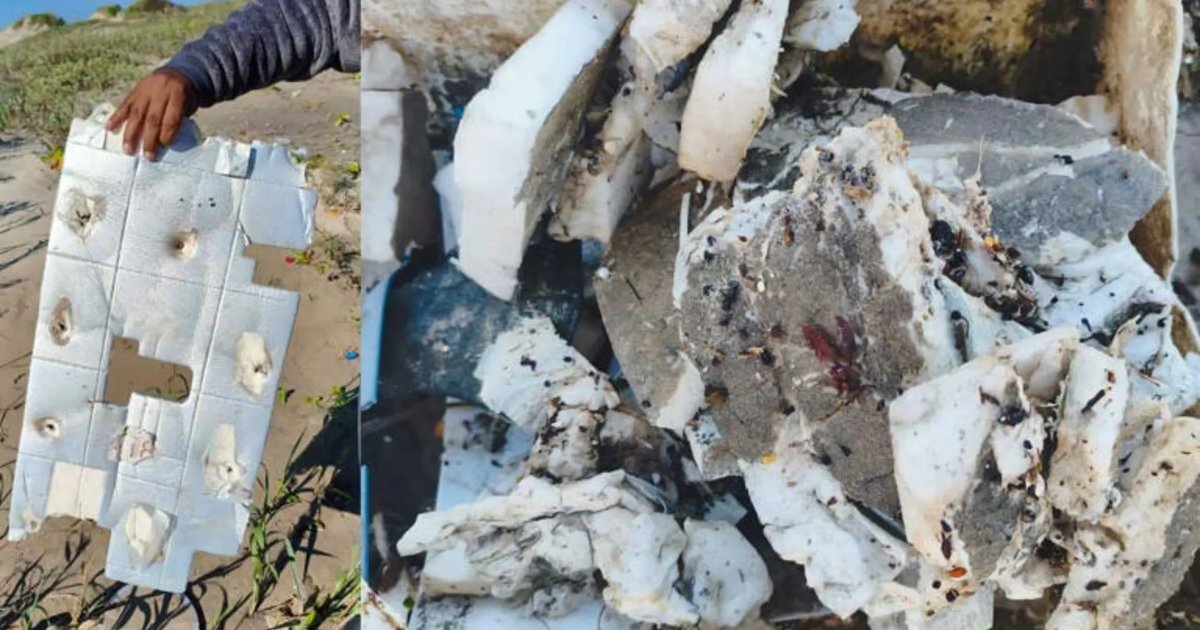
Matamoros, Tamaulipas — Fragments of SpaceX space debris have washed onto the coast at Playa Bagdad, raising environmental alarms after reports of dead sea turtles and dolphins in the area.
Members of the environmental group Conibio Global say remains from a rocket that exploded on Nov. 13 have begun accumulating on the beach and may be connected to the deaths of the marine animals.
Jesús Elías Ibarra Rodríguez, the group’s president, said the sea is casting up large amounts of material from the spacecraft. He described the scene as the ocean “vomiting” pieces of the structure, which have been appearing at various points along the Tamaulipas coastline.
In a report, Ibarra Rodríguez said weather conditions have hampered inspection and cleanup work.
Tide and cold front slow the cleanup
High tide and the effects of a cold front, accompanied by strong wind gusts, have left access to Playa Bagdad difficult, though field crews continue to survey the areas where work is possible.
Among the materials documented so far are white plastic fragments with gray tape, pieces wrapped in black rubber tape and components held together with blue adhesive. According to Conibio Global, the debris appears to come from the inner wall of the rocket’s booster and is mixed with waste generated by tourism on the beach.
The group’s representative warned that removing all of the debris will be difficult given the quantity and size of the fragments. He added that teams have not yet been able to reach the river mouth, near the site of the explosion, to check whether larger components are present.
On previous occasions, he said, crews have recovered pieces such as propulsion tanks weighing between 15 kilograms and half a ton. He called for inspections to be expanded to determine how much material may remain in the area and what risk it poses to the marine ecosystem.
PROFEPA inspects the coast and seeks accountability
The Federal Prosecutor’s Office for Environmental Protection (PROFEPA) said its inspectors traveled to Playa Bagdad to identify the debris, which began reaching Mexican waters around 7:30 a.m. The agency said it is working with the National Commission of Protected Natural Areas (CONANP) and Conibio Global to remove the material.
In a statement, PROFEPA said it will secure the collected fragments and will then ask SpaceX to take responsibility for the waste from its rocket. The agency said the operation is meant to document the findings and decide what action to take over the presence of space debris on Mexican territory.
Ibarra Rodríguez, meanwhile, urged the public to help draw attention to the problem and called on residents to tag PROFEPA and its head, Mariana Boy, in social media posts to push for joint action. As inspections and collection continue, the environmental group warned that damage to wildlife and the natural environment at Playa Bagdad still needs to be assessed.
More Environment
- Sian Ka’an Ranked Among Most Flood-Exposed Coasts as NASA Maps Project Sea-Level Rise
- Biologist Calls for Regulation of Chivita Snail Harvesting in Bacalar Lagoon
- IUCN Declares Mesoamerican Reef Critically Endangered
- UIMQROO Researcher Proposes Genetic Study of Dengue, Zika and Chikunguña to Aid Vaccine Research
- Playa del Carmen Keeps Macondo Playacar Permits on Hold After Judge Dismisses Environmentalists’ Injunction