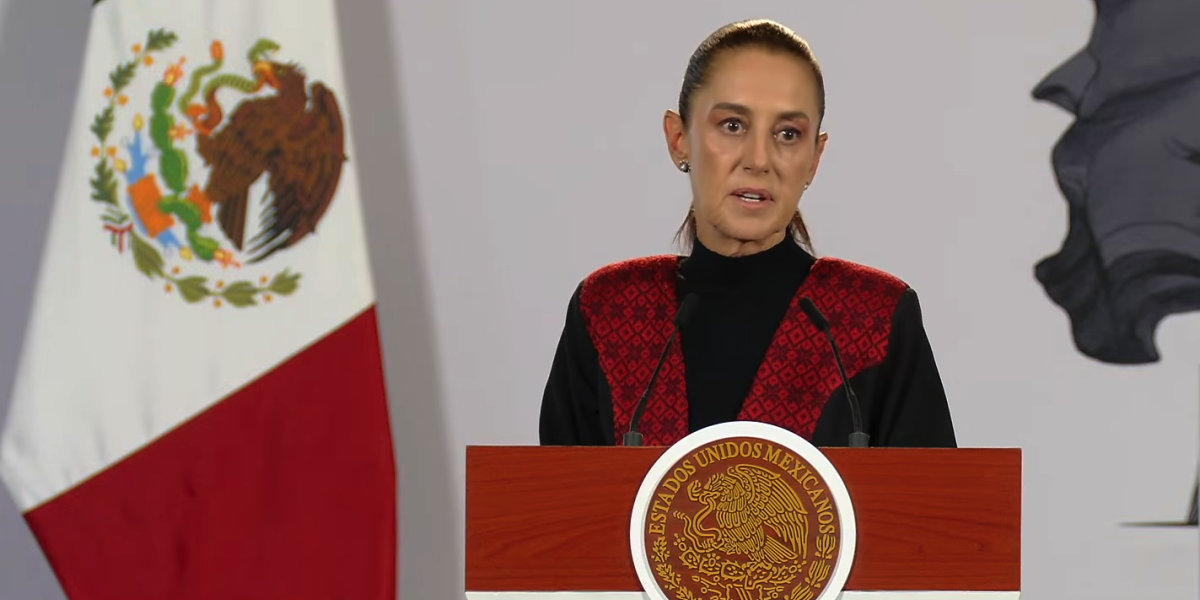
Mexico City — President Claudia Sheinbaum said Friday that she will hold a new meeting with US Ambassador to Mexico Ronald Johnson and Foreign Secretary Roberto Velasco to address specific items on the bilateral agenda, including security and police cooperation that were left unresolved during an earlier session with business leaders.
Speaking at her daily morning press conference at the National Palace, Sheinbaum explained that a previous meeting with representatives of the American Chamber of Commerce of Mexico (AmCham) focused mainly on economic and commercial matters, leaving no room to discuss other issues, such as a proposed police training academy in Querétaro that would involve US agencies.
“We already agreed to meet soon with the foreign secretary and the ambassador to look at particular issues,” Sheinbaum said.
Querétaro Police Academy Among Pending Items
The upcoming meeting follows the president’s call to clarify the terms under which US authorities would take part in the police training project in Querétaro, as well as whether any agreements exist with the Mexican government.
Sheinbaum said the topic was not raised during the session with Johnson and the US business representatives because the conversation centered on private-sector concerns and on the conditions needed to maintain a favorable investment climate.
The president did not give a date for the bilateral meeting but confirmed it would allow both sides to review specific matters that could not be covered during the business session.
Sheinbaum Points to Progress on Migration and Security
During the AmCham meeting, Sheinbaum also presented what her government describes as advances in cooperation with the United States on migration and security.
She said the number of people crossing into the United States has fallen by 98%, a result she attributed to joint work between the two countries and to measures aimed at discouraging migrants from continuing north. She also said fentanyl seizures in the United States have dropped 75% and highlighted operations carried out on Mexican territory against drug and human trafficking.
The president mentioned coordinated operations on both sides of the border, which she called “mirror operations,” in the context of the US military deployment in the region.
As part of the results of bilateral cooperation, she also recalled the transfer to the United States of 94 people identified by Mexican authorities as priority targets for drug trafficking, describing the move as part of joint security efforts.
Sovereignty and Coordination as Guiding Principles
Sheinbaum reiterated that cooperation with the administration of US President Donald Trump rests on four principles: territorial integrity, respect for sovereignty, mutual trust and coordination without subordination.
She said Mexico maintains broad cooperation with US institutions but insisted that any mechanism must respect national sovereignty. Those principles, she said, guide joint work on security, migration and the fight against illicit activities.
Steel and Auto Tariffs on the Trade Agenda
On the economic front, Sheinbaum said Mexico is seeking a reduction in US tariffs on automobiles and steel, which remain among the outstanding issues in the commercial relationship.
The president said the meeting with AmCham representatives served to address requests from US companies operating in Mexico, clarify aspects of the Revenue Law and review proposals related to trade and the conditions for investing in the country.
The next meeting with Johnson and Velasco will allow both sides to take up the topics left out of that conversation and review other specific issues in the Mexico–United States relationship.