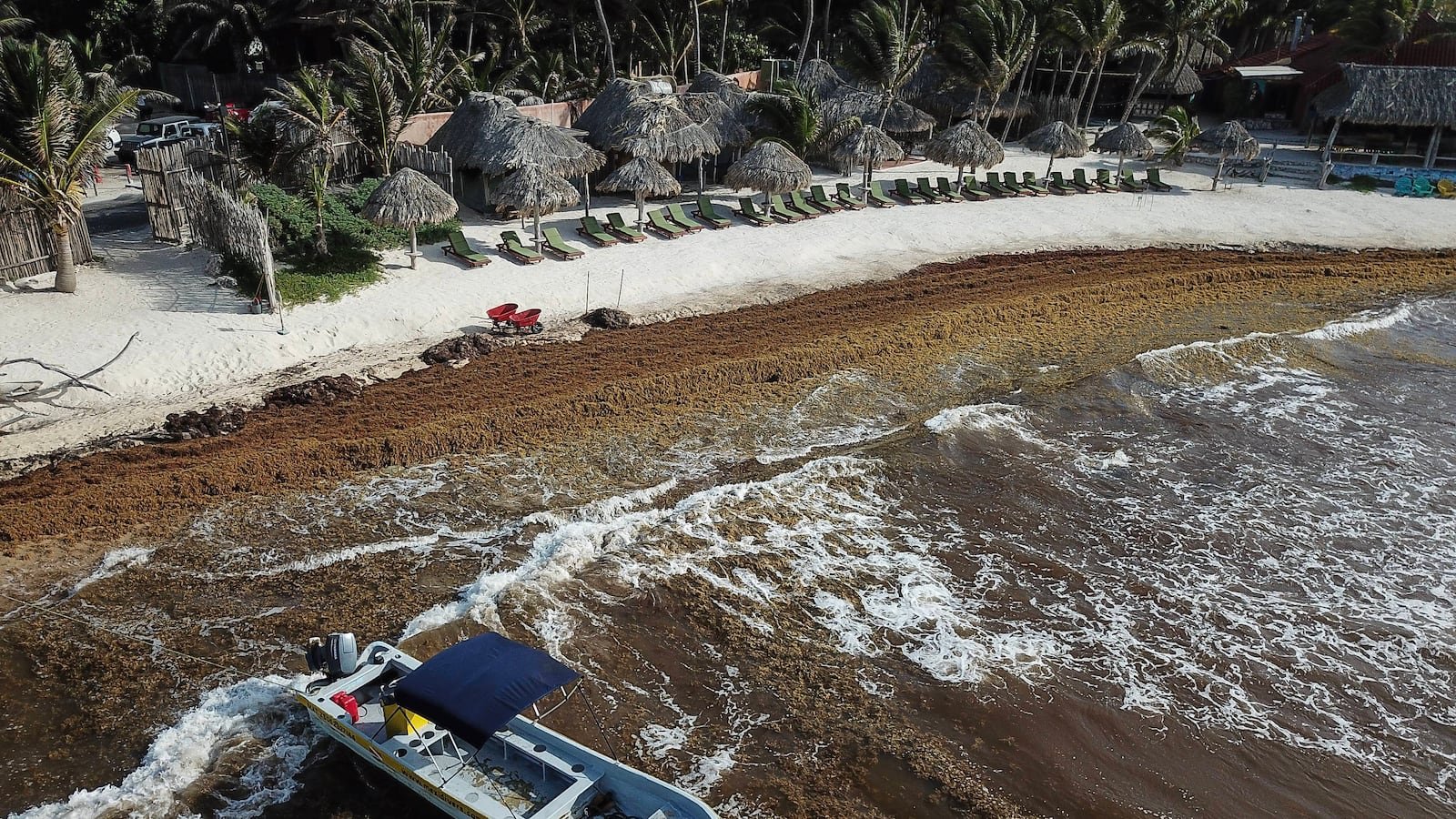
Quintana Roo, Mexico — A new critical phase of sargasso seaweed influx has hit Quintana Roo, with 65 of the state’s 140 monitored beaches placed on red alert due to significant accumulations of the algae.
According to Esteban Amaro, coordinator of the Sargasso Monitoring Center, nearly half of the monitored coastlines show high levels of sargasso within the first five nautical miles, forcing authorities to ramp up cleaning, containment, and collection efforts across various points of the Mexican Caribbean.
Cancun, Playa del Carmen, and Tulum Among Affected Areas
In northern Quintana Roo, 34 beaches remain on red alert, primarily in destinations such as Cancun, Playa del Carmen, and Tulum, where the influx affects both the tourist image and coastal maintenance work.
In the southern part of the state, another 31 beaches are affected, especially in Mahahual, in the municipality of Othon P. Blanco, one of the areas where the arrival of the algae has been most visible this season.
The 2026 sargasso season is shaping up to be one of the most intense in recent years, according to reports warning of a greater presence of the macroalgae in the Mexican Caribbean.
Navy Reinforces Sargasso Operation
In response to the increased influx, cleanup brigades made up of workers known as sargaceros are working alongside the Mexican Navy and municipal governments.
Since early May, the Navy has reinforced its operation in Quintana Roo with 150 additional personnel and a new sargasso-collection vessel capable of harvesting up to 600 tons daily at sea, according to local reports.
The strategy aims to contain sargasso before it reaches the coast, reduce accumulation on beaches, and mitigate the environmental, tourism, and economic impacts associated with the phenomenon.
Hotels Invest to Contain the Problem
The hotel sector has also intensified its actions to address the arrival of the algae. Toni Chavez, president of the Riviera Maya Hotel Association, said that businesses allocate around $150 million annually to deal with the sargasso problem on Mexican Caribbean beaches.
Additionally, 15,000 meters of sargasso barriers have been installed on Cancun beaches, while some resorts have implemented private containment systems as part of measures to protect high-traffic tourist areas.
In Mahahual, local businesses have set up PET chain barriers, which have helped reduce the arrival of algae to the coast, according to the report.
Environmental and Tourism Impact Mitigation
The containment actions are part of the state strategy to mitigate the effects of sargasso in Quintana Roo, where the phenomenon represents an environmental challenge due to its accumulation on beaches, foul odors, damage to coastal ecosystems, and pressure on tourism activity.
Authorities and the private sector continue to monitor beaches constantly to adjust collection efforts, reinforce barriers, and address the points with the greatest accumulation during the critical season.
More Business
More Quintana Roo
- Heavy Rains to Soak Quintana Roo as Unstable Weather Moves In
- Ten Rural Communities in Quintana Roo Form Community Conservation Territories
- Study Finds Cancún’s Laguna Manatí Mangrove Could Qualify for Carbon Credits
- Lawmakers Seek to Make Mexican Sign Language Mandatory in Quintana Roo Schools
- Quintana Roo Signs Deal for First Formal Sargassum Fishery, Involving Up to 840 Boats