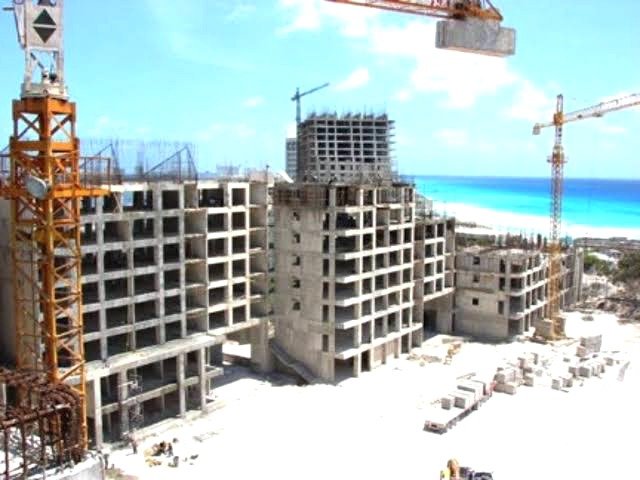
Quintana Roo, Mexico — Real estate mafias are illegally privatizing coastal lands in Quintana Roo, displacing indigenous Maya communities, ejidatarios, and small landowners through fraudulent schemes and corruption, according to recent reports and investigations.
The land dispossession problem has persisted for decades, driven by high tourism value and real estate development. It primarily affects ejidos, indigenous communities, and small property owners through forged documents, violence, or misinformation, resulting in the loss of communal lands.
Mechanisms of Dispossession
Since 1992, thousands of hectares of ejidal land have been privatized across the Yucatan Peninsula, including Quintana Roo, for tourism development. Documented cases show ejidal lands acquired at very low prices and resold to companies at much higher values, particularly in coastal areas.
The dispossession has led to the impoverishment of farming and indigenous communities, forcing migration and cultural loss.
Quintana Roo’s Expropriation Law allows expropriation for public utility with compensation. Federal projects like the Maya Train have involved expropriation of ejidal lands in the region.
While land dispossession carries penalties under local legislation, often involving fines and imprisonment for unauthorized occupation, complaints to authorities frequently languish, leaving poor property owners at a disadvantage.
Institutions Facilitate Privatization
The Mexican Civil Council for Sustainable Forestry has noted that delegations of the National Agrarian Registry and the Agrarian Attorney’s Office sometimes facilitate land privatization. Meanwhile, the “real estate mafia” along Quintana Roo’s coast remains active between 2025 and 2026, operating primarily through dispossessions, presale frauds, document forgery, and irregular developments in high-value areas like Tulum, Playa del Carmen, and Cancún.
This phenomenon involves networks connecting fake developers, notaries, and occasionally public officials, according to recent reports.
Modus Operandi
Presale frauds and “foreclosure” scams have increased, with real estate companies selling non-existent projects or those without construction permits, then disappearing after receiving deposits. In 2025, fraud in used housing increased 110% and in the vertical sector by 58%.
Land dispossession networks continue to operate by invading properties, forging property titles, and using rigged labor lawsuits to appropriate real estate. Fake companies seize national lands, even in areas projected for the Maya Train.
The highest-risk zone is Tulum/Solidaridad, where luxury developments (such as 7-story buildings in Tulum) lacking environmental and construction permits have been reported, putting the ecosystem at risk.
Fake bank foreclosures involve fraudulent sellers using apocryphal contracts and simulating bank foreclosures to lure buyers with low prices.
Over 116 Irregular Developments in 2025
The Secretariat of Territorial, Urban, and Sustainable Development has reported the identification of more than 116 irregular real estate developments during 2025.
Authorities in Quintana Roo have urged verifying property legality with the Public Property Registry before any investment.
The State Prosecutor’s Office maintains investigations into fraud networks, especially those using social media to offer irregular lands.
Citizens are advised to report to the State Prosecutor’s Office and avoid purchasing lots without legal certainty, basic services, or located in invaded zones.
Mayab Noticias documented that the Playa del Carmen ejido was victim to the invasion of 32 hectares of land located in a high-value area along Benito Juárez Avenue. The leaders who led the dispossession created four irregular settlements: San Judas Tadeo, Sagrado Corazón de Jesús, Alga y Omega, and one unnamed, selling residential lots for 100,000 pesos and commercial lots for 150,000 pesos.
“Residents of irregular neighborhoods block access with sticks, stones, wood, and cardboard following news of an eviction in the area. So far, municipal, state, and federal forces have not intervened,” a situation that could have ended in tragedy.
Dispossession: A Crime Full of Corruption Without Justice
According to official data cited by local media, between 1993 and 2018, more than 208,000 hectares of common-use lands were parceled for possible privatization, with a significant increase in the last 10 years. This situation has increased agrarian litigation, especially in coastal areas like Tulum, Isla Mujeres, and Bacalar.
This is mainly due to tourism expansion as an engine driving real estate speculation, generating pressure on ejidos near the coast, now also referred to as gentrification by some political and social groups.
Some of the most emblematic dispossession cases include:
- Supermanzana 247 (2018): In Cancún, the devastation of a vast 50-hectare area owned by a bank, carried out for political purposes and later taken over by organized crime, generated protests and litigation. Recent arrests of some promoters in 2025 left unprecedented ecological damage and urban development conflict.
- Ejido Jacinto Pat (2018): In Playa del Carmen, fraudulent sales of ejidal lands were reported, involving notaries and businessmen, similar to the disastrous corruption in the Colosio neighborhood where the Quintana Roo government was involved.
- Bacalar Case (2020): In this municipality, dispossessions through forged documents affected indigenous communities, compounded by deforestation by Mennonite groups that damaged aquifers, the lagoon, bee life, and ecological development.
- Tulum Project (2022): Tourism expansion in Tulum has led to multiple dispossession complaints, with emblematic cases including the eviction of ejidal families for hotel projects, with a high percentage of people living without legal certainty and drainage systems.
- Las Palmas: In Othón P. Blanco municipality, where a group requested recognition of possession and subsequent alienation of national lands from the Secretariat of Agrarian, Territorial, and Urban Development, a religious leader suddenly appeared with municipal documents to dispossess the primary promoters.
Maya Indigenous Women, Victims of Dispossession
Various investigations, reports, and complaints indicate that women in Quintana Roo, particularly indigenous Maya women and ejidatarias, have been victims of land dispossession linked to high-value conflicts, development projects, and sometimes complicity between individuals, businessmen, and authorities.
Specific high-profile cases include an 83-year-old woman, considered one of Cancún’s first cooks, who was dispossessed of her land by a high-ranking official.
Dispossession for projects and real estate interests has been documented in municipalities like Solidaridad and Tulum, where ejidatarios and families, including women, are dispossessed of their properties, sometimes under the guise of public works.
Fraudulent strategies include forging documents or simulating property owner deaths to seize lands from elderly women.
Women Defend Themselves Against Agrarian Mafia
Everyone fears the “Agrarian Mafia,” with complaints pointing to networks of individuals and former officials seeking to appropriate ejidal lands in high-value tourist areas. Despite threats and fear, many women organize to defend their lands, conducting guard duties and building homes to prevent invasion.
In some cases, the federal government has taken actions to return lands to Maya women who were dispossessed, acknowledging a historical debt. Meanwhile, the Quintana Roo Prosecutor’s Office has only maintained open investigations for the invasion and dispossession of lands in areas like Mahahual and Playa del Carmen.
Maya Community Demands
The Maya community demands an end to the dispossession of Quintana Roo’s coasts and the illegal privatization of all Mexican coastlines. “What we are seeing and living in our country is not a simple ‘administrative error’ but the culmination of decades of rapacious neoliberalism, now protected by some officials,” community representatives stated.
They emphasized that the “sale” of their coasts represents the surrender of national sovereignty to the highest bidder, where complicity between political power and the real estate mafia in Quintana Roo has turned a constitutional right into a luxury privilege.
Community representatives called for:
- Comprehensive audit of concessions: Urging the Secretariat of Environment and Natural Resources and the Superior Audit Office of the Federation to publish the names of beneficiaries of every square meter of concessioned coastline over the last 30 years.
- Immediate revocation: Not just “friendly attention calls” but revocation of concessions obtained through bribes or influence peddling.
- Immediate application of free and real access law: Constitutional Article 27 must be rigorously exercised, requiring dignified, signposted, and protected public access points, not “servitude corridors” hidden between hotels.
“We, as Maya Cruzo’ob, are ancestral owners of the beaches. We do not perceive them as merchandise but as our territorial and sovereign essence,” representatives stated. “While tourism is seen only as an investment figure and not as a tool for social well-being for native peoples, dispossession will continue to our detriment.”
Discover more from Riviera Maya News & Events
Subscribe to get the latest posts sent to your email.