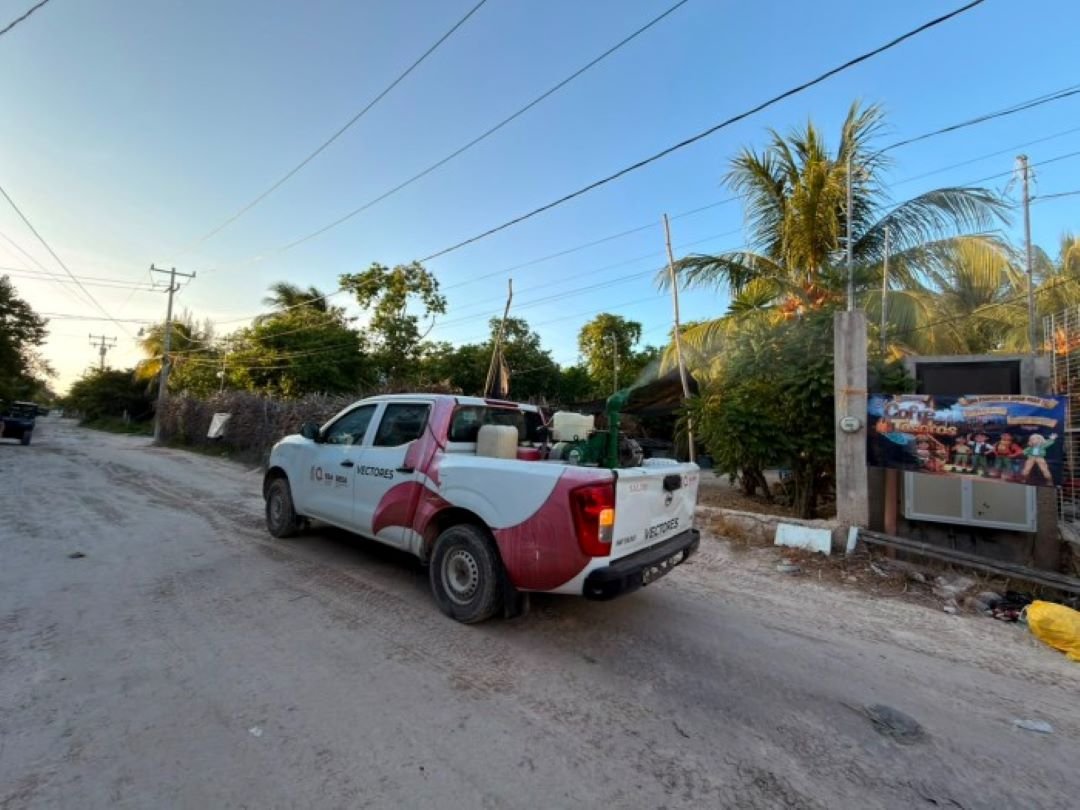
Chetumal, Quintana Roo — Quintana Roo is leading the Yucatan Peninsula in dengue cases, reporting 196 infections through the week of Aug. 2-8, according to the federal Health Secretariat’s weekly epidemiological report. Neighboring Yucatan recorded 53 cases, while Campeche counted 34.
Of the total, 124 cases are classified as non-severe dengue — three times the 41 cases reported during the same period last year. The state also logged 64 cases with warning signs, up from 53 a year earlier, and eight severe cases, compared with five in 2025.
Among municipalities, Othon P. Blanco, which includes the state capital Chetumal, had the most infections, with 42 non-severe cases and 22 cases with warning signs or severe disease, giving it a combined incidence rate of 7.45 per 100,000 residents. Playa del Carmen followed with 27 non-severe cases and 17 cases with warning signs or severe dengue. Bacalar reported four non-severe cases and seven cases with warning signs or severe disease — the highest rate in the state for the severe category, at 13.80 per 100,000 residents. Felipe Carrillo Puerto recorded five non-severe cases and four with warning signs or severe dengue.
The report also shows six cases of chikungunya in Quintana Roo — four men and two women — ranking the state second nationally. The state recorded zero chikungunya cases in 2025.
Health officials urged residents to eliminate standing water and mosquito breeding sites and to protect against bites from the Aedes aegypti mosquito, which transmits both dengue and chikungunya and can cause severe complications such as hemorrhagic dengue.
More Community
- Yucatán Suspends Classes in 27 Municipalities as Tropical Storm Isaías Nears
- Mexico’s Senate Votes 96-0 to Curb Telemarketing Harassment With New Do-Not-Call Registry
- Playa del Carmen Traffic Police Run No Operations Targeting Bike Lane Violations
- Holbox Businesses and Residents Urge Review of Street Closures
- Scooter Users Demand Say in Playa del Carmen Micromobility Rules
More Playa del Carmen
- Sheinbaum Acknowledges Little Progress in Talks With Vulcan Over Calica
- Fitch Downgrades, Then Upgrades Playa del Carmen Credit Rating Over Missed Payment
- Playa del Carmen Merchants Pin Hopes on Buen Fin, Winter Season to Salvage Weak Year
- Playa del Carmen Mayor Lights Municipal Palace Pink to Promote Breast Cancer Prevention
- Police Shoot and Wound Man in Playa del Carmen’s Misión de las Flores