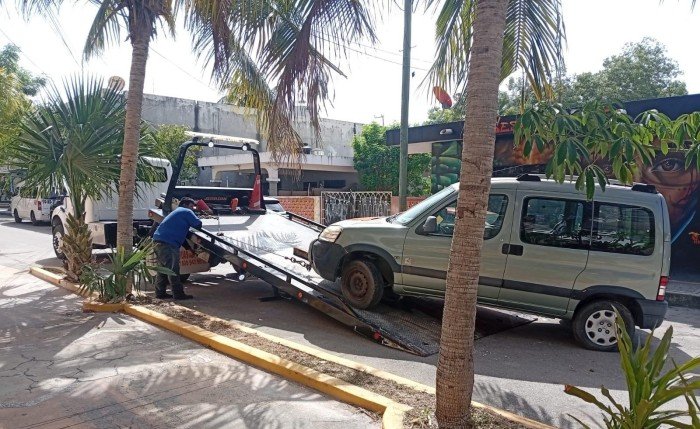
Playa del Carmen, Quintana Roo — An operation to clear abandoned vehicles from public streets has removed 2,864 cars and trucks, most of them voluntarily surrendered by owners, according to local transit officials.
Of that total, 528 vehicles had to be towed, said Aureny Sugeidy Martín Manzanilla, director of the municipal transit department. She said the goal is not to impound vehicles but to prevent them from becoming eyesores and health hazards, and that the preferred outcome is for owners to relocate them without needing a tow truck.
Martín Manzanilla noted that abandoned vehicles not only blight neighborhoods but can also be used by homeless people as sleeping quarters or makeshift housing. She added that wildlife such as foxes, opossums and cats often shelter inside the vehicles, creating unsanitary conditions.
The Ejido neighborhood has reported the most abandoned vehicles, she said, due to its size and the large number of auto repair shops located there.
The cleanup will continue on a permanent basis, moving through different areas of the city. Residents can report abandoned vehicles to the municipality.
More Government
- Mexico’s Cofepris Issues Health Alerts Over Counterfeit Granulox, Buscapina, Bedoyecta and Saizen
- Navy Transfers Injured Woman as Isla Mujeres Hospital Maxes Out
- Drought Reaches All 11 Municipalities in Quintana Roo
- Search Operation for Missing People Deployed in Felipe Carrillo Puerto
- Horseshoe Crabs in Isla Mujeres Face Threat From Bait Fishing in Laguna Chacmuchuch
More Playa del Carmen
- Playa del Carmen Beachgoers Denounce Charges of Up to 800 Pesos for Umbrellas and Lounge Chairs
- Three Men Sentenced to Up to 48 Years for Murder of Four Playa del Carmen Inspectors
- Punta Venado Caught Between New Hotels and the Calica Legal Fight
- Villas del Sol Downgraded to Yellow on Playa del Carmen Gender Violence Map
- Prosecutors Rescue Teen Girl From Alleged Labor Exploitation in Playa del Carmen