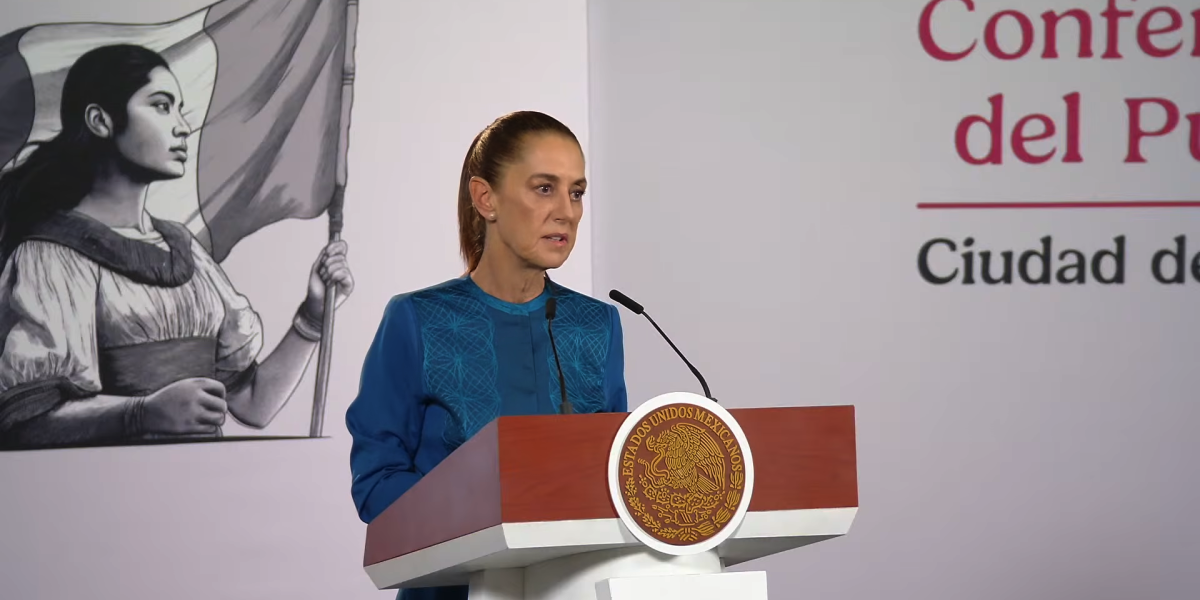
Mexico City — President Claudia Sheinbaum on Thursday ruled out deploying troops or taking repressive measures at Mexico’s southern border to stop migrant caravans, after U.S. President Donald Trump threatened to double tariffs on Mexico unless the groups are halted.
Speaking at her daily morning press conference, Sheinbaum said her government will continue to rely on a humanitarian protocol run by the National Migration Institute (INM), which informs caravan members about U.S. entry restrictions and offers them alternatives to return home safely or remain in Mexico under certain conditions.
Two caravans in transit
Sheinbaum said no caravan has reached Mexico’s northern border so far and that two groups are currently moving through the country. The first is in Arriaga, Chiapas, and originally numbered about 500 people before growing to 600; fewer than 100 remain in that group, she said. The second is made up of people from Honduras and will receive humanitarian attention with full respect for human rights.
“The vast majority return to their countries of origin once they learn they will not be able to cross the Mexican border into the United States,” she said.
Asked whether military presence would be reinforced along the southern border, Sheinbaum said: “No. Again, there is a lot of experience at the National Migration Institute and in all the institutions, including the National Guard — not as an act of violent repression, but as accompaniment to inform the people who are coming.”
Trump’s threat
Her remarks followed a post on Truth Social in which Trump threatened to double tariffs on Mexico if the government does not stop a caravan that left Tapachula, Chiapas, on Nov. 10. The U.S. president demanded that Mexico halt the group’s advance and said the trade duties would rise immediately if it did not, describing the migration movement as an invasion and linking the caravans to the results of the U.S. midterm elections.
The post did not specify which tariffs he was referring to, what the new rate would be, or when any measure would take effect.
More Economy
- Extortion and Inflation Deal a Heavy Blow to Small Retailers in Quintana Roo
- Playa del Carmen Weighs Extending Tax Breaks to December
- Buen Fin 2026 Travel Deals: Flights and Hotels to Quintana Roo Compared
- Tulum Council Approves 2026 Budget Adjustment, Sends 2027 Revenue Bills to State Congress
- Mexico Offers Near-Full Airport Fee Subsidies to Airlines That Add Tulum Routes