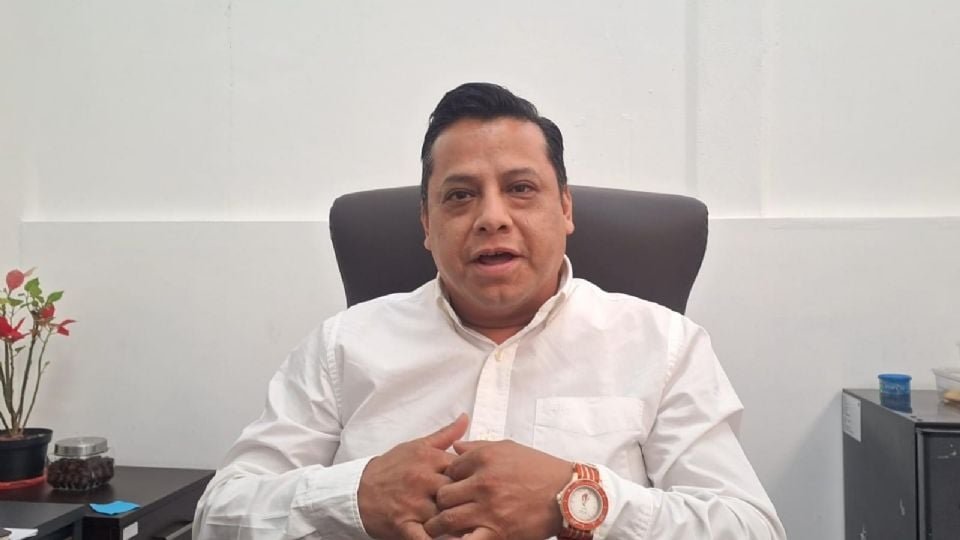
Playa del Carmen, Mexico — The municipal government has launched a process to organize and regularize street vending after detecting that only 2% of approximately 2,500 registered street vendors meet the vulnerability criteria established in regulations, according to Julián Lara, Director of Collections and Inspection.
Since the beginning of the current administration, the official explained, instructions were given to review and correct practices inherited from previous governments, in which permits were granted without adhering to regulations. The current regulations establish that permits for street vending should prioritize people in vulnerable situations—elderly adults, single mothers in precarious conditions, or people with disabilities—a condition that in practice was not respected, generating a crisis in the sector.
As a first step, the Collections and Inspection Directorate is working on creating a reliable registry, the basis on which a review commission will evaluate case by case to determine who complies with regulations and what strategy will be applied for the rest. Preliminary diagnosis indicates that 98% of street vendors are not in vulnerable situations, but rather operate as businesses with economic capacity to cover fair payment for use of public space.
Lara specified that the new approach distinguishes between those who require social support and those who engage in profitable commercial activity. In the first case, no fees are charged; in the second, the obligation to contribute under equitable conditions is established to avoid unfair competition against formal commerce, which does comply with taxes and permits.
The process includes review of business types and a relocation strategy, with emphasis on areas of greatest tourist and urban pressure, such as the tourist corridor, Fifth Avenue, Tenth Avenue, and the city’s central district. The intention is to organize the activity and prevent improper occupation of sidewalks, parks, bus stops, and other spaces that compromise pedestrian safety and urban image.
The director noted that establishments have been detected operating on public streets with restaurant characteristics, without meeting requirements or fitting vulnerability criteria, so efforts are being made to transition them to formal commerce. Municipal policy, he said, combines social sensitivity with application of regulations: recognizing the income many families obtain from informal commerce, but demanding order and compliance with regulations.
Three months into the program, authorities report progress in regularization. Most vendors have come forward to begin their procedures and are undergoing file review. However, those who ignored formal notifications—issued in advance—and operate without permits face direct confiscations, as this represents general application of regulations.
Confiscations, Lara clarified, have concentrated on cases of repeated omission, since it is not viable to apply regulations selectively. The priority, he emphasized, is to guarantee pedestrian safety and improve the image of the tourist zone, without allowing invasions or irregularities.
Finally, the official reiterated the invitation to vendors to approach the Commerce Directorate at the new Municipal Palace, Inspection area, where procedures are agile and provide legal certainty. Regularizing, he concluded, reduces risk of sanctions and allows progress toward orderly and equitable street commerce in Playa del Carmen.
Discover more from Riviera Maya News & Events
Subscribe to get the latest posts sent to your email.