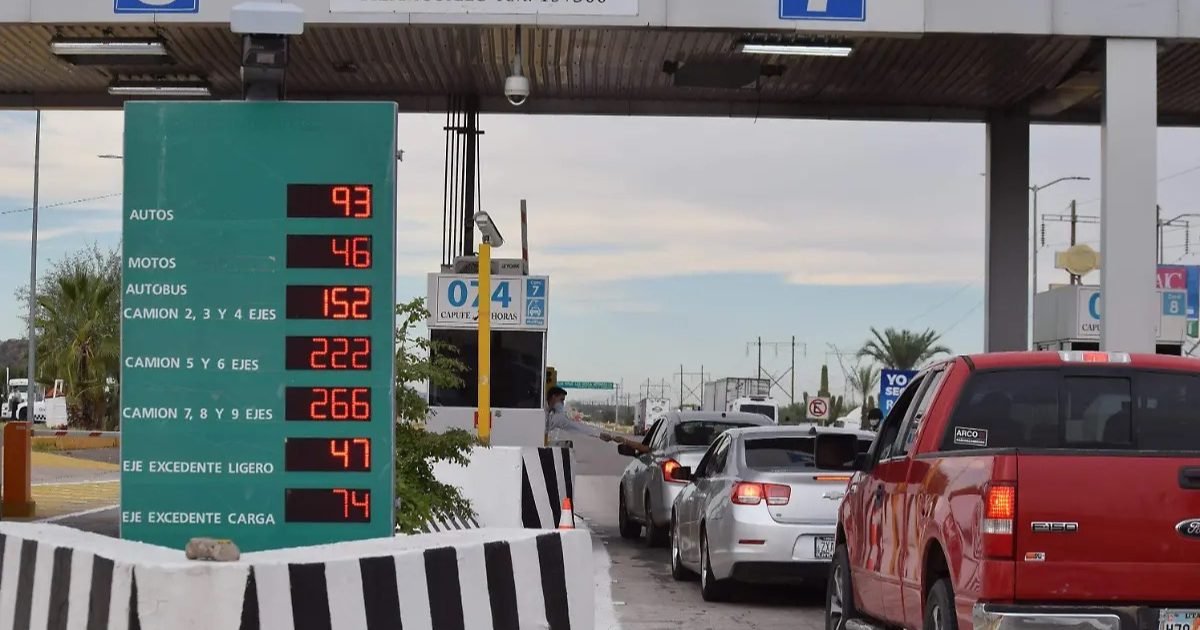
MEXICO CITY — Mexico is moving toward a largely cashless toll-road system, a change that could eventually affect drivers traveling from Playa del Carmen to Mérida and other destinations across the Yucatán Peninsula.
The federal government has said toll plazas will increasingly transition to electronic collection, with Infrastructure, Communications and Transportation Secretary Jesús Antonio Esteva Medina telling lawmakers in July that the country is moving toward a “zero cash” model. The broader goal is to modernize toll collection, reduce delays and improve traffic flow on Mexico’s network of more than 11,000 kilometers of toll roads.
However, one important clarification is needed: there is not yet a single confirmed date when every toll booth in Mexico will suddenly stop accepting cash. The transition is expected to be gradual, and Mexico’s toll-road network includes both federally operated roads and privately concessioned highways, which may not all change at exactly the same time. Earlier CAPUFE announcements said most toll plazas on the federal network would move toward electronic collection, while some cash lanes could remain during the transition. For local drivers, that distinction matters.
What This Means for the Drive From Playa del Carmen to Mérida
Drivers heading from Playa del Carmen to Mérida commonly use the toll-road connection toward El Tintal, joining the Mérida-Cancún toll highway, also known as the Autopista del Mayab. This route is especially popular because it avoids much of the slower traffic, towns and speed bumps found on the free roads.
The official SICT toll database currently lists the full Mérida-Cancún toll at 675 pesos for a passenger car, effective from April 13, 2026. The Kantunil-Valladolid portion costs 248 pesos for a car, while the full route is broken into different toll segments depending on where a driver enters and exits.
For someone driving from Playa del Carmen, the exact amount depends on the entry point and route taken. Drivers using the El Tintal connection toward Valladolid and Mérida do not necessarily pay the same total as someone driving the full Cancún-Mérida route.
The practical takeaway is simple: do not assume that cash will always be accepted indefinitely on this route. At present, reports and toll-road guides indicate that the Mérida-Cancún highway accepts electronic TAG payment, including widely used systems such as IAVE, PASE and TeleVía.
What Is a TAG?
A TAG is a small electronic device placed on or near a vehicle’s windshield. As the car passes through a compatible toll lane, an electronic reader identifies the device and charges the toll automatically.
Mexico has several commonly used systems:
IAVE is the electronic toll system associated with CAPUFE and can be used on hundreds of compatible toll plazas across Mexico. Users can load money onto the account and review transactions online.
PASE offers both fixed and portable TAG devices and allows users to recharge or link payment methods through its system.
TeleVía is another major electronic toll-payment provider used on highways around the country.
Because Mexico’s toll network includes different operators, interoperability matters. A TAG that works on one highway may not necessarily work everywhere, so frequent travelers should verify coverage for the roads they use most often.
What About Debit and Credit Cards?
Some reports about the national transition have said that debit and credit card terminals are being expanded at toll plazas. However, bank-card acceptance is not yet universal, and drivers should not assume they can pull up to any toll booth and pay directly with a Visa, Mastercard or foreign-issued card.
For Riviera Maya residents driving to Mérida and back, a compatible TAG is currently the safer long-term solution than depending on either cash or a bank card.
That is especially true because card terminals can fail due to poor connectivity, and electronic toll infrastructure remains uneven in some parts of Mexico. More than 60 percent of toll payments were still being made in cash as recently as 2026, according to reporting on the challenges facing the national transition.
Why Is Mexico Making the Change?
The government argues that electronic toll collection can reduce congestion by eliminating the time needed to handle cash, make change and issue paper receipts. The benefits are most obvious during holiday periods, when long lines can form at busy toll plazas.
Electronic collection can also reduce the amount of cash held at toll booths, improve transaction records and eventually allow for more advanced systems in which vehicles pass through without stopping at all.
Federal transportation rules already contemplate the gradual introduction of free-flow tolling, where vehicles are identified electronically rather than stopping at a traditional booth.
Advice for Local Drivers
For anyone who regularly drives between Playa del Carmen and Mérida, Valladolid, Chichén Itzá, Cancún or elsewhere on Mexico’s toll-road network, this would be a good time to consider getting a TAG. Do not wait until the day you are standing at a toll plaza with no accepted form of payment.
Before a trip, make sure your device is active, confirm that it is compatible with the highway you plan to use and check that there is sufficient balance or a valid linked payment method.
For now, cash has not disappeared completely from Mexico’s toll roads. But the direction is clear: electronic toll collection is expanding, and drivers who use the toll roads regularly will increasingly need to be prepared for a cashless system.
More Lifestyle
- Hundreds of Riders Expected for Tulum’s Fourth Federated Horseback Ride
- Quintana Roo Plans Two Wastewater Plants and Two Aqueducts for Cancún and Playa del Carmen
- Playa del Carmen Ranks Second in HIV Cases in Quintana Roo, Official Says
- Cancún Taco Festival Aims to Revive Local Economy in Low Season
- Screwworm Cases Detected in Two Dogs and a Horse in Tulum