PLAYA DEL CARMEN, Quintana Roo — Playa del Carmen’s seasonal bull shark diving activity is moving closer to receiving a geographic indication, a legal distinction more commonly associated with regional products such as foods, beverages and artisan goods.
The proposal, formally titled “Tiburón Toro de Playa del Carmen, Quintana Roo,” was submitted to the Mexican Institute of Industrial Property, or IMPI, by the Quintana Roo government through Economic Development Secretary Paul Michell Carrillo Cáceres. IMPI published the application data in the Diario Oficial de la Federación in late May, opening the required legal review and opposition period.
The initiative is unusual because it does not seek to protect a product made from an animal. Instead, state officials say the goal is to recognize and protect a nature-based tourism activity built around observing living bull sharks in their natural habitat. Governor Mara Lezama described it as a first-of-its-kind effort in Mexico and internationally, intended to promote sustainable use through conservation rather than extraction.
If approved, the designation would recognize Playa del Carmen’s bull shark diving as a distinct activity tied to a specific place, season, natural conditions and operating protocols.
A Defined Shark Zone Off Playa del Carmen
The proposed geographic indication is linked to the Public Use Bull Shark Subzone of the Mexican Caribbean Biosphere Reserve, a 10.33-hectare polygon off the coast of Playa del Carmen. The federal publication lists the approximate area between 20°36′ and 20°39′ north latitude and 87°04′ and 87°06′ west longitude.
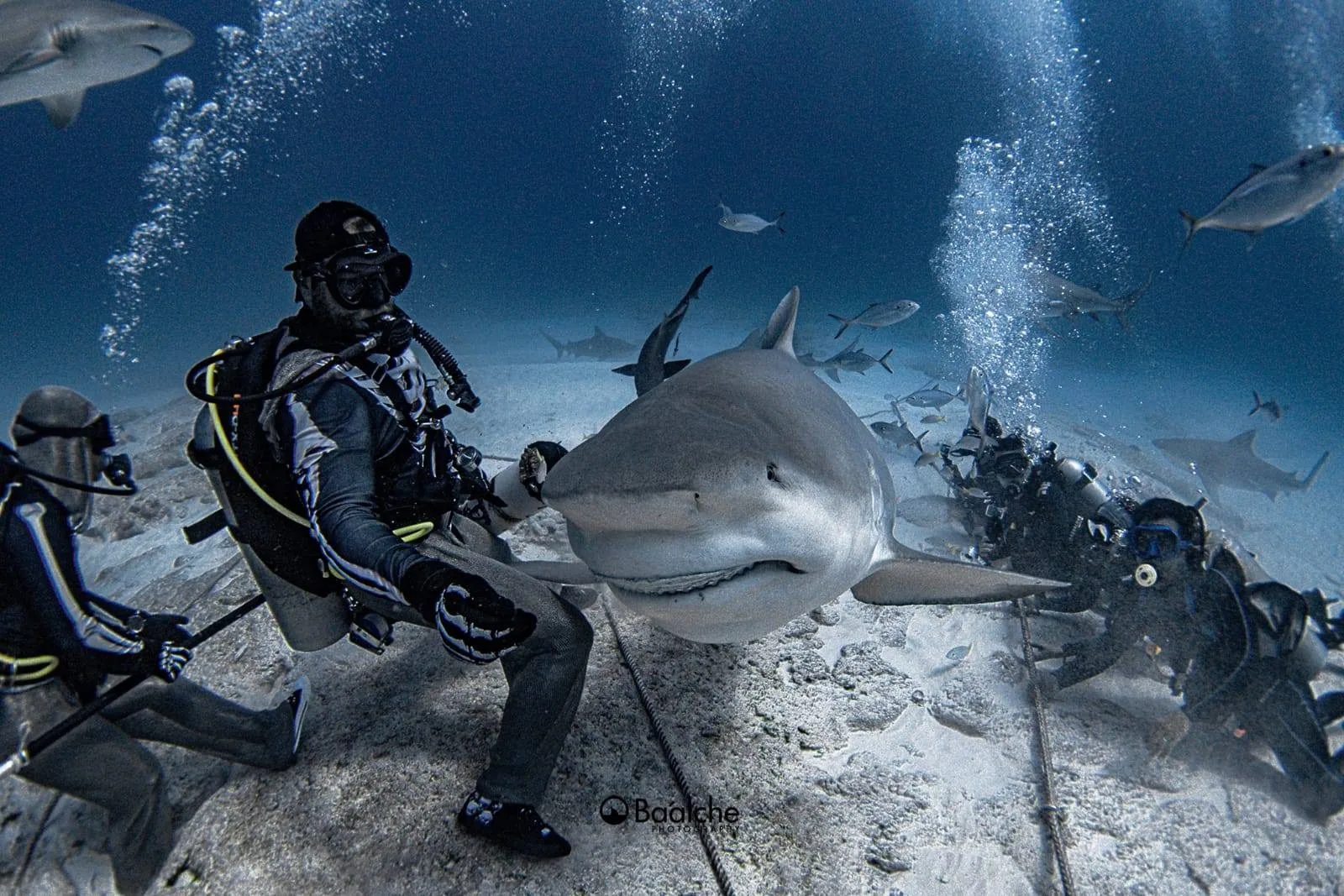
According to the application summary, the activity takes place seasonally, generally between November 1 and March 31, when female bull sharks are observed off Playa del Carmen. The document describes two authorized forms of activity: observation, when sharks appear naturally in the public-use zone, and attraction, in which specialized divers use a controlled amount of bait as an olfactory attractant under established protocols.
That distinction is important because bull shark diving in Playa del Carmen has been both celebrated and debated. For many divers and conservation advocates, it is a high-value wildlife experience that gives living sharks economic importance. For others, especially critics of baited shark encounters, the activity requires strict oversight to ensure tourism does not alter animal behavior or create unnecessary risk.
The geographic indication proposal attempts to place that activity inside a formal framework backed by local operators, researchers, fishermen and government agencies.
Five Months of Work With Local Sectors
Cecilia Gutiérrez, project officer with MarAlliance Mexico, said the proposal has entered its final stage after roughly five months of work among federal, state and local authorities, permit holders and fishermen. The application has already been submitted, and working groups are now refining the final details of the proposal.
Gutiérrez said Playa del Carmen’s natural conditions make the experience different from other shark-diving destinations in the Caribbean and elsewhere. A geographic indication would formally recognize the activity’s connection to place while reinforcing good practices under protocols supported by environmental authorities and the local community.
MarAlliance identifies Gutiérrez as a project officer who has worked directly on regulating bull shark diving in Playa del Carmen and on developing public-policy tools within the Mexican Caribbean Biosphere Reserve.
Research Built on Photo Identification
A key part of the conservation argument is that bull shark tourism has helped generate research. MarAlliance has documented the annual presence of female bull sharks off Playa del Carmen between November and March and describes the site as a place where divers, fishermen, authorities, scientists and the community collaborate to better understand the aggregation.
Through non-invasive photo identification, researchers and participating photographers analyze scars, fin shapes, pigmentation and other visible marks to identify individual sharks. MarAlliance reported that over a five-year period, the local community identified around 50 female bull sharks using more than 10,000 donated photographs from dives in the bull shark public-use zone.
The latest local report places the current photo-identified number at 42 individual bull sharks returning to Playa del Carmen waters.
Those numbers are not just trivia for divers. Individual identification can help researchers understand site fidelity, seasonality, population structure and whether the same sharks return year after year. That information can then support management decisions, including how many operators should be authorized, where dives should occur and what protocols are needed.
Conservation and Economic Value
The bull shark, Carcharhinus leucas, is listed as Vulnerable on the IUCN Red List, with global population concerns tied largely to fishing pressure and the species’ use of coastal and estuarine habitats.
State officials have framed the geographic indication as a way to shift the value of the bull shark from extractive use toward tourism and conservation. In other words, the shark is worth more alive as part of a regulated wildlife encounter than dead as a fishery product.
That approach also aligns with the municipal government’s growing public messaging around the species. Playa del Carmen recently announced the second edition of Tiburón Toro Fest, scheduled for July 25 at the Sayab Planetarium, with workshops, conservation exhibits, expert panels and family activities designed to reduce myths about sharks and promote marine conservation.
At that event presentation, MarAlliance Executive Director Rachel Graham described Playa del Carmen as one of the world’s important sites for bull shark research and noted that shark encounter tourism generates more than $500 million annually worldwide when conducted under sustainability criteria.
What Happens Next
IMPI’s publication does not mean the geographic indication has already been granted. The federal notice states that publication of the application does not prejudge whether the request will be approved or denied. It also opens a two-month period for interested third parties to submit objections or observations.
If the designation is approved, Playa del Carmen would have a formal legal distinction tying its bull shark diving activity to a defined marine area, season and set of practices. That could help promote the destination internationally, but it would also raise expectations for enforcement.
For the designation to have real meaning, operators, authorities and the community would need to ensure that the activity remains regulated, transparent and focused on conservation. That includes respecting authorized zones, limiting impacts on the animals, maintaining safety standards for divers and continuing research that shows whether the aggregation remains healthy.
For Playa del Carmen, the proposal is more than a tourism label. It is an attempt to define the bull shark not as a threat, not as a fishing resource and not simply as a photo opportunity, but as part of the city’s natural identity and marine economy.
If approved, the geographic indication would make that relationship official.
More Tourism
- Mexican Caribbean Destinations and Resorts Win Across 2026 World Travel Awards
- No GPS, No Renewal: Quintana Roo Taxi Rule Explained
- Why a Councilman Wants Tulum Out of the Airport’s Name
- US Lifts Limits on Flights From AIFA and AICM to US Cities
- Leaks Flood Cancún Airport Terminal 2 as Heavy Rain Soaks Check-In Area
More Playa del Carmen
- Nine Suspected Gang Members Arrested in Two Playa del Carmen Raids
- Juan Arena Sworn In as Puerto Aventuras Mayor After Predecessor’s Extortion Arrest
- Developers Seek Semarnat Approval for 16.45-Hectare Residential Subdivision at Punta Maroma
- Playa del Carmen to Review Legal Status of Chen Zubul Property
- Playa del Carmen Hosts Second National Firefighters Congress With 750-Plus Participants