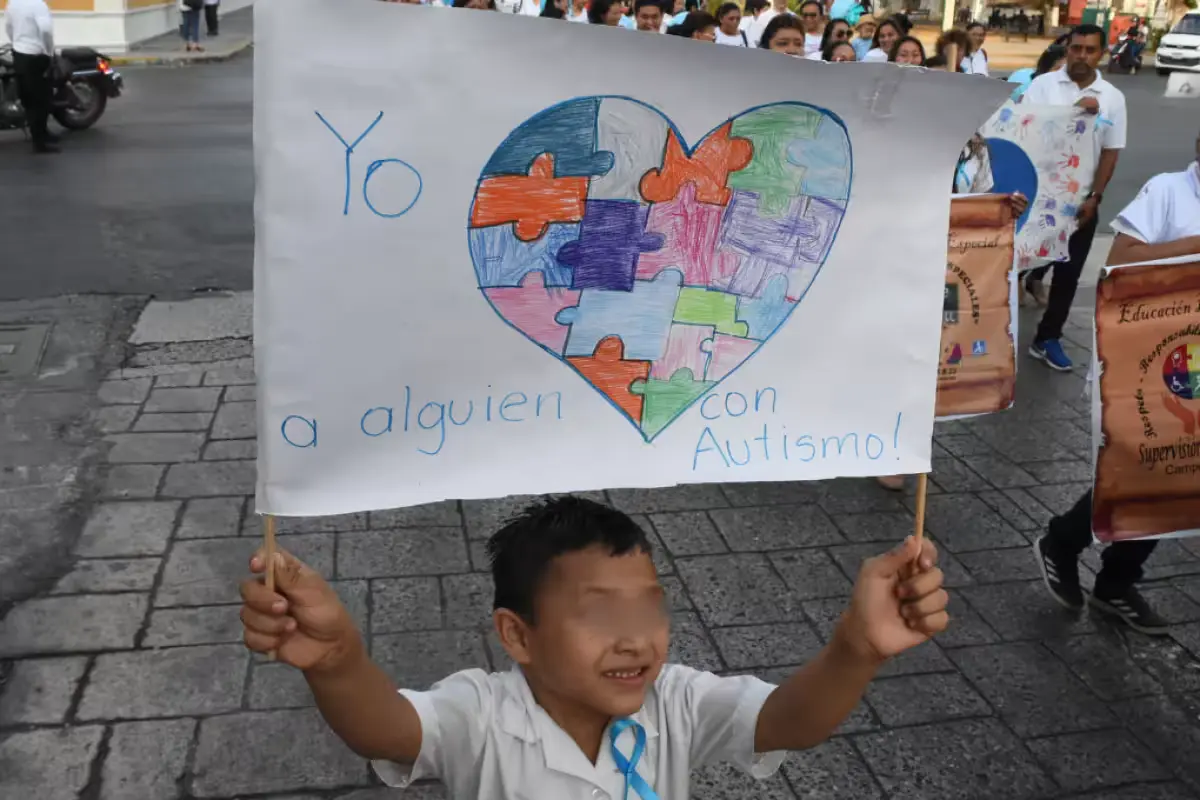
Merida, Yucatan — Public and private schools across Yucatan must now ensure that students on the autism spectrum have full access, enrollment and inclusion, under a state law that took effect Aug. 6 as the new school year began.
The Law for the Attention, Protection and Inclusion of Autistic Persons of the State of Yucatan prohibits schools from denying entry or conditioning enrollment of autistic children and adolescents. It also bars any form of discrimination, aggression or exclusion within the school environment.
Autism spectrum disorder is a neurodevelopmental condition that affects communication, social interaction, behavior and the processing of sensory stimuli. Because symptoms and needs vary widely, the law requires schools to provide individualized supports — some students need constant assistance, while others function more independently and require specific environmental adjustments.
Under the law, the state government, through the Yucatan Department of Education (Segey), must provide free, appropriate public special education for autistic students and promote training for teachers and administrative staff at regular schools where they are enrolled.
School administrators are required to eliminate barriers to learning and create inclusive environments with reasonable adjustments tailored to each student’s abilities and potential. Official supervision during the back-to-school period is expected to verify that schools have the necessary conditions in place.
The law also calls for early detection starting in preschool education, so that possible cases of autism are identified and referred for timely diagnosis and care. It expressly forbids public or private schools from tolerating mockery, aggression or behavior by staff or students that undermines an autistic student’s dignity.
The State Center for Autism will be responsible for promoting training of education personnel and developing action protocols based on human rights and gender perspectives.
More Government
- Mexico’s Lower House Approves Single-Nationality Requirement for Presidency and Governorships
- More Than 200 Children Evacuated From Chetumal Daycare After Electrical Fault
- US Expands Visa Restrictions Targeting Birth Tourism
- Mexico’s Supreme Court Blocks Telmex Bid for Automatic Pay TV Access
- Mexico and EU Bring Modernized Global Agreement to Congress as Senate Ratification Looms