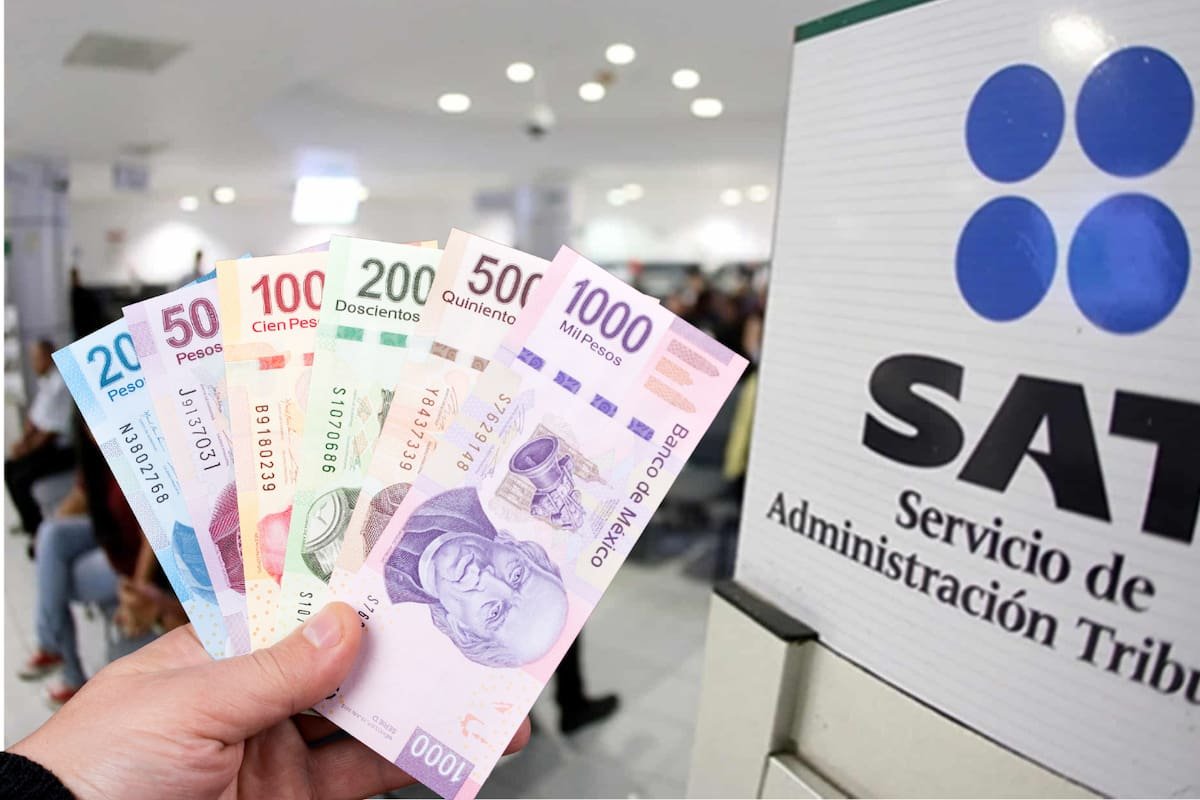
Mexico City — The Servicio de Administración Tributaria (SAT) has reiterated that cash deposits exceeding MXN 15,000 per month will trigger mandatory reporting by banking institutions, as part of its efforts to strengthen fiscal transparency and prevent undeclared financial activity.
Promoting Fiscal Transparency
The SAT emphasises that the aim of this control measure is not to penalise account-holders arbitrarily, but to ensure that the origin of funds corresponds to tax-declared income, while deterring undeclared operations, money-laundering and tax evasion. “The limit on cash deposits is directly related to fiscal transparency and the need to guarantee that all taxpayers correctly declare their income to the tax authority,” stated the agency in its public notice.
To frame this within the legal context, the measure is enabled by the Ley del Impuesto sobre la Renta (ISR) and the annual Resolución Miscelánea Fiscal, under which banks are obliged to report deposits in cash that exceed a monthly threshold—in this case, MXN 15,000.
The Threshold and Its Effect
Under the current regime, once a client deposits more than MXN 15,000 in cash within a single month, the institution must notify the SAT of that transaction. Those notifications do not automatically entail a tax charge. According to multiple analyses, the SAT does not currently impose an automatic surcharge of 3 % on the excess amount.
For example: if an individual deposits MXN 26,000 in cash during a month, the excess over the MXN 15,000 threshold (MXN 11,000) will be reported. But unless the SAT finds inconsistencies between the declared income and the deposit, no automatic tax levy occurs under the current rules.
Reporting Obligations and Financial Surveillance
Banks are obligated under rule 3.5.14 of the Resolución Miscelánea and Article 55 of the ISR to inform the SAT of deposits in cash exceeding the threshold. The obligation includes both single deposits and multiple deposits within the same month that cumulatively exceed the threshold. The move is part of the broader monitoring of cash flows, which are harder to trace and more frequently used to conceal undeclared income.
Sanctions for Non-compliance
The SAT has warned that while there is no new automatic tax on excess cash deposits, failing to justify large cash flows that do not match income declarations may lead to civil or criminal audits. In such cases the individual may be required to pay the underlying tax (ISR), interest and fines for omitted income.
Practical Guidance for Taxpayers
To avoid triggering an audit or subsequent sanctions, taxpayers are advised to:
- Avoid making cash deposits over MXN 15,000 in a month unless they are fully justified and documented.
- Use electronic methods (SPEI, TEF) for large transactions because such transfers are traceable and not subject to the deposit-report requirement.
- Retain receipts, invoices, and other documentation that validate the origin of funds.
- Reconcile account statements with declared income and review any anomalies with a tax advisor.
A Measure of Control and Prevention
Through this routine reporting mechanism, the SAT seeks to reinforce oversight of cash flows and disincentivise the circulation of unreported funds. While the 3 % tax on deposits is a relic of the former IDE-tax system (which was repealed in 2014), the current framework focuses on information-gathering and selective audits rather than blanket charges.
“Maintaining a transparent record of income is essential for the country’s economic stability and confidence in the tax system,” officials say. By aligning financial activity with tax declarations, the SAT hopes to build a more equitable fiscal system with stronger compliance and less hidden income.
Discover more from Riviera Maya News & Events
Subscribe to get the latest posts sent to your email.