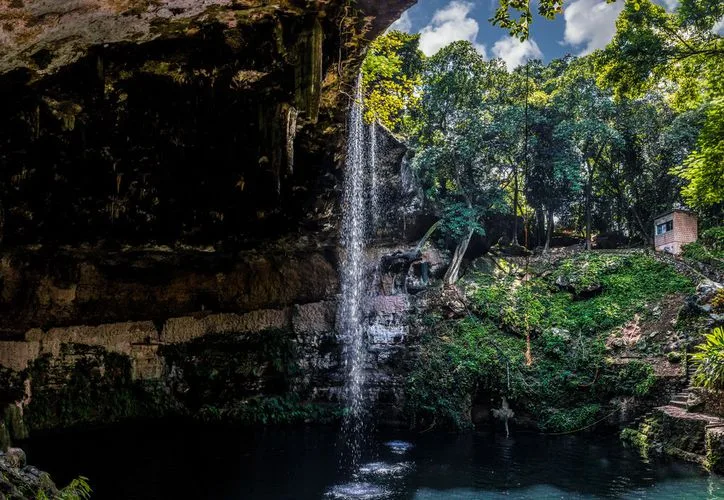
Cancún, Quintana Roo — A project to establish a new protected area in Quintana Roo, designed to shield the region’s extensive system of cenotes and underground rivers from pollution, will enter a public consultation phase in June. This step is essential for the official decree of the protected zone, an initiative described as an innovative global effort to safeguard three million hectares of subterranean waterways.
According to Maricarmen García Rivas, Director of Conservation for the National Commission of Natural Protected Areas (Conanp), the project aims to comprehensively protect a unique cave system that is vital for water supply and maintaining the environmental balance of the entire region.
She detailed that the decree is not intended to halt tourism or real estate development but to regulate and protect the most vulnerable parts of the aquifer. The management plan will include core areas of strict protection alongside zones where certain uses are permitted under more rigorous guidelines.
García Rivas emphasized the critical importance of maintaining good water quality. The goal is to preserve the karst system while also protecting urban developments from potential structural collapses, particularly in areas where construction may be unsuitable.
She explained that one of the major issues prompting this project is the poor management of wastewater and the recurring failure to comply with regulation NOM-001, which requires advanced treatment before any discharge into the subsurface.
“I have been a diver and cave diver for over 20 years, and we have tried to protect these cave and underground river sites,” García Rivas said. “Later, with the Basin Council, we managed to change the NOM-001 regulation for wastewater treatment from secondary to tertiary treatment, meaning removing nitrogen and phosphorus, because Caribbean waters are sterile. What we have had for years is enrichment or eutrophication; this has led to more algae than corals, which ultimately prevents reef restoration.”
Although the current regulation has required tertiary treatment for years, its lack of enforcement has impacted the aquifer. Therefore, the new protected area will seek to work in coordination with water authorities to oversee concessions, permits, and projects, preventing activities that could damage the integrity of the caves.
“The entire Yucatan Peninsula is an alkaline system of underground rivers and caves that should be protected,” the specialist noted. “But it is important to say that creating a protected area does not mean they will take your land; it is a benefit for everyone: to protect what we have.”
The project is currently in the final stage of technical development, where scientific information is being compiled ahead of the public consultation in June. The official decree is expected to be published in the second half of the year.
The initiative has been developed by divers, communal landowners, hoteliers, and local communities. If established, it would mark a significant step for Mexico in environmental conservation, creating one of the world’s most ambitious and extensive underground protected areas on the Yucatan Peninsula.
The Project
Focus: The project focuses exclusively on the subsurface, marking a milestone by protecting the “Great Maya Aquifer” and systems like Sac-Actun and Ox Bel Ha.
Objectives: To regulate real estate development and protect water quality, biodiversity, and paleontological findings.
Timeline: The preliminary justification study will conclude in March 2026, followed by the public consultation and the final decree.
Discover more from Riviera Maya News & Events
Subscribe to get the latest posts sent to your email.