Mexico City — The Mexican government has filed a formal complaint with the United States over the Drug Enforcement Administration’s decision to open channels for receiving reports on members of Mexican cartels, officials allegedly linked to organized crime and financial operators involved in money laundering.
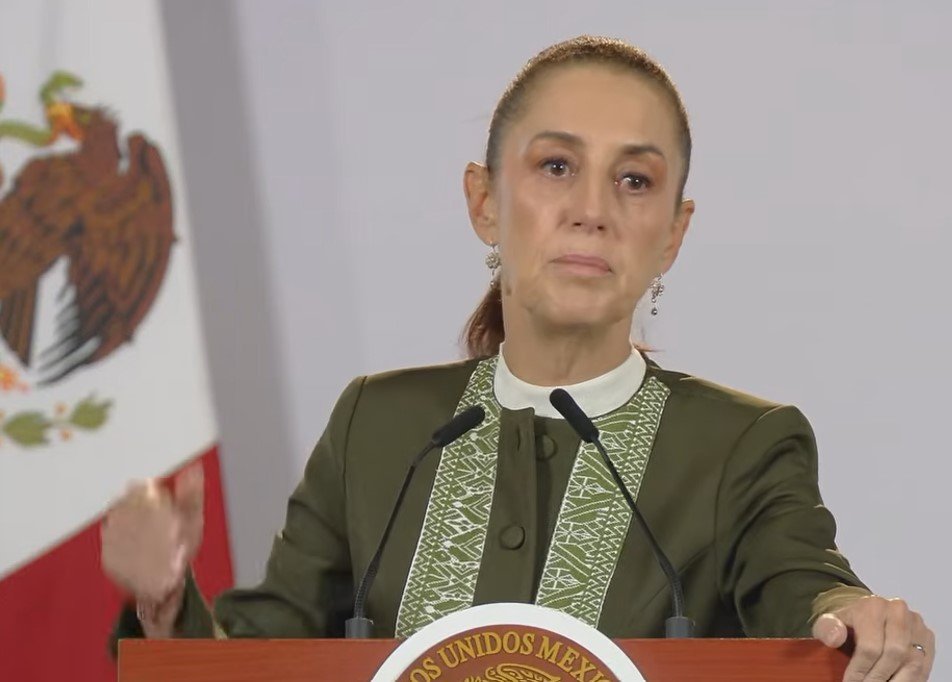
President Claudia Sheinbaum said Friday that the Foreign Ministry contacted US Ambassador to Mexico Ronald Johnson to express the government’s displeasure with the initiative announced by the anti-drug agency. She said the ambassador responded that he would review the matter.
Sheinbaum insisted that her government will maintain bilateral cooperation on security but rejected actions she considers contrary to national sovereignty.
From public criticism to diplomatic protest
The formal complaint came a day after the president described the opening of the reporting channels announced by DEA Administrator Terry Cole as an act of interference.
On Wednesday, Nov. 25, Cole called on Mexican citizens to provide anonymous and confidential information about members and collaborators of criminal organizations, government officials allegedly providing them support, and people involved in money-laundering operations.
The initiative, initially focused on Sinaloa and Jalisco, allows information to be submitted via WhatsApp, Signal, Threema and email.
To publicize the call, the DEA administrator tagged several Mexican journalists and media outlets on social media.
While US agencies have previously used citizen reporting mechanisms to locate fugitive drug traffickers, a central aspect of this call is its explicit emphasis on alleged government and financial protection networks for cartels.
Sheinbaum demands US investigate corruption and drug trafficking
The president reiterated that US authorities must assume their responsibility in combating drug trafficking, particularly regarding criminal organizations operating within their territory, distribution networks, drug consumption and the destination of money generated by these activities.
Since Thursday, Sheinbaum has questioned what the US government’s reaction would be if Mexican authorities set up a similar mechanism to receive reports about corrupt officials in the United States.
“It is clearly a matter of interference,” she said at the time.
The president also referred to an Associated Press investigation that documented operations in which DEA agents allowed large quantities of counterfeit fentanyl pills to circulate while investigating drug trafficking networks on US soil. Sheinbaum used that investigation to question the agency’s conduct and call for greater attention to problems associated with drug trafficking on the other side of the border.
Security Cabinet rejects unilateral actions
Mexico’s Security Cabinet also rejected the DEA initiative, arguing that the country has institutions empowered to receive reports, investigate crimes, combat corruption and administer justice.
In its statement, the cabinet reiterated that international cooperation must be subject to respect for sovereignty and territorial integrity, shared and differentiated responsibility, mutual trust and the absence of subordination.
The government’s position contrasts with that of the US agency, whose director maintains that the reporting mechanisms seek information to identify criminal structures, financial networks and possible links between drug trafficking and public officials.
Government corruption at the center of a new bilateral controversy
The diplomatic protest comes amid growing differences between Mexico and the United States over mechanisms to combat criminal organizations and their alleged links to government officials.
The DEA’s decision to receive information directly from Mexican citizens opens a new debate about the scope of bilateral cooperation, particularly when reports involve public officials who may be connected to organized crime.
On one hand, the Mexican government maintains that its own institutions are responsible for investigating and punishing crimes committed within national territory. On the other, US authorities seek to expand their sources of information to investigate criminal organizations whose activities affect both countries.
The controversy also raises questions about the effectiveness of national reporting mechanisms, the protection of informants and the capacity of Mexican institutions to investigate possible corruption networks without political interference.
The opening of these channels, however, does not in itself constitute a formal accusation against specific officials nor does it establish the existence of new cases of government corruption.
More Politics
- Former Treasurer Kira Iris San Wins Partial Injunction in Playa del Carmen Audit Case
- Former Solidaridad Mayor Laura Beristain Joins Local Party RSPQ
- Mexico’s Security Cabinet Rebukes DEA Over WhatsApp Tip Line, Says ‘Mexico Does Not Accept Interference’
- Mexico Escapes Trump’s New Tariffs as US Keeps Preferential Trade Treatment
- Feminist Groups March in Cancún, Denounce Government Inaction on Violence Against Women