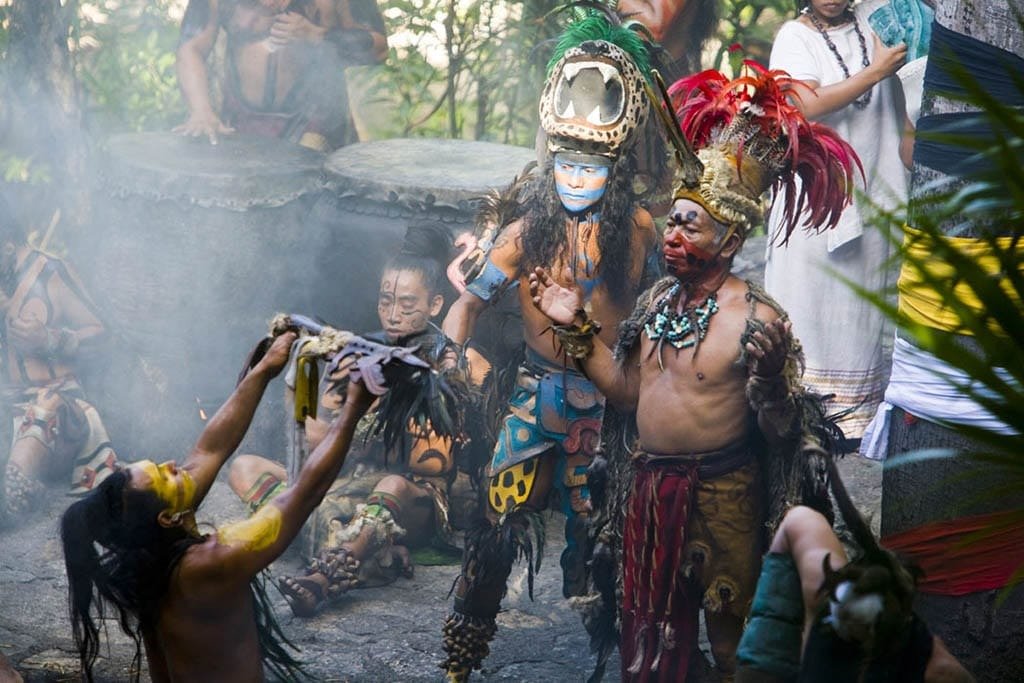
Playa del Carmen, Quintana Roo — Mexico’s Supreme Court has postponed a landmark decision on whether tourism giant Xcaret can legally use Maya cultural symbols in its theme parks, leaving both the company and indigenous communities in a state of legal limbo.
The delay represents a critical juncture in determining where cultural promotion ends and commercial appropriation begins. For Xcaret, the postponement offers temporary relief; for Maya communities seeking protection of their intellectual heritage, it represents another delay in their quest for justice against a business model that has capitalized on indigenous identity for decades.
Xcaret maintains it operates within the “existing legal framework,” but critics point to historical legal gaps that have allowed entertainment industries to extract symbols, rituals, and iconography from indigenous peoples without equitable compensation. While the company says it will make necessary adjustments after the court’s ruling, its current strategy appears focused on damage control, framing its activities as “cultural promotion” rather than what critics call one of Mexico’s most lucrative marketing strategies.
In an attempt to validate its position, Xcaret has sought recognition from the Gran Consejo Maya, claiming to have reached a “conciliatory agreement” with the organization. However, activists and academics remain skeptical, arguing such agreements often fragment community representation and serve as “social licenses” to avoid more serious sanctions. The dialogue occurs under an evident power imbalance, with a multi-million dollar corporation negotiating terms for using a millennial heritage that belongs to an entire people, not just one council.
The company’s argument that it has promoted regional culture for 30 years obscures an economic reality: while Xcaret has grown into a global tourism giant using Maya names and aesthetics, the communities that originated these elements face deep social inequalities. The Supreme Court’s eventual ruling will set a precedent for collective intellectual property rights, challenging the notion that indigenous folklore is a free resource available for private enrichment.
The court’s postponement prolongs uncertainty affecting the cultural sovereignty of Quintana Roo. A judicial decision requiring modification of Maya cultural representation could force Xcaret to fundamentally rethink its business model. What’s at stake is not just a logo or park aesthetics, but the dignity of a people fighting to stop being tourist commodities and regain control over their historical narrative.
Discover more from Riviera Maya News & Events
Subscribe to get the latest posts sent to your email.