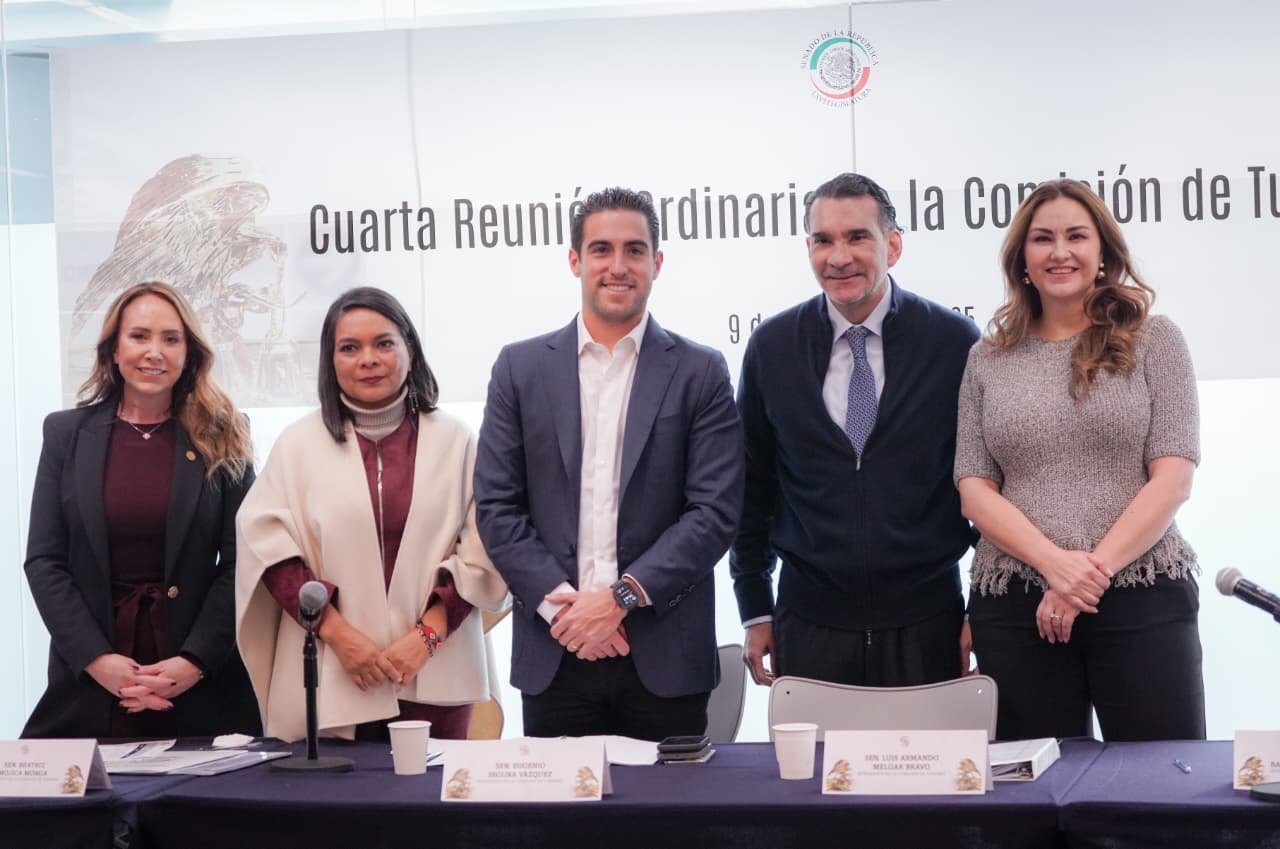
Mexico City — Senator Eugenio “Gino” Segura presided over the Tourism Committee during the session in which a measure was approved that aligns the law with the human right to a healthy environment by democratizing access to the 232 Natural Protected Areas and 98 million hectares of national territory. With this reform, the country’s beaches must be free, gratuitous, and accessible.
“We are replacing chaos with technical planning through the new National Beach Registry, a tool that for the first time will cross-reference municipal cadastres with the federal zone to provide definitive legal certainty. Where private property exists, it will be respected, but where there is no public road, access will be mandatory by law,” explained the senator.
The measure proposes reforms to establish that access to maritime beaches and the contiguous federal maritime-terrestrial zone will be free, gratuitous, and permanent for all people, without distinction of origin, nationality, or social condition. The imposition of charges, fees, or restrictions for entry is prohibited, except in cases justified by environmental protection, public safety, or national interest.
Likewise, it orders the creation of a National Beach Registry, based on the joint identification and validation of urban, semi-urban, and rural layouts, in accordance with Urban Development Programs, Ecological Zoning Programs, and Natural Protected Area Management Programs.
Municipalities will have the obligation to register beach accesses in their cadastres and Public Property Registries, guaranteeing their permanence and ensuring their recognition in processes of buying and selling, boundary rectification, and adjacencies.
Segura highlighted that this registry will also promote new tourist destinations in various states by making the free and gratuitous accesses to the country’s beaches transparent and mapped.
During his intervention, the senator recognized the joint work with the Secretary of Tourism of the Government of Mexico, Josefina Rodríguez; Governor Mara Lezama; Municipal President Diego Castañón; SEDENA; and the Mundo Maya Group. Thanks to this coordination, he indicated, the problem of the Jaguar Park in Tulum was resolved, where the three public beaches that had been left within a Natural Protected Area now have free and gratuitous access again.
The measure was approved unanimously by the senators of the Tourism Committee of the Senate of the Republic.
Finally, Gino Segura emphasized that, by 2030, it is projected that the tourism sector will sustain almost 8 million jobs, and that guaranteeing free access will allow economic spillover to reach local communities and not remain encapsulated in exclusive zones.
Discover more from Riviera Maya News & Events
Subscribe to get the latest posts sent to your email.