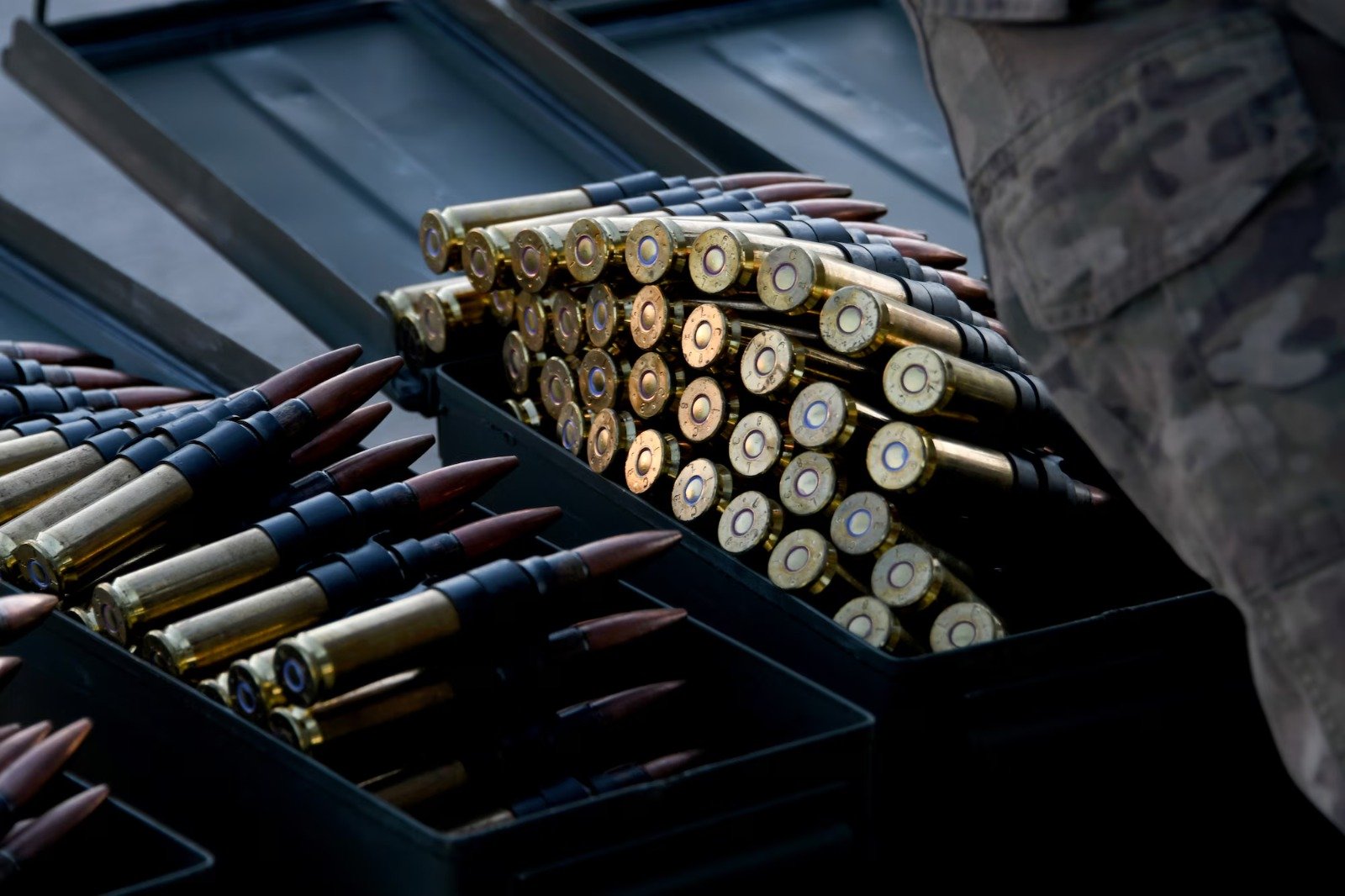
Mexico City — Mexican President Claudia Sheinbaum has called on the United States to strengthen controls on the production and trafficking of military-grade ammunition, following a New York Times report documenting how Mexican cartels are using .50 caliber rounds manufactured at a U.S. Army plant.
Speaking from the National Palace, Sheinbaum questioned whether Washington is doing enough to curb the flow of weapons. “Doesn’t it seem that there is a limited effort or very few actions regarding what the United States has said about arms control?” she asked during her daily press briefing.
She emphasized that the ammunition in question — .50 caliber cartridges produced at the Lake City Army Ammunition Plant near Kansas City — is designed for exclusive military use. “That weaponry is for exclusive military use, not for civilian shelves and certainly not for criminal hands,” she stated.
The president confirmed her administration is reviewing the report to open direct dialogue with U.S. officials and demand clear explanations about how high-power ammunition capable of piercing armor and downing helicopters is crossing the border. “We are reviewing the report to be able to speak with the government of the United States about this topic,” she said.
Trafficking Context
The issue of arms trafficking from the U.S. has long been cited as fueling violence in Mexico. The New York Times investigation revealed serious failures in the custody chain and export controls for ammunition produced under government contract.
The report referenced a November 2019 attack in Villa Unión, Coahuila, that left 25 dead and involved at least 45 .50 caliber shell casings marked with “L.C.” initials.
Since 2012, the U.S. Bureau of Alcohol, Tobacco, Firearms and Explosives has seized more than 40,000 cartridges of that caliber in border states, with one in three originating from Lake City. Between 2019 and 2024, another 36,000 .50 caliber bullets were confiscated at the U.S. southern border.
While each cartridge costs $3-4 in the U.S. and can be purchased legally, in Mexico they are traded as weapons of war. For victims, including the widow of a police officer killed in Michoacán, the message is clear: not enough has been done.
Sheinbaum did not specify dates or names of U.S. counterparts but made clear the issue will be a priority, reiterating Mexico’s position on shared responsibility: the bullets aren’t manufactured there, but they kill there.
Discover more from Riviera Maya News & Events
Subscribe to get the latest posts sent to your email.