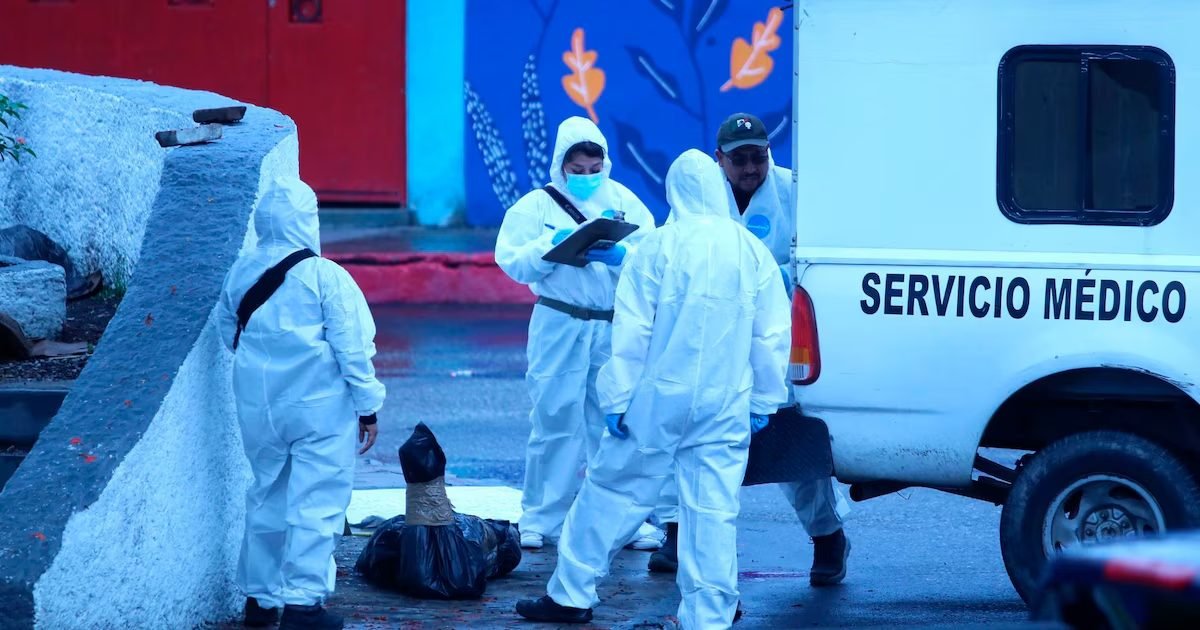
Between September 2016 and November 2025, Mexican authorities identified more than 34,000 unknown individuals in Forensic Medical Services (Semefos) facilities.
This achievement was made possible through the analysis of biometric data from the Electoral Registry of the National Electoral Institute (INE).
This progress represented 35% of the requests managed by various prosecutors’ offices and search commissions within the framework of the country’s disappearance crisis.
Body Identification Process
According to information published by El Sol de México, out of 98,703 requests received for biometric data cross-referencing, 34,612 yielded at least one useful record for identification processes.
This cooperation was supported by more than 40 agreements between the Institute, the National Search Commission (CNB), state commissions, the Attorney General’s Office (FGR), and state prosecutors’ offices.
The National Registry of Missing and Unlocated Persons indicates that, as of December 12, 2025, 133,555 people remain unlocated in Mexico.
The trend intensified after 2006 with the increase in violence associated with the federal security strategy better known as the “war on drugs.” According to El Sol de Zacatecas, the recent exchange of databases is not limited solely to the public sector.
Following reforms published in the Official Gazette of the Federation (DOF) this year, the General Law on Enforced Disappearance and the General Population Law enable the expansion of information cross-referencing, even with private entities.
Actions to Address the Situation
The Unique Identity Platform, created by decree in July 2025, will integrate federal and state records along with relevant data from the private sector, such as financial services, telecommunications, transportation, health, education, or employment records, when consultation is necessary for investigations such as searches or identifications.
The medium reported that this platform seeks to expedite the location of missing or unidentified persons.
Although access to biometrics facilitates searches, the INE warns that identification concludes only after other authorities contact family members or acquaintances to confirm whether the body corresponds to a person reported as missing.
Therefore, the Institute lacks precise information about how many of these findings result in full identifications, as that task falls to prosecutors’ offices and search commissions.
Despite the progress, there are delays: 23 states have not signed the necessary collaboration agreements, which limits national coverage, according to reports.
The same medium cites the Iberoamerican University, which promotes the development of artificial intelligence technologies applied to the identification of missing persons, such as tattoo analysis and facial recognition, tools that could be scaled up in 2026.
The agreements and interoperability arise from constitutional and legal obligations, which indicate that authorities must collaborate to search for and locate missing persons.
“The purpose of these agreements is to establish coordination and collaboration mechanisms between the signing parties so that (…) information cross-referencing is carried out using the INE’s identification systems to achieve the identification of unlocated persons or unknown persons containing fingerprints or biometrics susceptible to analysis,” according to El Sol de México.
Discover more from Riviera Maya News & Events
Subscribe to get the latest posts sent to your email.