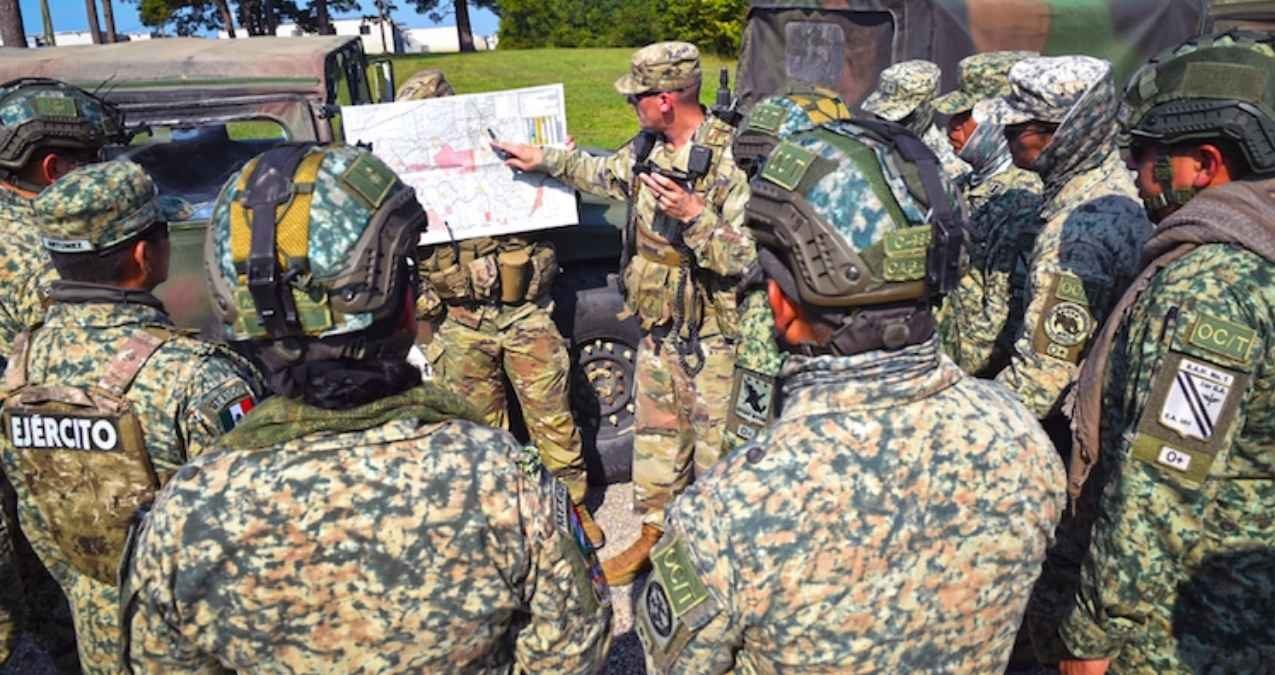
Temamatla, Mexico — With the 2026 FIFA World Cup approaching, the Mexican military is escalating its security preparations, including specialized counterterrorism training conducted by elite special forces units. The exercises are part of broader efforts to safeguard the international sporting event, even as experts warn of potential security risks within the country.
Elite Unit Trains for Hostage Scenarios
At the Army Special Forces base in Temamatla, southeast of Mexico City, a unit recently conducted a counterterrorism training course focused on rescuing hostages from a potential terrorist attack. The drill is part of the development of the elite group known as "Los Murciélagos" (The Bats).
The Associated Press observed the exercise, which began with a radio message alerting a unit of the Mexican Green Berets that the path was clear to begin a simulated hostage rescue in a mock village. A first group of three uniformed soldiers—equipped with bulletproof vests, helmets, and M4 rifles—initiated the advance, with the rest of the unit holding position.
After simulated gunfire and the deployment of a white smoke bomb, the 11-member unit moved through the streets to a building housing the mock hostage and captors. In a synchronized maneuver, a soldier threw a stun grenade, enabling the team to storm the building and successfully extract the hostage, who was then driven away in a pickup truck.
Acknowledged Risks Amid Preparations
While Mexico does not typically face large-scale terrorist attacks like its northern neighbor, experts assess that risks persist, particularly during an event of the World Cup's magnitude. When questioned on the topic at her morning press conference, Mexican President Claudia Sheinbaum stated that a terrorist attack during the sporting event was unlikely, but acknowledged that "any type of risk is present in all scenarios."
Security expert David Saucedo highlighted specific threats. He pointed to the events of February 22, when the Jalisco New Generation Cartel (CJNG) executed dozens of attacks against businesses and vehicles and blocked roads across much of the country. These actions were in retaliation for a military operation that resulted in the death of the cartel's leader, Nemesio Oseguera Cervantes, known as 'El Mencho'. The United States had offered a $15 million reward for information leading to his capture.
Saucedo identified the CJNG as a “source of terrorist attacks” that could carry out operations during the World Cup. He also cited another risk factor: “cells of Islamic fundamentalism,” which he stated “infiltrated the country some time ago in connection with the World Cup.”
The "Bats" and Plan Kukulkán
The "Los Murciélagos" unit, comprising approximately two thousand members, gained prominence following the February operation in Tapalpa, Jalisco, that resulted in Oseguera Cervantes's death. Speaking about the unit's demanding standards, a member who identified himself as Lieutenant Vega said, "earning the beret is no small feat." He added that remaining within the elite corps demands "physical, mental, and psychological efforts that put us to the test."
Mexican authorities formally presented their security plan for the World Cup this month. The tournament, to be held jointly for the first time by Mexico, the United States, and Canada between June and July 2026, will be secured under "Plan Kukulkán."
General Román Villalvazo, head of the Mexican coordination center for the World Cup, stated that approximately 100,000 members of military and police forces—federal and local—will participate in the operation. Plan Kukulkán encompasses specialized training for officials, planning and operational exercises, early warning systems, and security deployments at stadiums, airports, roads, lodging centers, as well as protection schemes for delegations and attendees.
Discover more from Riviera Maya News & Events
Subscribe to get the latest posts sent to your email.