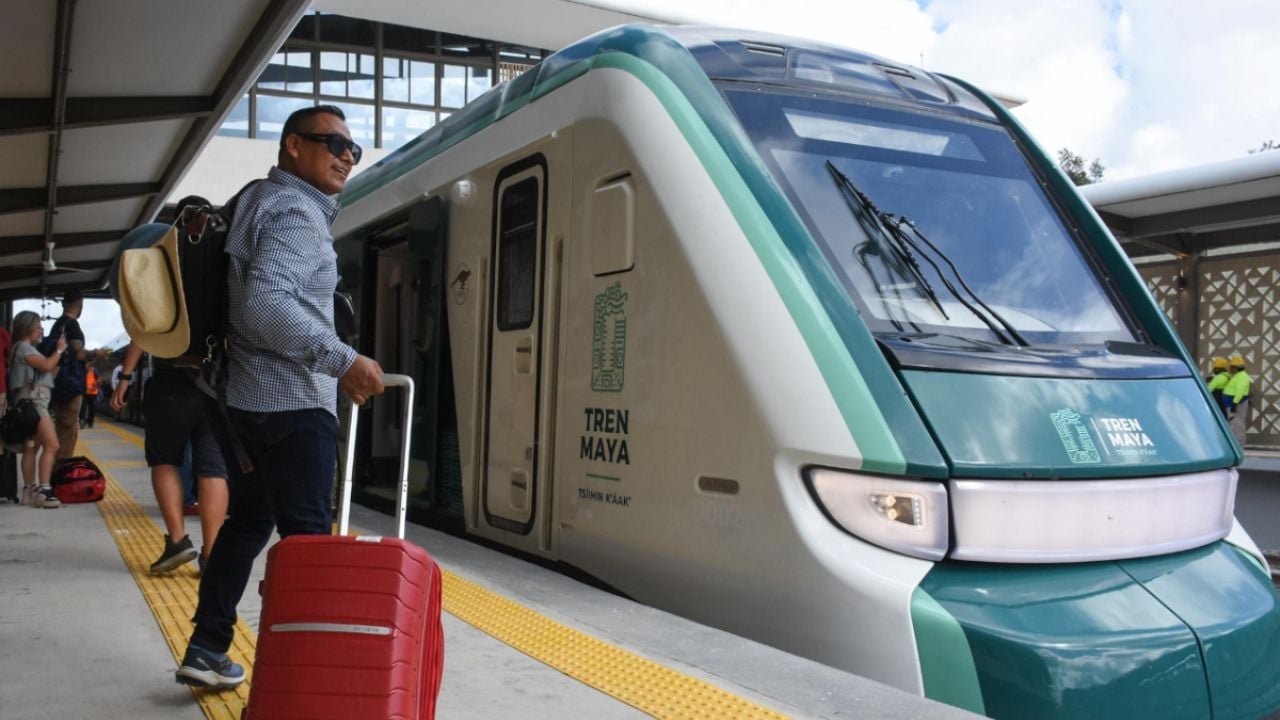
Quintana Roo, Mexico — The Maya Train has established itself as one of Mexico’s most attractive tourist routes, connecting archaeological and natural destinations across the country’s southeast region.
More than just a railway system, the Maya Train offers an integrated tourism experience that allows travelers to quickly and comfortably connect to some of Mexico’s most iconic destinations, passing through tropical jungles, Mayan communities, natural reserves, and historic cities.
With stations distributed across five southeastern states — Chiapas, Tabasco, Campeche, Yucatán, and Quintana Roo — this transportation system has become one of the most attractive routes for exploring the cultural heritage of Mayan civilization.
A Travel Experience That Begins With the Journey
Unlike other transportation systems, the Maya Train route is designed so the journey itself becomes part of the tourism experience.
The modern units feature panoramic windows that allow passengers to observe tropical jungle, cenotes, lagoons, and traditional villages, providing a different perspective of southeastern Mexico.
Among the journey’s attractions are:
- Panoramic routes through tropical jungle and natural reserves
- Observation of unique natural landscapes of the Yucatan Peninsula
- Access to important Mayan archaeological zones
- Connectivity between key tourism destinations in the southeast
This type of railway tourism allows visitors to experience Mayan culture from the journey itself, turning each station into a gateway to new experiences.
Archaeological Sites You Can Visit Thanks to the Maya Train
One of the Maya Train’s greatest benefits is its direct connectivity to some of the most important ceremonial centers of Mayan civilization, facilitating access to historical sites that previously required long travel times.
Among the most visited archaeological destinations are:
Palenque, Chiapas
The station near the Palenque Archaeological Zone allows travelers to enter the Chiapas jungle to discover one of the most important Mayan cities.
This archaeological site is famous for:
- The tomb of Mayan ruler Pakal the Great
- Its temples surrounded by tropical jungle
- Its monumental architecture and historical importance
Chichén Itzá, Yucatán
Another must-see destination is Chichén Itzá, considered one of the New Seven Wonders of the World and one of Mexico’s most visited archaeological sites.
Among its main attractions are:
- The Pyramid of Kukulkan
- The Great Ball Court
- The Mayan Observatory
- Its historical and cultural relevance in Mesoamerica
The Maya Train’s connectivity facilitates access to this archaeological zone for thousands of tourists each year.
Uxmal, Jewel of the Puuc Style
Located in the Uxmal Archaeological Zone, this Mayan city stands out for its elegant architecture and decorative complexes.
Among its most representative monuments are:
- The Pyramid of the Magician
- The Nuns’ Quadrangle
- The Governor’s Palace
Uxmal is considered one of the best-preserved Mayan cities in the southeast.
Tulum, Archaeology Facing the Caribbean
At the Tulum Archaeological Zone, Mayan history merges with the Caribbean Sea.
This site stands out for:
- Its location on a cliff facing the sea
- Its ceremonial temples
- The combination of archaeological heritage and natural landscape
Cobá, the Mayan City Hidden in the Jungle
The ancient city of the Cobá Archaeological Zone was one of the most important in the Mayan world.
Among its main attractions are:
- Ancient trade routes called sacbés
- Its extensive network of stone roads
- The Nohoch Mul pyramid, one of the tallest in the region
How to Buy Tickets to Travel on the Maya Train
For those who want to experience this tourism opportunity, Maya Train tickets can be purchased through the official reservation system.
Authorities recommend buying tickets in advance, especially during holiday seasons or weekends.
Available options for purchasing tickets:
- Official portal: www.trenmaya.gob.mx
- Schedule and route consultation
- Advance purchase to secure a spot
The system offers different travel classes designed for different types of tourists:
- Xiinbal: standard and comfortable service
- Janal: onboard gastronomic experience
- P’atal: long-distance travel with cabins
A Project That Boosts Tourism, Culture, and Local Economy
Beyond tourism, the Maya Train also aims to generate economic development in communities across southeastern Mexico.
Each station was designed to reflect the cultural identity of its region, promoting local community participation through the sale of crafts, traditional foods, and regional products.
Among the benefits this project promotes are:
- Sustainable tourism development
- Promotion of Mayan crafts and culture
- Job generation in local communities
- Conservation of natural and cultural heritage
The goal is for visitors not only to travel through the region but also to learn about its history, cuisine, and the cultural richness of its people.
The Maya Train Redefines Travel in the Southeast
With its growing connectivity and cultural focus, the Maya Train positions itself as one of Latin America’s most important tourism routes.
Today, traveling through southeastern Mexico means exploring Mayan cities, ancient jungles, cenotes, and living communities, all in the same journey.
For many visitors, the Maya Train represents the opportunity to discover Mexico’s history and biodiversity in a unique way, where each station becomes the beginning of a new adventure.
Discover more from Riviera Maya News & Events
Subscribe to get the latest posts sent to your email.