Chetumal, Quintana Roo — Artifacts recovered during construction of Mexico’s Maya Train are entering a new phase of study, with specialists analyzing thousands of pieces that offer fresh insights into the historical development of the country’s southeastern region.
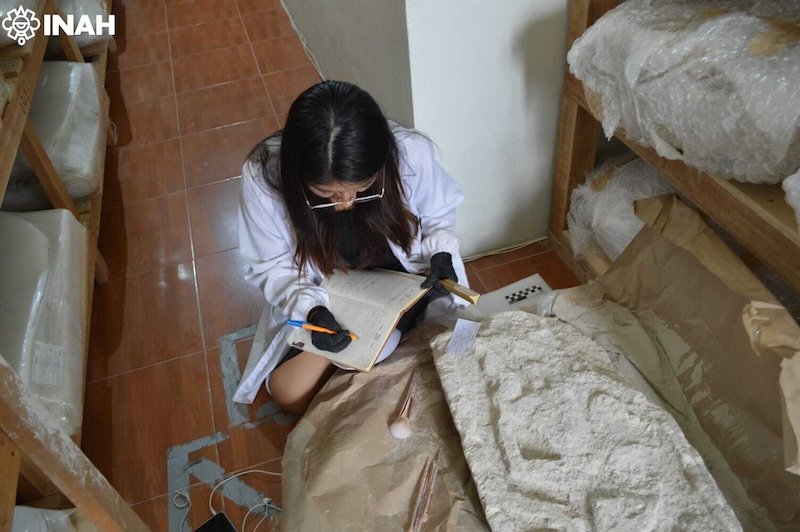
At the Museum of Maya Culture in Chetumal, experts from the National Institute of Anthropology and History (INAH) are classifying and examining objects spanning multiple eras. The Laboratory for Analysis of Historical and Miscellaneous Material from the Maya Train operates within INAH at the museum facility.
The collection includes pre-Hispanic stucco fragments, colonial-era domestic utensils, 19th-century glass containers, telegraph insulators, ammunition, weapons, and even 20th-century toys.
Two-Year Cataloging Effort
For nearly two years, a team led by restorer Kenia Monserrat Chávez Cruz and archaeologists Itzel Paola Hernández Hernández, Glenda Natalia Dena Muro, and Tadeo Martínez Nepomuceno has reviewed materials from all seven sections of the Maya Train route. Their initial work involved registering, inventorying, and describing each piece—whether complete or fragmented.
After completing that process, they began classifying objects by type, material, and time period. They’re now conducting detailed analysis to identify manufacturing techniques, constituent materials, and possible production sources, which helps reconstruct historical trade routes and social contexts.
Medicine Bottles Tell Story of Epidemics
Among discoveries from Section 6 near Felipe Carrillo Puerto are two amber bottles inscribed with “C.H. Wintersmith. LOUISVILLE. K.Y. U.S.A.” Researchers traced these to a Kentucky manufacturer of quinine-based anti-malarial tonic that circulated widely from the late 19th to early 20th centuries.
The presence of these containers coincides with periods when Quintana Roo experienced severe malaria outbreaks. Swampy conditions and tropical climate favored proliferation of the transmitting mosquito, identified in 1881 by Cuban scientist Carlos Finlay.
Diseases transmitted by this vector affected local populations amid poor sanitary conditions and armed conflicts related to the Caste War, contributing to elevated mortality rates in the region.
Coins Reflect Economic Changes
The inventory also includes coins of various denominations. Only one piece dates to 1894, minted during the Porfiriato era; the rest belong to the 20th century, with issues between 1920 and 1990.
Numismatic analysis shows the transition from gold and silver coins predominant since colonial times toward industrial metals like copper, bronze, brass, and cupronickel—a shift that consolidated after the Mexican Revolution and changes to monetary legislation.
Specialized Conservation Work
Beyond classification, the team measures and weighs each object. In some cases, they take sediment samples to identify original contents of containers or analyze corrosion products.
When necessary, they apply conservation treatments: cleaning metals, removing corrosion, reassembling glass fragments, and creating special packaging for delicate pieces like remains of Maya masks.
“Every fragment, no matter how small, provides information,” explained one researcher. At the Chetumal laboratory, material recovered during Maya Train construction is becoming a source of knowledge about daily life, trade networks, and historical processes that shaped southeastern Mexico.
Discover more from Riviera Maya News & Events
Subscribe to get the latest posts sent to your email.