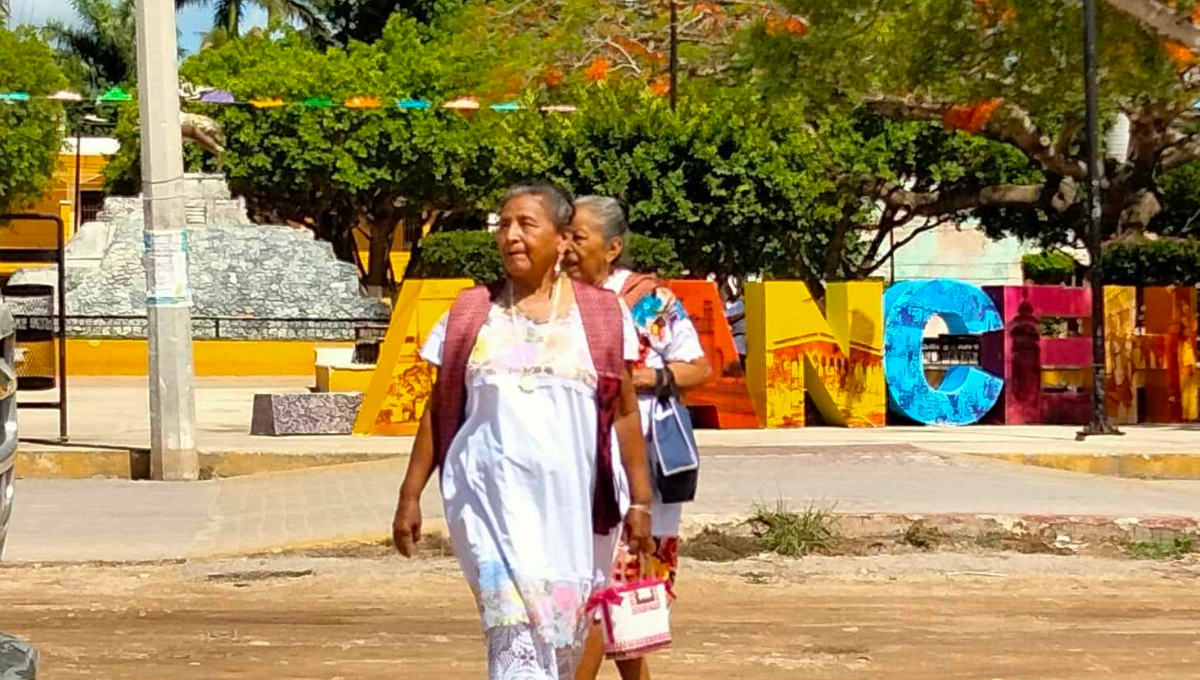
The Maya language remains one of the deepest signs of identity in Yucatán. It lives in surnames, town names, occupations, prayers, sayings, and the daily conversation of hundreds of thousands of people. However, when reviewing censuses, academic studies, and daily experience, two realities emerge that coexist with tension: the persistence of the language in numerous communities and, at the same time, a gradual but constant decline that worries linguists, teachers, and cultural defenders.
On the occasion of National Maya Culture Day, commemorated each December 21, official records confirm that Yucatán concentrates the largest population of maayat’aan speakers in the country, with more than half a million people using this indigenous language. This figure places the state as the main stronghold of the language in the Peninsula and nationally.
Nevertheless, when observing the proportion relative to the total population, the outlook is less encouraging. Academic studies and data from university institutions show that between 2000 and 2020, the percentage of Yucatecans who declared speaking Maya decreased steadily, going from just over one-third of the population to less than one-quarter. The decline reflects reduced intergenerational transmission and profound social transformations associated with urbanization, migration, and changes in the labor market.
Half a Million Maya Speakers
According to the National Institute of Statistics and Geography (Inegi), in Yucatán more than half a million people aged three and older speak an indigenous language, representing nearly one-quarter of the population in that age range. The age groups with the highest presence of speakers are concentrated between 35 and 44 years, with similar proportions between men and women, reinforcing the idea of a solid adult base but with signs of weakening in younger generations.
The same report indicates that a small but significant part of the population speaks only Maya, without functional command of Spanish. This condition exposes them to inclusion problems, especially in urban contexts where the presence of the language in public offices, hospitals, or services is limited, despite its demographic and cultural weight.
In territorial terms, the use of Maya is especially high in municipalities in the south and east of the state. Locations such as Tahdziú, Chikindzonot, Mayapán, Chacsinkín, and Tixcacalcupul record the highest percentages of speaking population, confirming the language’s vitality in communities with strong cultural roots and traditional social networks.
Beyond language, the Census also provides data on identity: a broad majority of the Yucatecan population identifies as indigenous, even among those who no longer speak Maya. Municipalities such as Teabo, Tixmehuac, and Chankom lead the list of population that assumes itself as native, evidencing that ethnic identity persists even when the language weakens.
Why Is Use Being Lost?
The causes of the decline do not respond to a single explanation. Migration to cities or outside the state, the concentration of jobs and services in spaces where Spanish predominates, and decades of monolingual schooling have displaced Maya from the formal sphere. To this are added cultural factors: for a long time, speaking Maya was associated with stigmas of poverty or backwardness, which led numerous families to stop transmitting it to their children as a social mobility strategy.
Recent research on sociolinguistic attitudes confirms that these prejudices have not completely disappeared and continue to influence the linguistic self-esteem of speakers. However, the language map also shows pockets of resistance and renewal.
In absolute numbers, municipalities such as Mérida, Valladolid, Chemax, and Tizimín concentrate large Maya-speaking communities. In the case of the capital, the language survives in popular neighborhoods and in a broad bilingual population that moves between the urban world and their communities of origin.
Contrasts in the Zones
In rural communities and ejidos, the language remains a central part of daily life: it is spoken at home, the market, work, and ceremonies. In contrast, in peri-urban areas and neighborhoods of medium-sized cities, it is observed that girls, boys, and young people no longer master Maya with the same fluency as their grandparents, due to the hegemony of Spanish in school and leisure spaces.
Specialists have documented that family transmission, the fundamental pillar for linguistic continuity, weakens when mothers and fathers prioritize Spanish as a tool for social advancement, even when they maintain an emotional bond with the language.
Current Efforts
Faced with this scenario, different institutions have intensified revitalization actions. The Yucatán Secretariat of Education promotes mother tongue programs in preschool and primary school; the Autonomous University of Yucatán and research centers offer courses and diplomas; the National Institute of Indigenous Languages supports material production and cultural dissemination; and in 2025 the state government launched the program Ko’ox kanik maaya t’aan (“let’s learn Maya”), with in-person and virtual courses aimed at both students and public officials.
Although these initiatives represent a relevant institutional change, specialists and activists warn that coverage is unequal and that specialized teachers, adapted materials, and sustained budgets are still lacking to guarantee continuity.
Prejudices and Marginalization
The weight of historical discrimination remains present in collective memory: generations that were punished or ridiculed for speaking Maya remember those experiences and, in some cases, chose not to transmit the language. Faced with this, discourses of vindication have emerged that propose linguistic inclusion as a right and a practical tool, not only as cultural heritage.
Today, in Yucatán coexist classrooms where Maya is formally taught, media that disseminate it, and plazas where it remains the language of daily life. Speaking Maya is, increasingly, a conscious decision that mixes memory, identity, and conviction.
Reversing its loss will not depend solely on public policies or school: it requires recovering pride, guaranteeing services in the mother tongue, and creating spaces where Maya is as useful as Spanish for the daily life of new generations who study, work, and dream in 2025.
Discover more from Riviera Maya News & Events
Subscribe to get the latest posts sent to your email.