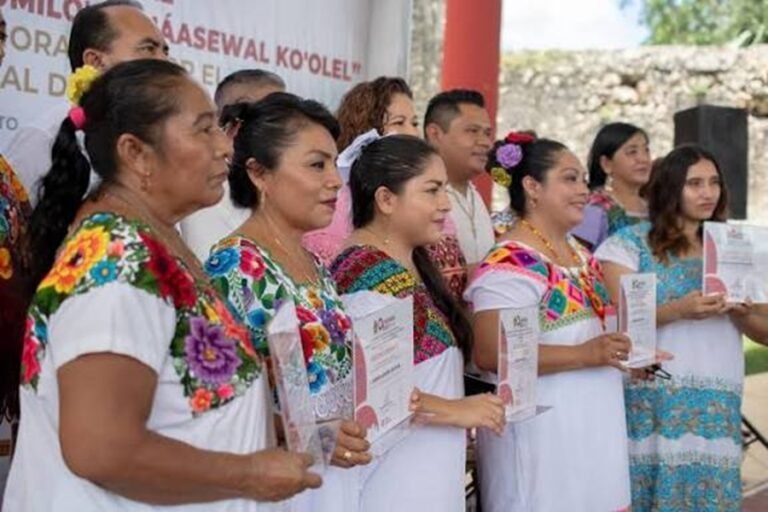
Playa del Carmen, Quintana Roo – Representatives of Maya communities in the state have held meetings with indigenous councilors from various municipalities, with the aim of pushing the local Congress to review and potentially reform the Indigenous Law. They argue that several of its provisions have become obsolete and no longer respond to the current needs of the indigenous peoples.
According to Hermelindo Be Cituk, president of the Plural National Indigenous Assembly for Autonomy (ANIPA) in Quintana Roo, the Indigenous Law has undergone very few modifications since its creation, despite constitutional changes and international standards on indigenous rights.
He recalled that this legislation was created during the government of Mario Villanueva, a period in which the authority of the Gran Consejo Maya (Great Maya Council) was diminished by transforming it into a civil association, weakening its representative character and decision-making capacity.
“We are working with indigenous councilors from across the state to promote this reform. The law has not been updated, it does not coordinate with the communities, nor does it truly support the indigenous population,” he stated.
Be Cituk explained that the Indigenous Law has not been harmonized with international standards, not even with the reforms to Article 2 of the Constitution, which recognizes the autonomy, own normative systems, and forms of self-government of indigenous peoples.
The ANIPA representative also questioned the figure of the indigenous magistrate, which has remained unchanged since the law’s creation and lacks effective representation from the communities.
He indicated that the position is currently held for life by Javier Reyes, whom he accused of not fulfilling the functions of accompaniment, management, and defense of the rights of the Maya peoples, such as reviewing laws, institutional coordination, or strengthening the working conditions of indigenous dignitaries.
According to Be Cituk, this figure in the past served the PRI political system and, currently, continues to operate in the same way, now under governments stemming from Morena, limiting itself to protocol acts with no real impact on the communities.
The immediate objective is to achieve a comprehensive review of the Indigenous Law, although he lamented the lack of support from the president of the Commission on Indigenous Affairs, Deputy Silvia Dzul, to formally initiate the legislative process.
Finally, the indigenous representative reiterated his call to the Quintana Roo Congress to update the legal framework, guarantee real representation for the indigenous peoples, and harmonize state legislation with rights recognized at the national and international levels.
Discover more from Riviera Maya News & Events
Subscribe to get the latest posts sent to your email.