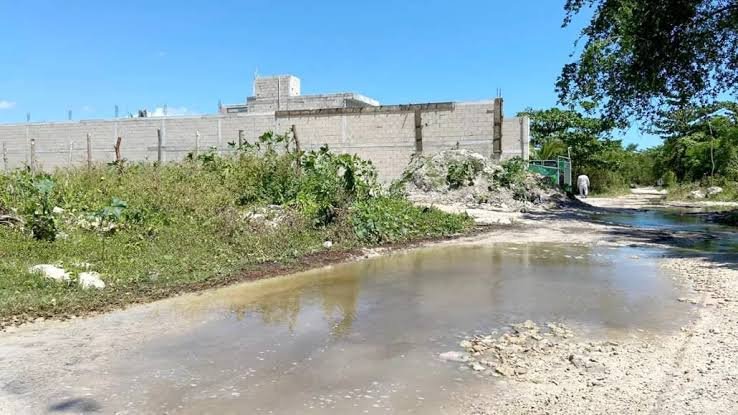
Cancun, Quintana Roo — Alejandro López Tamayo, general director of Sentinelas del Agua, warned that even as Quintana Roo has advanced with new wastewater treatment mandates, the failure to connect many homes to sanitary sewer systems remains a major source of contamination in the state’s water bodies and coastal areas.
According to López Tamayo, the amended NOM-001-SEMARNAT-2021 introduced for the first time specific standards for karst systems of the kind found throughout the Yucatan Peninsula. The change created stricter wastewater treatment obligations, prompting the hotel industry and other productive sectors to spend several years evaluating technologies that could bring them into compliance.
He said the Water and Sanitation Technologies Forum was organized with that goal in mind: to connect private-sector actors and government authorities with technologies capable of meeting the new regulations.
Yet while deadlines were established for both the private sector and the government to overhaul treatment plants, López Tamayo said water-quality monitoring has not shown any significant improvement. He attributed the central problem to homes that remain disconnected from drainage networks.
The specialist explained that explosive urban growth caused many residences to send wastewater directly into cenotes, caves, or poorly maintained septic tanks.
Playa del Carmen stands out as one of the most troubling examples, he said. A census of roughly 186 lots in the Luis Donaldo Colosio neighborhood found that 146 were not linked to the sanitary sewer system.
That situation is especially risky, López Tamayo noted, because a major tourist beach in Playa del Carmen lies directly in front of the neighborhood.
He contrasted the case with Cancun, where mangrove systems linked to the Nichupté lagoon and other mangrove corridors can help capture and filter some pollutants before they reach the coast. In Playa del Carmen, by contrast, groundwater discharges flowing into the sea have shown high concentrations of nutrients and other contaminants.
In Cancun, López Tamayo identified the Guayacan area, south of the city, as another zone of concern. It still lacks drainage, and apartment buildings there continue to rely on tanker trucks to remove wastewater.
He acknowledged that, beyond uncertainty over where those shipments ultimately end up, legal loopholes have also blocked efforts to compel the lots to connect to the sewer system.
The same problems appear in Tulum, Puerto Morelos, and Playa del Carmen, he said, where wastewater is not taken to treatment plants and therefore cannot be traced. He raised the question of where the tanker trucks are discharging their loads.
López Tamayo also stressed the need for a communication and awareness campaign aimed at residents so they are encouraged to connect to drainage networks. The standard gives until 2027 to connect and complete the re-engineering work, he said, but extensions continue to be granted.
More Environment
- Hotels in Cancún and Puerto Morelos Restore Coastal Dunes With Native Plants
- Dolphin Swims Continue in Puerto Aventuras as Cancún Dolphin Debate Simmers
- Punta Allen Lobster Fishermen Report 40 Tons Three Months Into Season
- Scientists Warn Sargassum and Pollution Threaten Quintana Roo’s Coral Reefs
- Mahahual Hosts Nearly 100 Birdwatchers for 12th Regional Pajareada
More Playa del Carmen
- Calica Mine Lands to Become Ecological Restoration Zone, Conanp Says
- Bull Shark Diving Hits Carrying Capacity in Playa del Carmen
- Playa del Carmen Plans to Restore 750 Meters of Beach in November Using Sand Recovered from Sargassum Cleanup
- Federal Court Halts Macondo Playacar Construction, Voids Building Permit
- Tropical Wave 36 Floods Northern Quintana Roo, Hits Tourism