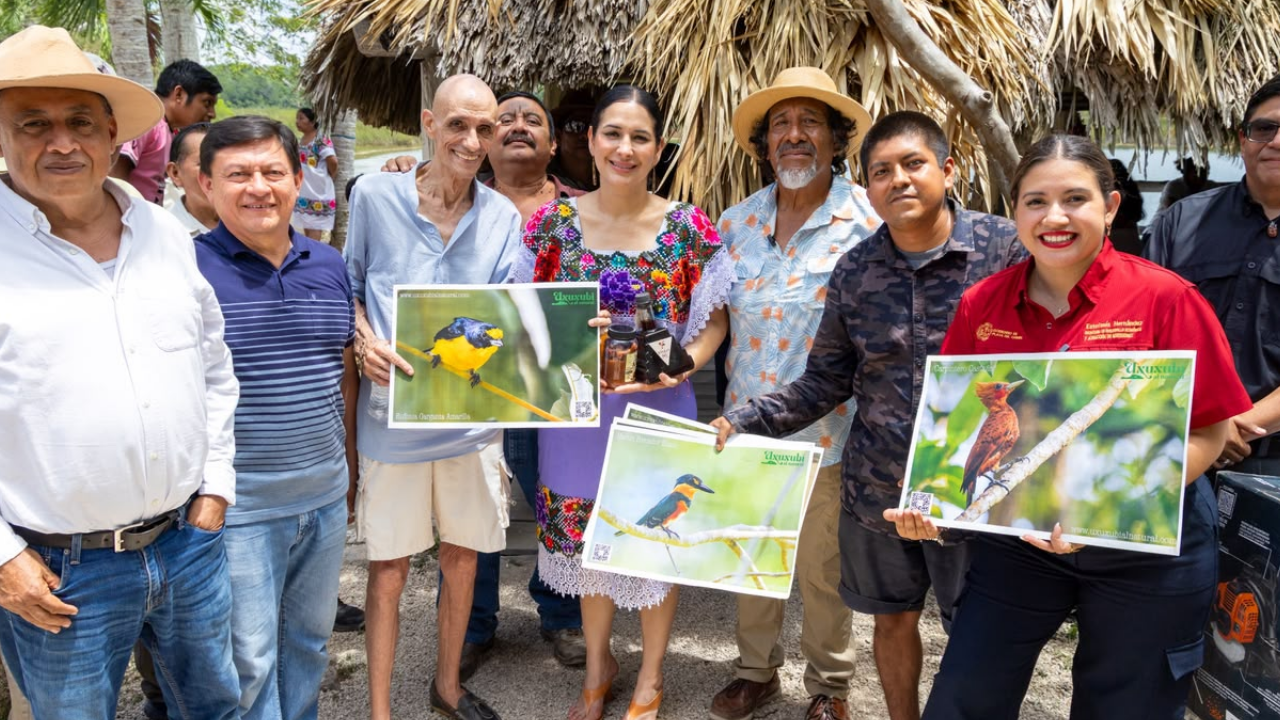
Playa del Carmen, Quintana Roo — The municipalities of Playa del Carmen and Lázaro Cárdenas have signed a formal request for the Kilich Kab corridor, also known as Mundo Sagrado, to be declared a Rural Community Zone with Tourism Potential, a designation that would bring the area closer to becoming Quintana Roo’s 13th tourism brand.
The initiative is aimed at strengthening community-based tourism as a tool for sustainable development, reinforcing local value chains, and diversifying the rural economy. The proposed biocultural corridor covers more than 400,000 hectares and includes 40 communities, among them Uxuxubí, Campamento Hidalgo, and Punta Laguna, all in the municipality of Playa del Carmen.
At the signing ceremony, led by Quintana Roo Tourism Secretary Bernardo Cueto Riestra, Playa del Carmen Mayor Estefanía Mercado said Kilich Kab represents an opportunity to generate shared prosperity by connecting the state’s major tourist destinations with the cultural and natural wealth of its communities.
“Quintana Roo has two enormous strengths that we need to connect,” Mercado said. “We have destinations like Playa del Carmen, recognized across Mexico and the world, and we have communities with extraordinary richness: their identity, their culture, their territory, and their knowledge.”
Mercado said the next step is to turn that wealth into opportunities for families by opening new markets for community handcrafts and promoting community tourism experiences that generate income and well-being. She said the declaration would help build a more integrated, sustainable, and fair region in which communities lead decisions about their own development and the responsible use of their heritage.
The mayor also reaffirmed her administration’s commitment to act as a bridge between Uxuxubí, Campamento Hidalgo, and Punta Laguna and one of the world’s most important tourism markets.
“We are not here to tell communities how to do things; we are here to work with them,” Mercado said. “You know your land, your culture, and the best way to protect the heritage we inherited and must pass on to future generations. It is the government’s job to accompany, facilitate, open doors, and create conditions.”
Cueto Riestra said the request opens the door to a joint process among federal, state, and municipal governments, as well as community representatives, to define the region’s tourism future in a participatory manner.
“This declaration will allow us, over the years, through joint work among the federation, the state, the municipalities, and particularly the representatives of the communities, to make decisions about what we want for the future,” he said. “We are not handing over decisions; we are returning to the communities the decisions about what we want to do in tourism, and we will accompany them.”
The Mundo Sagrado project seeks to consolidate a community tourism model that preserves biocultural heritage, generates economic opportunities, and strengthens the identity of the communities based on their own knowledge, territories, and forms of organization.
The event was also attended by Liliana García, director of Kanché A.C.; José María Quintal Olivar of the Kilich Kab Community Network; and representatives of the communities that make up Mundo Sagrado.
More Tourism
- Riviera Maya Hotel Occupancy Plunges to 36% in October 2026
- Quintana Roo Hoteliers Say DNR Hike Favors Punta Cana Over Cancún
- Tulum Airport Operating Normally Despite Flight Cuts, Grupo Mundo Maya Says
- Tulum Ranks Second as Mexico Claims Six Spots on Best Beaches List
- Holbox Businesses and Residents Urge Review of Street Closures
More Zona Maya
- Quintana Roo Opens 2026 Poetry Contest for Indigenous and Afro-Mexican Girls
- Drought Damages Farmland in Felipe Carrillo Puerto as Quintana Roo Assesses Losses
- Aluxes Endure in the Beliefs of Maya Communities in Quintana Roo
- Search Operation for Missing People Deployed in Felipe Carrillo Puerto
- Mothers of Missing Children Ask Quintana Roo to Display Their Faces on Public Transport