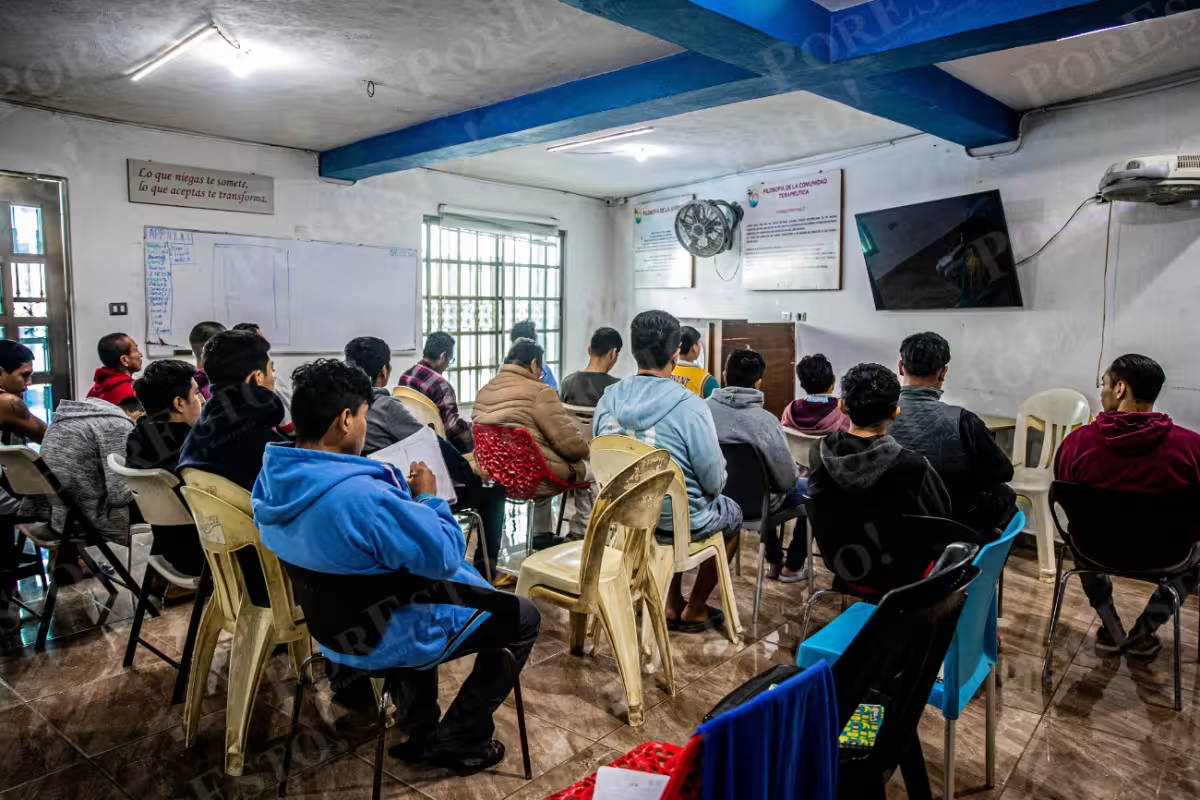
Quintana Roo, Mexico — Irregular rehabilitation centers known as “anexos” in Quintana Roo are raising growing concerns due to internal conditions, abuse allegations, and weak institutional oversight. Experts and families warn that many operate outside regulations, exposing residents to physical, emotional, and financial risks.
Liliam Negrete Estrella, director of the Centro de Integración Juvenil (CIJ), revealed that authorities opened 43 case files for people with addictions in January alone. During 2025, the CIJ provided nearly 1,620 outpatient consultations for patients and family members. About 61.45% of those treated are young people, primarily aged 15 to 19, most of them students.
According to the Observatorio Mexicano de Salud Mental y Adicciones, the most commonly used substances in Quintana Roo last year were alcohol, marijuana, methamphetamines, and tobacco. This trend aligns with records from the CIJ and the Instituto Municipal contra las Adicciones (IMA) of Benito Juárez.
Psychologist Luis Romo said multiple alerts have emerged from these centers about alleged malpractice, including physical and psychological abuse, involuntary confinement, lack of specialized staff, and high fees that condition residents’ stay and release. He noted the phenomenon continues to grow due to insufficient public alternatives and ineffective regulation.
Health professionals and formal center directors estimate Cancún has over 45 registered centers, but only a minority hold valid health licenses from the Federal Commission for Protection against Health Risks (Cofepris) or the state health department. Romo insisted, “There are no updated official figures on how many operate clandestinely, but the widespread perception is that they are numerous and proliferate even in irregular areas.”
Negrete Estrella warned of a lack of effective regulation to ensure these spaces operate efficiently, respect human rights, and maintain a genuine health perspective. “Although there are no updated official figures on how many function clandestinely, it is estimated that of the more than 45 centers registered in Cancún, only a minority have valid health licenses,” she explained.
Romo stated, “There are as many anexos in Cancún and Playa del Carmen as Oxxo stores. They are everywhere, many in private areas where supervision is difficult.” Common complaints include beatings, mental pressure, confinement, and fees that can reach up to 15,000 pesos monthly.
Testimonies from those who have been through these centers paint a troubling picture. Carlos Hernández Pérez, 28, said he spent eight months in an anexo in Playa del Carmen. “They beat me for asking about my family. There was no doctor, no psychologist, just a man who said he was a counselor. When my mother couldn’t pay the fee, they locked me in a room for three days until they covered the costs,” he recounted.
María Guadalupe Sánchez López, 23, entered an anexo in Cancún for marijuana use. “They wouldn’t let me leave or make calls. They said I was in a purification process. We lived in unsanitary conditions, with little food and no medical attention when I got sick,” she said.
Families also face extreme situations. Rosa María Díaz García, mother of a young man interned in Puerto Morelos, explained she paid 50,000 pesos for admission and then 12,000 monthly. “When I asked about the treatment, they told me it was none of my business. Then they called to say my son had cut his veins and they didn’t know how to treat him,” she said.
Javier González Martínez reported that his 17-year-old daughter was interned without his consent. “When I went to look for her, they denied me access and said I had to pay more for her to leave. I had to file a complaint,” he stated. Ana Patricia Ramírez Cruz said her brother left with bruises and severe anxiety. “They told us it was part of the process, but it was abuse,” she said.
Experts warn these practices are not only irregular but dangerous. Psychologist Marcela Antonio Joaquín explained many centers do not use evidence-based protocols. “This can cause permanent psychological damage and increase relapse risk due to lack of follow-up,” she said.
Dr. Alfredo Hatchett Anaya, a mental health specialist, noted that involuntary confinement violates human rights and does not aid recovery. “Treatment requires a multidisciplinary approach and respect for patient autonomy,” he said.
A state health department source acknowledged institutional failures, admitting gaps in supervision due to staff shortages and difficulty locating centers in private or rural areas. The source indicated authorities closed seven clandestine centers in 2025, but the problem persists.
Health regulations require these establishments to have licenses, qualified medical and psychological staff, adequate facilities, care protocols, and respect for patient rights. However, common violations include lack of permits, missing medical records, absence of specialists, and no biosafety measures.
Negrete Estrella said, “The main reason for consultation is marijuana use, followed by cocaine and stimulants like crystal meth. Among legal substances, alcohol leads consumption, and Quintana Roo is among the states with the highest prevalence.” She also warned of increased ayahuasca use among youth, a psychoactive substance that produces altered states of consciousness and intense physical effects.
Luis Fernando Ruiz Velasco, director of the “Un Nuevo Amanecer” center, explained treatment demand has grown steadily in recent years. With over a decade of operation, he said alcohol and marijuana previously predominated, but in the last five years, crystal meth and methamphetamines have become the most consumed substances. He described methamphetamine as a highly addictive stimulant that severely alters brain chemistry and causes physical and mental damage.
Ruiz Velasco emphasized that resistance to receiving help remains a major obstacle for formal institutions. His center is one of the few with certifications, operating with a recovery fee of 500 pesos weekly—insufficient to cover expenses—despite offering food, psychological care, family support, and therapeutic activities for at least six months of treatment.
He explained addiction should be understood as a disease. “When it advances, decision-making capacity is blocked. Interning someone is not a punishment; it’s an act of protection. It must be done with consent and specialized professionals,” he emphasized.
Quintana Roo has public alternatives, but they are insufficient to meet demand: four CIJ centers in Cancún, Chetumal, Cozumel, and Playa del Carmen; eight Community Mental Health and Addiction Centers; services from IMSS and ISSSTE; and the remodeled Municipal Comprehensive Rehabilitation Center in José María Morelos from 2024.
Still, many families turn to anexos out of desperation. “Demand exceeds institutional capacity, and that pushes families toward risky options,” said Rosa María Díaz García.
Negrete insisted greater public investment, constant supervision, and campaigns to help families identify legal centers are needed. “Mental health and addictions are a collective problem. We cannot allow those seeking help to end up as victims of abuse,” she concluded.
Discover more from Riviera Maya News & Events
Subscribe to get the latest posts sent to your email.