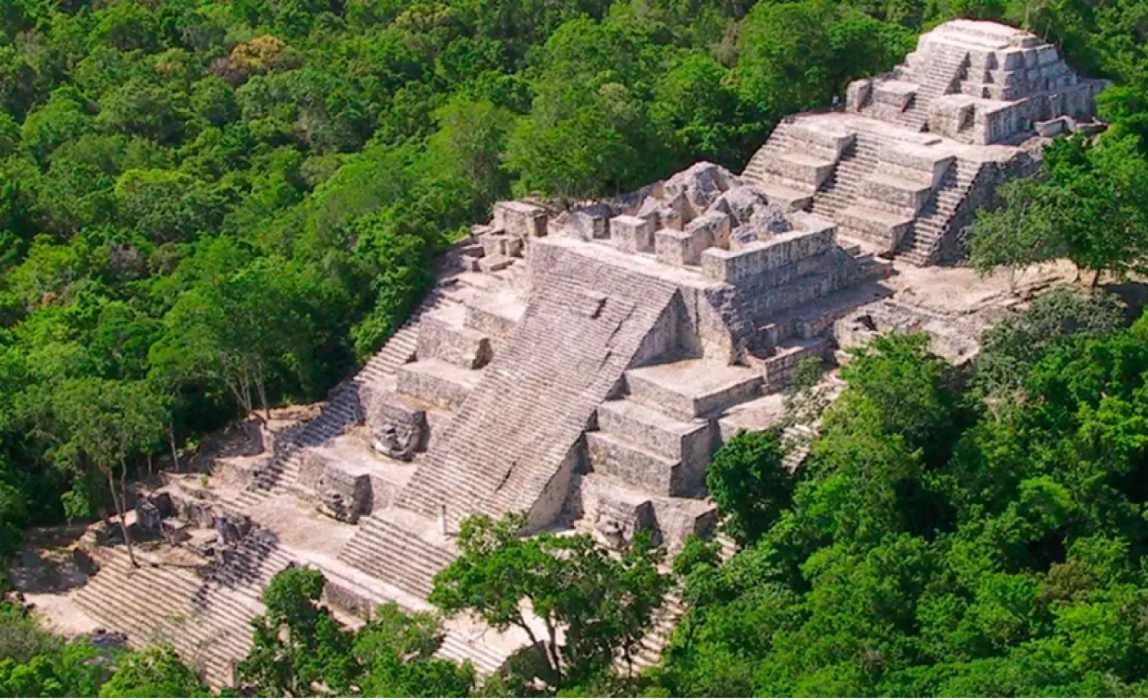
BACALAR, MX. — The National Institute of Anthropology and History (INAH) has begun registration for activities for “Ichkabal Before the Eyes of the World,” which will take place from January 30 to February 1 and on February 8, 2026.
Ichkabal, which in Maya means “between lowlands,” reflects the complex relationship between Maya civilization and its environment. The city was located on land that flooded during the rainy season, offering researchers a unique opportunity to understand the development of Maya agriculture on the Yucatán Peninsula.
“Ichkabal Before the Eyes of the World” refers to the promotion and public opening of the Maya archaeological zone of Ichkabal in Bacalar, highlighting it as a monumental site (older than Chichén Itzá) with impressive pyramids, managed by INAH to bring its history to an international level, attracting visitors with events and free access to showcase the rich cultural heritage of the Classic Maya.
In Ichkabal, one can trace the steps of the powerful Kaanul dynasty, also known as the Snake Dynasty. Originating from Dzibanché, this influential dynasty moved to Calakmul, extending its influence through northern Guatemala and even rivaling the iconic Tikal. During this time, Ichkabal became one of the most powerful cities of the Classic Maya period.
The Ichkabal Archaeological Zone, located 40 kilometers west of Bacalar Lagoon and whose existence was unknown until the late 20th century, strengthens efforts aimed at its public opening.
Although the ancient Maya political center began to be the subject of research by INAH in 2009, it is through the Archaeological Zone Improvement Program (Promeza), derived from the priority Maya Train project, that its study, conservation, and updating have continued.
Ichkabal, founded between 200 BC and 200 AD, has its history intertwined with that of great capitals of the Maya world, such as Calakmul and Tikal, with which it shared architectural style, cultural links, and political power.
It stands out for its monumental structures, many of which exceed 40 meters in height, in addition to being arranged in triadic complexes, a characteristic of this site. Over the past two decades, INAH archaeologists have undertaken intensive work in prospecting, conservation, and restoration, revealing remains of stucco, mural painting, and ceremonial architecture of the Petén style.
Currently, thanks to new access routes and services, this millennia-old archaeological zone is beginning to receive visitors, offering a unique window into the splendor of the Maya world in one of its least explored regions. Thus, Ichkabal opens a new chapter in the archaeological history of Mexico.
Discover more from Riviera Maya News & Events
Subscribe to get the latest posts sent to your email.