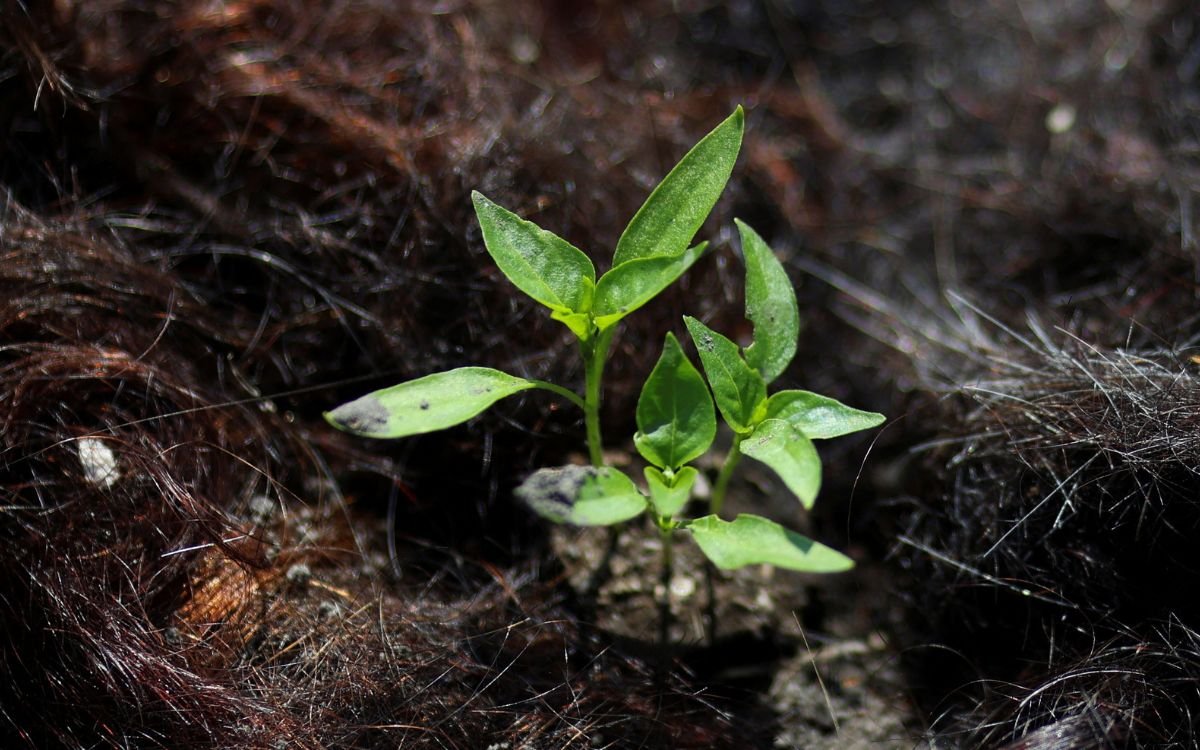
Mexico City — Hair clippings from barbershops and salons across Mexico are being transformed into water filters that could help save the endangered axolotl in the historic canals of Xochimilco.
“We’re going to bring them back,” Josefina González told EFE as she tended to an axolotl sanctuary she runs with her husband Roberto in Xochimilco. What began with two specimens in 2021 now houses more than 60 axolotls along with dozens of eggs.
In one of the last refuges for the amphibian, there remains hope that axolotls might once again swim in the clean water González remembers from her childhood. Today, the canals appear murky, contaminated, and devoid of the endemic species that once populated them.
The axolotl, which served as the mascot for the World Cup hosted in Mexico City, has virtually disappeared from Xochimilco over the past decade. Surveys have dropped from recording fewer than 300 specimens per square kilometer to finding none, according to Michel Balam of the Independent Environmental Management Community (CIMA), part of the Ajolote Sanctuary project.
This dramatic decline is largely due to “brutal” water pollution from domestic and commercial discharges, bacteria, and heavy metals, Balam warned.
A Hairy Solution
To combat this deterioration, filters made from human hair are now being installed in Xochimilco’s canals. Each filter contains about one kilogram of hair capable of absorbing up to five times its weight in pollutants.
Attached to traditional trajinera boats, the devices are being tested for the first time in the water with the goal of bringing this technology to vessels that navigate the canals. Since October, the environmental project has placed about twenty filters along the waterways’ edges.
“Imagine if we could have 500 trajineras with these devices—we’d be cleaning the water every day,” Balam said.
After remaining in the water for nearly two months, the filters are removed and treated with bacteria that break down oils and fats. This allows them to be reused or integrated into soil without generating waste, whether for agriculture or other processes.
“It might seem like hair is magical, but it’s not,” explained Mattia Carenini, founder of Matter of Trust Latam. “It’s millions of years of evolution that made this fiber, which once helped us trap oil and fat and provided extra insulation, now useful for remediating contaminated water bodies.”
The same properties have led to hair being used in oil spills, such as in Veracruz, where the organization has worked with communities to train them in its safe use and handling. According to Carenini, the material can adhere to hydrocarbons and facilitate their collection, though effectiveness depends on spill conditions, and there are disposal risks including burns or cancer.
From Barber Shop to Waterway
To make the hair filters possible, the organization has built a network of 33 salons and barbershops across Mexico that collect an average of two kilograms of hair monthly (202 kilograms in 2025), which is then used to manufacture the devices.
At a barbershop in the State of Mexico on the outskirts of the capital, hair that falls to the floor is no longer waste but becomes part of this process.
While getting a haircut, customer Luis admitted he didn’t know his hair would end up helping axolotls but said he felt satisfied to contribute his “grain of sand.”
Javier Rangel, co-owner of JR Barber Studio, shared that this is precisely his motivation for joining the network: “This shows that small actions, even from a small barbershop, can help change the world for our children in the future.”
“There’s a sustainable business model, both for them and for us, collectively,” concluded Constanza Soto, co-founder of Matter of Trust Latam.
The initiative is part of an international network that has used hair to clean water and regenerate soils in various countries for more than two decades—a model now seeking to scale up in Mexico.
Discover more from Riviera Maya News & Events
Subscribe to get the latest posts sent to your email.