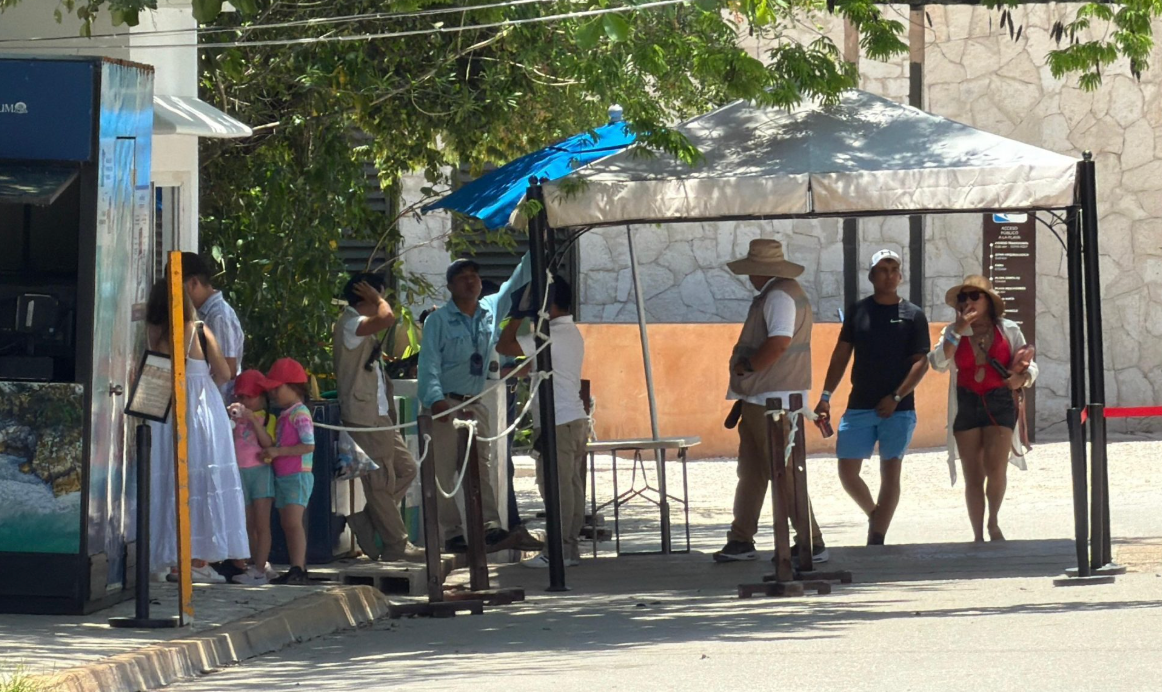
TULUM, Quintana Roo — A family visiting from Mexico City says people selling tours near the Tulum Archaeological Zone pressured them into using a particular parking area and purchasing a tour costing 900 pesos per person.
The Morales family said they had not planned to take the tour and felt intimidated and misled during their arrival at one of the Riviera Maya’s most visited attractions. Their account has renewed complaints about “jaladores,” the informal salespeople who approach passing vehicles and direct tourists toward parking lots, tours or other paid services.
The allegations have not been independently verified, and authorities have not announced an investigation or identified the people involved. However, established merchants near the archaeological zone say aggressive sales practices remain a problem despite increased surveillance along Federal Highway 307.
The merchants said enforcement has reduced the number of vendors stepping onto the highway and stopping vehicles, but visitors continue to encounter unclear offers and inflated prices around parking areas and the former location of the large Tulum letters.
Some tourists have reportedly sought help from security personnel after paying more than they believed they had agreed to.
A 900-peso tour is not required for entry
Visitors do not have to purchase a commercial tour or hire a private guide to enter the Tulum Archaeological Zone.
The federal government recently changed the official admission system under its Tulum Renace plan. The National Institute of Anthropology and History currently lists a unified admission price of 80 pesos for Mexican visitors and 265 pesos for international visitors.
The site is open from 8 a.m. to 5 p.m., with final admission at 3:30 p.m. Mexican citizens and foreign residents of Mexico are generally entitled to free admission on Sundays when they show accepted identification.
Guided visits, snorkeling excursions, boat trips and combination packages may cost considerably more, but these are optional commercial services. Sellers should clearly explain what is included, identify the company providing the service and disclose the total price before accepting payment.
The 900 pesos reportedly charged to each member of the Morales family may have covered a package containing additional services. The family’s complaint does not include a receipt, company name or detailed description of the tour, making it impossible to determine whether the price itself was unauthorized. The central allegation is that they were pressured into buying something they had not intended to purchase.
New access system may add to visitor confusion
The complaint comes shortly after the federal government announced a ten-point plan intended to reverse falling visitor numbers and make the Tulum archaeological and beach area easier to access.
Under the Tulum Renace plan, Mexican visitors receive free access to Jaguar Park, while the combined archaeological-site and protected-area charges have been reduced. The plan also includes electric transportation inside the park, a new southern parking area, improved public transportation and a visitor-assistance program involving the National Guard.
The changes are meant to address persistent complaints that visiting the ruins had become confusing and expensive because travelers encountered separate charges for admission, the protected natural area, transportation and parking.
That transition can also create an opening for misleading sales pitches. Visitors unfamiliar with the new system may have difficulty distinguishing an official charge from a privately sold tour, particularly when approached before reaching the authorized entrance.
No salesperson outside the complex controls access to the archaeological site. A claim that visitors must park in a specific private lot or purchase a tour before proceeding should be confirmed with uniformed park personnel.
Tourism providers must disclose prices
Under Mexico’s Federal Consumer Protection Law, service providers must display and honor their prices, explain the conditions attached to an offer and provide the consumer with the total amount to be paid. They may not force the purchase of one service as a condition for obtaining another unrelated service.
Tour operators and travel agencies must also be registered with Mexico’s Secretariat of Tourism. Travelers can search for a company by name or registration number through the government’s public National Tourism Registry.
Tourist guides working at archaeological sites should carry a current credential issued by the Secretariat of Tourism. Registration does not guarantee the quality of a tour, but it allows visitors to confirm that the person or company offering it can be identified and held accountable.
PROFECO previously carried out a verification operation in Tulum following complaints about tourism services. The agency has repeatedly cited failure to display total prices, refusal to honor advertised prices and unclear sales conditions among the violations it monitors.
What visitors should do before paying
Travelers arriving independently should continue to an official entrance or information point before deciding whether they need parking, transportation or a guide. They should ask for the complete price in pesos and request a written explanation of what the charge includes.
Visitors should also:
- Avoid handing over cash until the company and service have been identified.
- Ask whether the offer includes official admission or only the tour.
- Photograph the business name, posted prices and vehicle information.
- Request a receipt showing the provider’s legal or commercial name.
- Decline the service and leave if a salesperson becomes threatening or refuses to explain the charge.
A consumer complaint can be filed with PROFECO through its complaint and reporting system or by calling 55-5568-8722 from Mexico City and 800-468-8722 elsewhere in the country. Immediate threats or attempts to prevent someone from leaving should be reported to 911.
The Morales family said they came forward because they did not want other visitors to have the same experience.
Tulum is trying to rebuild confidence after repeated criticism of its prices, access system and treatment of visitors. New parking lots and lower federal admission fees may help, but they will have limited effect if a traveler’s first encounter is with someone using pressure or confusion to make a sale.
More Tourism
- Mexico Tourism Boom Accelerates Digital Shift, Raising Security Stakes
- Quintana Roo Artisans Win Dedicated Law to Protect and Promote Their Craft
- Mundo Maya Nations Agree on Multi-Destination Tourism Route
- ASUR Expands US Presence With $295 Million Airport Commercial Deal
- Playa del Carmen Municipal Police Take Command of Quinta Avenida Security Operation
More Tulum
- At Least 10 Shots Fired at Tulum Office Building, Triggering Major Police Response
- Aeroméxico to End Flights to Tulum Airport After September
- Pre-Hispanic Bee House Unearthed in Tulum Sheds Light on Ancient Maya Homesteads
- Tulum’s Feria de la Cancha Maya to Gather Five Ceremonial Centers
- Deported Mexicans Flock to Quintana Roo as Support Services Strain