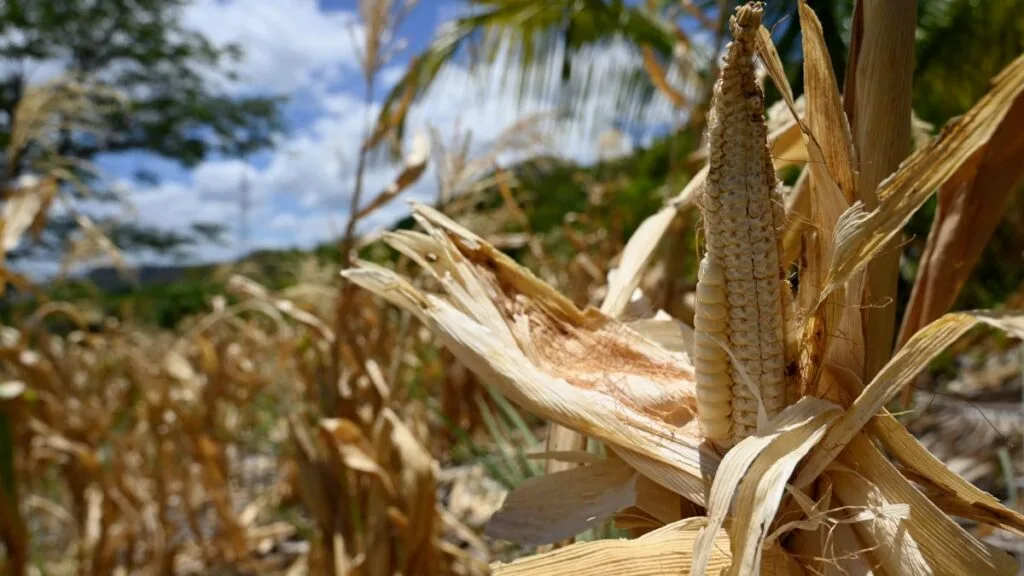
Chetumal, Quintana Roo — A drought across Quintana Roo is damaging the state’s agricultural sector, with Felipe Carrillo Puerto reporting the heaviest impact so far, officials said.
Enrique Morales Pardo, the federal head of the Agriculture and Rural Development Ministry (SADER) in Quintana Roo, said authorities have received reports of drought-related losses but do not yet have exact figures because assessments of the affected areas are still underway.
He estimated that results from the survey of rural communities could be ready by the first week of October. The findings will determine what support can be offered to affected producers.
Morales Pardo said Felipe Carrillo Puerto accounts for the largest share of reports to date, while other municipalities have not shown the same level of damage.
“In Felipe Carrillo Puerto they plant criollo corn, and they are the ones who have reported damage, but right now they are in talks with the state government and SEDARPE, and we are coordinating on the matter,” he said. “We are already sending the issue of losses to Mexico City, since we have notified SADER’s central offices.”
The drought has hit criollo corn crops in particular. The official acknowledged that water scarcity is one of the biggest challenges for the state’s farmland, especially because Quintana Roo has no rivers or dams and relies mainly on wells.
As a result, the lack of rain has become a critical factor for crops across the state. Authorities are continuing to gather information to better gauge the extent of the damage.
Morales Pardo added that at least 22,000 producers receive support through the federal Maíz para el Bienestar program.
More Environment
- Cancún to Host National Climate Change Colloquium in October
- Riviera Maya Hotels Offer Free Nights When Sargassum Blocks the Beach
- Cancún Residents Block Avenida Tules Over Sewage Overflow
- Royal Caribbean Collects 997 Tons of Sargassum in Mahahual
- Playa del Carmen Reports Over 11,000 Permits and 46 Closures for Environmental Violations
More Zona Maya
- Aluxes Endure in the Beliefs of Maya Communities in Quintana Roo
- Search Operation for Missing People Deployed in Felipe Carrillo Puerto
- Mothers of Missing Children Ask Quintana Roo to Display Their Faces on Public Transport
- Maya Language Advocate Martiniano Pérez Angulo Dies at 67 in Quintana Roo
- Maya Midwife in Quintana Roo Fights to Keep a 25-Year Tradition Alive