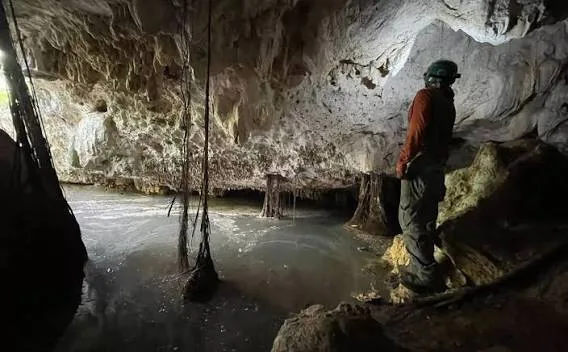
Cancún, Quintana Roo — A persistent lack of household connections to municipal sewer systems in Cancún, Playa del Carmen and Tulum is continuing to contaminate the region’s karst landscape, harming cenotes, aquifers and coastal waters, warned Alejandro López Tamayo, director of the environmental group Centinelas del Agua.
López Tamayo said that despite the 2021 update to the Mexican standard NOM-001-SEMARNAT-2021, which set stricter limits on wastewater treatment across the Yucatan Peninsula, water quality in Quintana Roo has shown no sign of improvement.
Homes Still Rely on Septic Tanks
The core problem, he explained, is the backlog in connecting homes to the sewer network, which leaves many families relying on septic tanks or discharging wastewater directly into the subsoil — raising the risk of contamination in the aquifers beneath the peninsula.
Hotels add to the pressure as the state’s largest water consumers. Under the regulations, hotels must upgrade their treatment plants to cut pollutant levels before 2027, although the industry has reportedly requested an extension until 2030 to comply.
López Tamayo noted that the earliest neighborhoods in these resort cities were built with no drainage infrastructure at all. Although systems were installed later, many homes were never connected, keeping the environmental problem alive.
He warned that unless full drainage coverage is achieved and treatment systems are operated correctly, pollution will keep damaging ecosystems and water quality across the region.
More Environment
- Cancún Protesters Demand Answers on Fate of Big Cats Kept by ‘Pepe Tigre’
- Cancún Hotel Zone Projects Must Include Wastewater Pre-Treatment Plants
- Microplastics, Sunscreen Chemicals and Repellents Under Study in Quintana Roo Waters
- Cancún Launches Operation to Protect Blue Land Crabs During Migration to the Sea
- Quintana Roo to Present Mexican Caribbean Cenote Guide at DEMA Show 2026
More Playa del Carmen
- Playa del Carmen Cuts Intentional Homicides by 51.6% in First Eight Months of 2026
- Assault Survivor Robert González Praises Eugenio Derbez’s ‘El juicio’ in Emotional Message
- Playa del Carmen Residents Demand Action After Molotov Attack on Taxi Union
- Negroni Week 2026 Brings Riviera Maya Bartenders to Playa del Carmen
- Playa del Carmen Fire Calls Rise 4% on Carelessness and Uncontrolled Burns