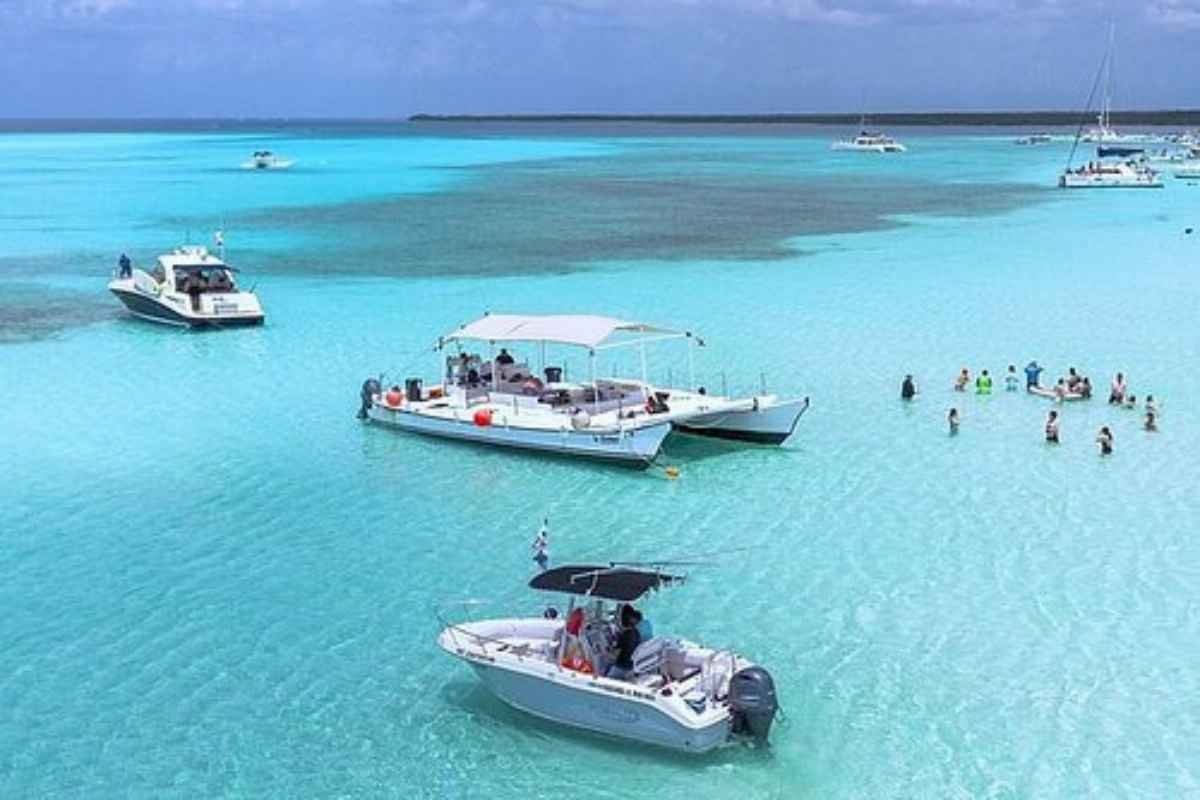
Cozumel, Quintana Roo — A personal watercraft event held last weekend inside the Cozumel National Reef Park has reignited public anger against the National Commission of Protected Natural Areas (CONANP) and the island’s Port Captaincy, which critics accuse of allowing vessel traffic up to ten times the protected area’s carrying capacity.
Enrique Noriega, a spokesman for the citizens’ group Isla Cozumel, said the collective asked CONANP last year for a list of all vessels with valid permits to enter the park, which covers 11,987.88 hectares. The request revealed that CONANP has authorized 263 vessels: 91 open boats, 40 yachts, 20 catamarans, 37 boats, 26 covered boats and 25 personal watercraft, among others.
Those permits also cover nearly 4,000 passengers and 516 crew members, Noriega said, adding that the figures exceed by ten times the recommended capacity at other reefs where carrying-capacity studies have been conducted.
Black market in permits alleged
“It is massively oversaturated, and it is not just the boats, which are getting bigger and bigger. What has been established here is a black market in permits,” Noriega said. “Authorizations are given to a permit holder, a company or an individual, and that person decides whether to pass it on or transfer it, apparently encouraged by CONANP itself. It is an open secret.”
The park, which covers the coral reefs off the southern coast of Cozumel, is home to a wide variety of corals, sponges, crustaceans, mollusks, echinoderms and reef fish, as well as algae and seagrasses. It also shelters endangered species including loggerhead, hawksbill and green sea turtles, as well as fish, crabs and the queen conch. It is internationally recognized as Ramsar site 1449 because of its ecological, biological and hydrological value.
Activists say the reality is that the area “is an amusement park, not a protected natural area; what CONANP is doing is a joke.” They point to last weekend’s personal watercraft race, in which craft sped at excessive speed and two participants went missing; one has since been found.
“They are damaging the ecosystem and violating the management program, so this discontent that the Cozumel community feels toward these authorities has been reignited, because the truth is they do not really do anything,” Noriega said.
More vessels and passengers reported
The activist said more personal watercraft are seen navigating over the park, suggesting many operate without permits or irregularly, or that more permits have been granted to beach clubs over the past year.
When asked about the event, the municipal governments of Cozumel and Playa del Carmen confirmed that no permits existed for it, even though at least 40 personal watercraft carrying twice as many passengers traveled from Puerto Aventuras to the island. The Port Captaincy could not be reached for comment.
“We are tired of talking to the authorities; they pay no attention to us. They say they have an advisory council and they talk, but they never solve a single problem. All people conclude is that they never do anything because there are never any consequences,” Noriega said.
More Environment
- Mexico Approves Bird Flu Vaccination in Yucatan After Second Outbreak
- Two Puerto Morelos Schools Certified for Health Promotion and Dengue Prevention
- Horseshoe Crab, a Living Fossil, Faces Microplastic Threat in Quintana Roo
- Cold Front 8 Floods Nearly 80% of Holbox Streets
- Isla Mujeres Rides Infrastructure and Beach Upgrades to Top Caribbean Tourism Ranks
More Cozumel
- Cozumel Nears 5 Million Cruise Passengers, Set for Record 2026
- Quintana Roo Brings Four Community Tourism Routes to National Pueblos Mágicos Gathering
- Xcaret Ferry Raises Fares on Playa del Carmen–Cozumel and Cancún–Isla Mujeres Routes
- Quintana Roo Hosts Fourth Climate Action Forum in the Mexican Caribbean
- Heavy Rain From Cold Front Diverts Eight Flights From Cancún to Cozumel and Mérida