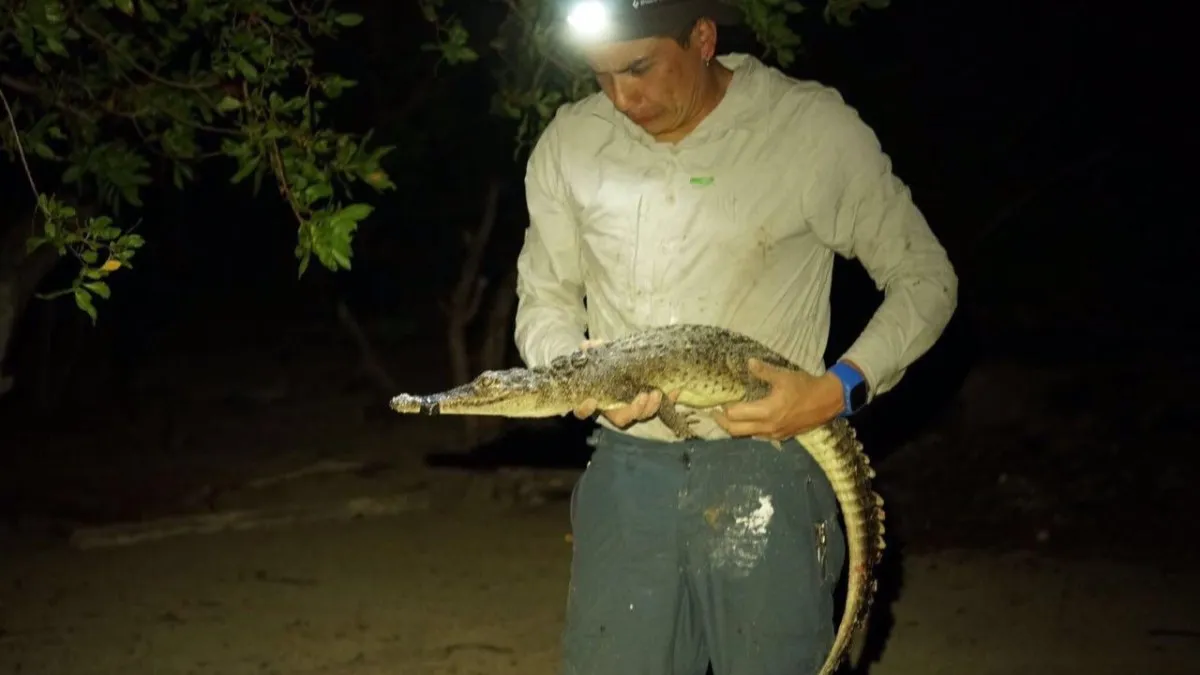
Cozumel, Quintana Roo — Cozumel’s crocodiles may be more unique than previously understood, and ongoing research could eventually change how scientists classify the island’s population.
Héctor González Cortés, deputy director of Punta Sur Ecotourism Park, recently told visitors that studies are underway to determine whether the crocodiles living in the protected area could represent a distinct species. Punta Sur, located on the southern end of Cozumel, includes Laguna Colombia, one of the island’s most important crocodile habitats.
González Cortés said Mexico is currently recognized as home to three crocodilian species, and that Cozumel is considered a privileged location for crocodile research and conservation. He said the studies being carried out in Punta Sur are intended to better understand the animals and support protection of their natural habitat.
The statement follows a growing body of scientific interest in Cozumel’s crocodiles. For years, the island population has generally been identified as the American crocodile, Crocodylus acutus, a species found in coastal, brackish, and mangrove environments across parts of the Caribbean, Mexico, Central America, and northern South America.
But recent research suggests the crocodiles of Cozumel may not be the same as mainland populations. A 2025 scientific study, developed by researchers including McGill University scientists and Mexican collaborators, identified significant genetic, ecological, and morphological differences in crocodile populations from Cozumel and Banco Chinchorro. The findings suggest that each island population may represent a previously unrecognized species within a broader complex of Neotropical crocodiles.
If formally accepted by the scientific community and taxonomic authorities, the discovery could mean Mexico has five recognized crocodilian species instead of three. That would make the country even more important for crocodile conservation.
For Cozumel, the implications are significant. Island populations are often especially vulnerable because they live in limited habitats and may be affected by development, pollution, storms, changing water conditions, tourism pressure, and conflict with humans. If Cozumel’s crocodiles are confirmed as a distinct species, protection of their habitat would become even more urgent.
Punta Sur has already become a key site for research and public education. Local authorities have previously reported hundreds of crocodiles in the Laguna Colombia area, and the park has hosted monitoring projects, educational talks, and nighttime observation activities designed to teach visitors about the ecological role of crocodiles.
Crocodiles are apex predators, meaning they help regulate ecosystems by controlling prey populations and maintaining balance in wetlands and lagoons. Their presence is often a sign of a functioning habitat, even if their reputation makes people nervous.
Researchers have also studied the diet and behavior of the crocodiles in Laguna Colombia, adding to the scientific record of how the island population lives and feeds. Those details matter because they help distinguish whether the animals are simply an isolated population of American crocodiles or something more biologically distinct.
For now, the responsible wording is “possible new species,” not confirmed new species. The research is promising, but species recognition is a careful scientific process that requires peer review, comparison, and acceptance beyond a single local statement.
Still, the possibility is exciting. Cozumel has long been known for endemic and unusual wildlife, from its dwarf mammals to island bird populations. The idea that its crocodiles may also be distinct adds another layer to the island’s conservation value.
The message from Punta Sur is clear: these animals are not just tourist curiosities. They may be part of a much larger scientific story, one that makes protecting Cozumel’s wetlands even more important.
More Environment
- Two Atlantic Low-Pressure Areas Watched; One Shows 40% Cyclone Chance
- Tren Maya Freight Complex in Chetumal to Break Ground in 2027
- Lawmakers Propose One Tree Every 15 Meters in New Quintana Roo Developments
- Bacalar Aims to Show the World Its Appeal Goes Beyond the Lagoon
- Quintana Roo Weighs Permanent Revocation of Permits for Legacy by Awa Playacar After Closure Seals Broken
More Cozumel
- Environmentalists Urge Crackdown on Jet Skis in Cozumel Reef Zones
- Young Man Loses Arm at Cozumel Beach Club in Suspected Crocodile Attack
- Cozumel Submarine Power Cable to Be Installed Oct. 5 After 40-Year Wait
- Cozumel Reports Alcohol and Drug Use Starting at Age 11
- Cozumel Lifeguards Keep Watch Over Playa Caleta After Crocodile Sighting