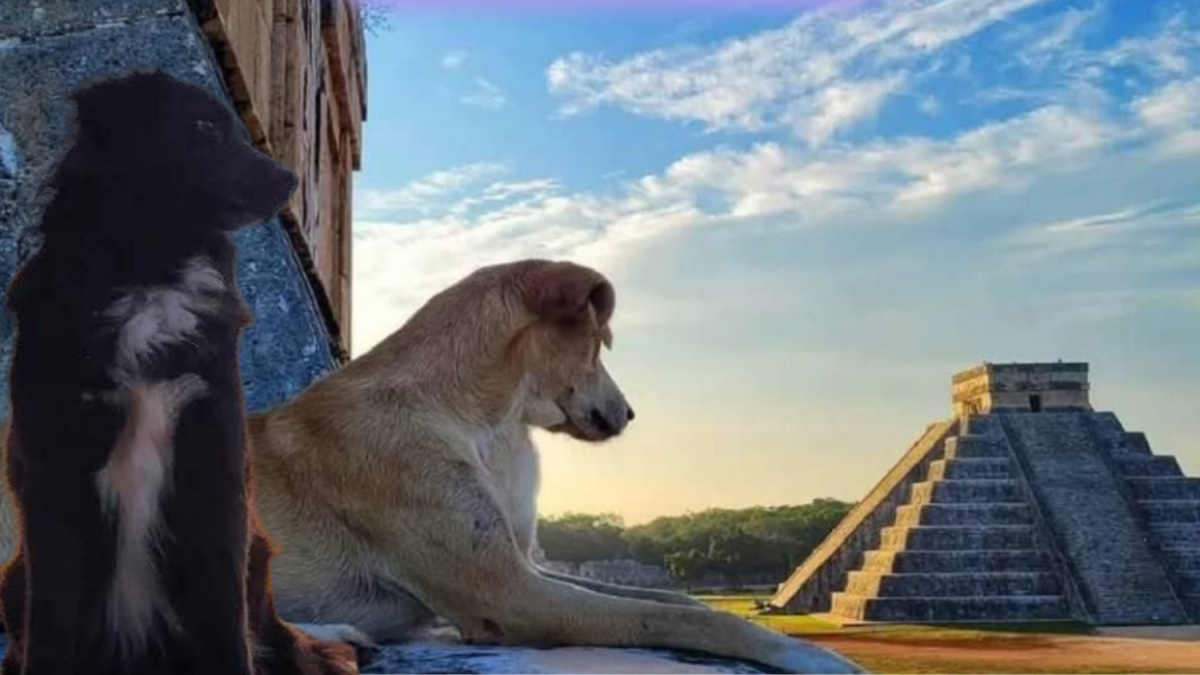
Chichén Itzá, Yucatán — Workers, visitors and social media users are mourning the deaths of “El Wero” and “Tomasita,” two beloved dogs who became unofficial guardians of Chichén Itzá after spending years accompanying custodians, staff and visitors through one of Mexico’s most important archaeological sites.
The story was shared publicly by José Antonio Keb Cetina, a custodian at Chichén Itzá, whose farewell messages to the dogs quickly spread across Mexican media and social networks. According to his account, both animals were humanely euthanized after their health deteriorated, ending a chapter that many site workers remember with affection and sadness.
“El Wero,” also known as “Chucho,” first appeared around the archaeological zone in 2019. Keb Cetina described him as a calm dog who arrived in poor health, suffering from a tumor, but gradually became part of the daily life of the site. Over time, he joined a small group of rescued dogs that roamed the area and accompanied workers during their rounds. Other dogs remembered by staff included “Pirata,” “Cachimba” and “Negrín.”
Tomasita, sometimes affectionately called “La Negrita Tomasa,” was remembered as quieter and more reserved. According to Keb Cetina, she often came near workers at mealtime and liked to rest beside the informational plaques inside the archaeological zone. While less outgoing than El Wero, she became a familiar presence for those who spent long workdays among the temples, paths and plazas.
Their bond with Chichén Itzá became especially meaningful during the COVID-19 pandemic, when one of Mexico’s busiest archaeological zones suddenly fell silent. With tourists gone and the usual crowds absent, the dogs stayed close to custodians and workers who continued caring for the site. Keb Cetina recalled that during those difficult months, the animals offered companionship in an otherwise empty and uncertain place.
Before the pandemic, the dogs often spent time near the former tourist stop at the entrance to Chichén Itzá, where visitors and local workers would sometimes share food with them. During the shutdown, local support helped keep the small pack fed. Reports based on Keb Cetina’s posts mention donations from nearby bakeries and butcher shops, including bread and bones for the dogs that had made the ruins their home.
One of the most remembered stories involves El Wero climbing to the upper part of the Temple of Kukulkán during an inspection round with Keb Cetina. Once at the top, the dog reportedly lay down and quietly looked out over the horizon. The image stayed with workers and later became part of the story people shared online, reinforcing the idea of El Wero as one of the site’s silent guardians.
Chichén Itzá has been a UNESCO World Heritage Site since 1988 and is recognized as one of the most important examples of Maya-Toltec civilization in the Yucatán Peninsula. Its temples, plazas and stone monuments draw visitors from across Mexico and around the world, but for those who work there every day, the site is also a living workplace shaped by daily routines, personal bonds and quiet stories that rarely appear in official tourism materials.
The deaths of El Wero and Tomasita have resonated because they speak to that more intimate side of Chichén Itzá. They were not official mascots, nor part of any formal program. They were rescued animals who found shelter, food and companionship among the people who cared for the site. Over time, they became part of its daily rhythm.
Mexican outlets including TV Azteca, Por Esto, Posta and Donde Ir reported that both dogs were put to sleep because of advanced health problems. The farewell messages prompted hundreds of comments from people who remembered seeing them at the site or were moved by the story of two stray dogs who became part of Chichén Itzá’s human landscape.
For many who knew them, El Wero and Tomasita were more than dogs that wandered among the ruins. They were companions during the pandemic, familiar faces for workers and small symbols of loyalty in a place usually defined by stone, history and crowds. Their absence has left Chichén Itzá feeling a little quieter.
More Lifestyle
- Cancún Opens Registration for Janal Pixan 2026 Catrina and Altar Contests
- Brain-Eating Amoeba Found in Six Artificial Lakes in Mérida; Water Contact Restricted
- Cancún Launches 2026 Ocular Prosthetics Program With Free Evaluations
- Playa del Carmen Health Center in Villas del Sol to Close Two Days for Maintenance
- Tulum’s Mureco Museum Adds 53 Archaeological Pieces From Across Mesoamerica