
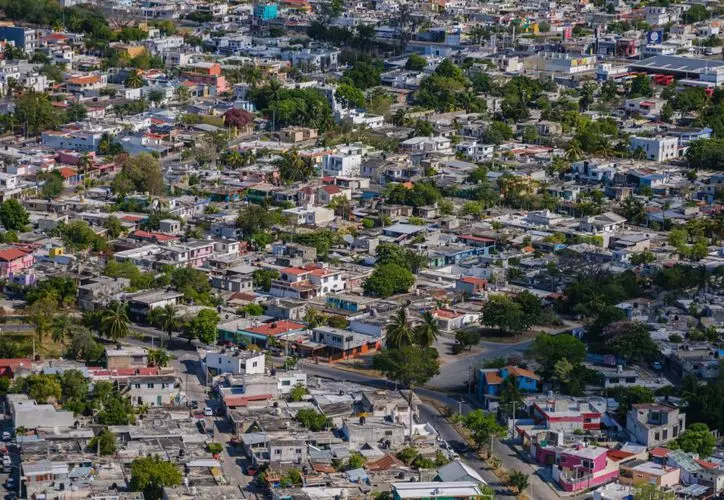
CHETUMAL, QUINTANA ROO. – The state capital, Chetumal, will continue to benefit from the Free Zone decree until December 30, 2026, an extension that underscores the policy of promoting industrial and commercial development, competitiveness, and productivity in the region. This measure, published in the Official Gazette of the Federation (DOF), aims to revitalize the economic dynamism that characterized the city in past decades.
The decree extends the fiscal incentives that fully deduct the general import tax for certain goods destined for the region, applicable to individuals with a valid registration as a Company of the Region. Additionally, benefits regarding customs processing fees for such imports and their re-exportation, as well as the general import tax for foreign goods not part of passengers’ luggage, are maintained for one more year.
As a strategy to attract trading companies, the policy includes a reduction in the Value Added Tax (VAT), Income Tax (ISR), and Customs Processing Fee. While these benefits focus on tenants of the Tianguis del Bienestar, they extend to the entire municipality of Othón P. Blanco. This series of incentives aims to recognize the strategic importance of the border region and restore the commercial vigor it had over 30 years ago.
Josefina Lombard, director of the Mexican Council of Foreign Trade (Comce) in the southern zone, stated that this extension represents favorable alignment for Quintana Roo in the economic sphere, establishing the foundations to trigger investments in Chetumal’s industrialization. She also highlighted the vast export potential that opens up, particularly with the opportunities offered by the Polo del Bienestar, whose first investments have already been announced.
Comce, in collaboration with the Secretariat of Economic Development of Quintana Roo, has articulated a promotion strategy for Chetumal, aimed at attracting investments. Lombard emphasized the need to capitalize on exports from Chetumal to Central and South America, as well as to Canada and the East Coast of the United States, leveraging air connectivity and the upcoming incorporation of the freight train. The latter will allow the mobilization of goods not only from the north to Mexico but also from Quintana Roo to tourist destinations that demand the same supplies currently consumed by the Cancún-Riviera Maya corridor.
The “Chetumal Free Zone Decree” was initially published on December 31, 2020, with subsequent modifications in November 2022 and December 2024, establishing the Chetumal Border Region. The current extension prolongs its validity, initially set until December 31, 2025, for an additional year.
More Business
- Yucatan Pitches 88 Private Projects Worth $151.8 Billion to Banamex Advisors
- Playa del Carmen Mayor Honors Mónica Tello as 2026 Businesswoman of the Year
- Tulum Dive Community Urged to Unite to Reclaim World Cave-Diving Capital Title
- BBVA México Places Up to 90 Billion Pesos in Sustainable Loans in Quintana Roo
- Quintana Roo Tourism Chief Warns of Flight Shortages Into 2027 as Hotel Occupancy Climbs
More Chetumal
- Quintana Roo, INAH Set Early 2027 Payment for Sabidos Ejido Lands
- Chetumal Taxi Drivers Could Join Uber Under Proposed Mobility Law Reform
- Jet Skis Cross Bacalar Lagoon to Chetumal Bay in First-Ever Nautical Tourism Tour
- Belizean NGO Warns of Rising Manatee Deaths in Chetumal Bay
- Thieves Ransack Vehicle in 20 Minutes at Chetumal Sam’s Club Parking Lot
