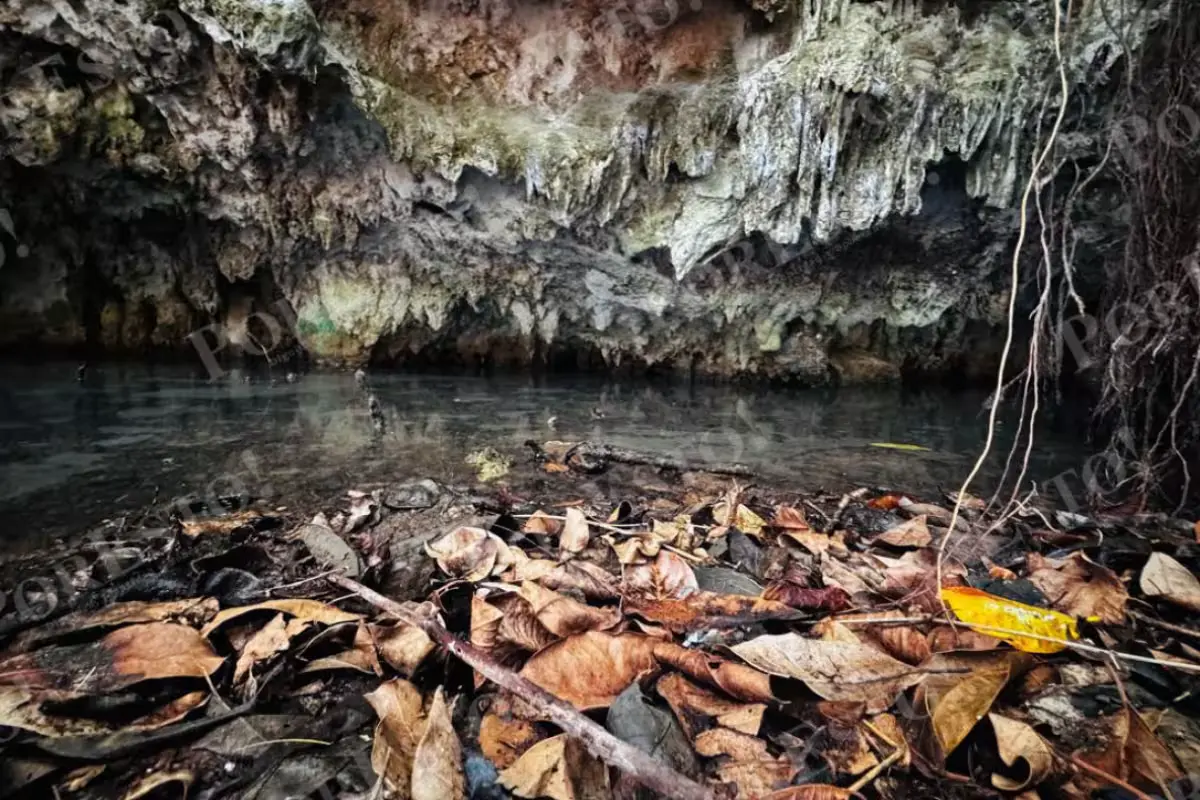
Playa del Carmen, Quintana Roo — Playa del Carmen’s cenotes are at risk of contamination and declining water quality because the area lacks properly functioning wastewater treatment plants and household drainage connections, activist Elías Siebenborn warned.
Siebenborn said the region’s fragile karst soil makes it especially vulnerable to pollutants, and noted that not all neighborhoods are connected to the municipal sanitary sewer network.
Speaking around International Cave and Karst Day, he called on authorities and residents alike to raise awareness about the protection, study and sustainable management of karst formations and caves.
During a visit to a cave known as La Cueva Papalote, located in the fourth park of the Villas del Sol subdivision, observers noted the presence of a variety of animal species.
Fellow activist Roger de la Mora said “irregular” human settlements that lack infrastructure discharge fecal waste into the caves, which contaminates the aquifer. That pollution does not stay underground, he added — it travels toward the sea, where it ultimately damages coral reefs.
More Environment
- Mexican Army Nears Completion of 16-Kilometer Jungle Road Over Tulum’s Sac Actún Cave System
- Akumal Halts Turtle Swim Tours Through September
- Mexico Assigns $110 Million Navy Budget to Fight Sargassum in Quintana Roo
- Mérida Opens First Green Corridor to Fight Climate Change
- El Niño Keeps Atlantic Hurricane-Free, Setting Record for Latest First Storm in Decades
More Playa del Carmen
- Business Leaders Urge Playa del Carmen to Diversify Economy as Tourism Slumps
- Playa del Carmen Inaugurates Plaza Punto Sur Under Public-Private Alliance
- Mayakoba Resorts Accused of Illegally Withholding Up to 35% of Worker Tips
- GPS Leads Police to Rental Car Reported Stolen in Cancún; Two Arrested in Playa del Carmen
- Two Men Bound Over for Trial in Playa del Carmen Extortion Case