
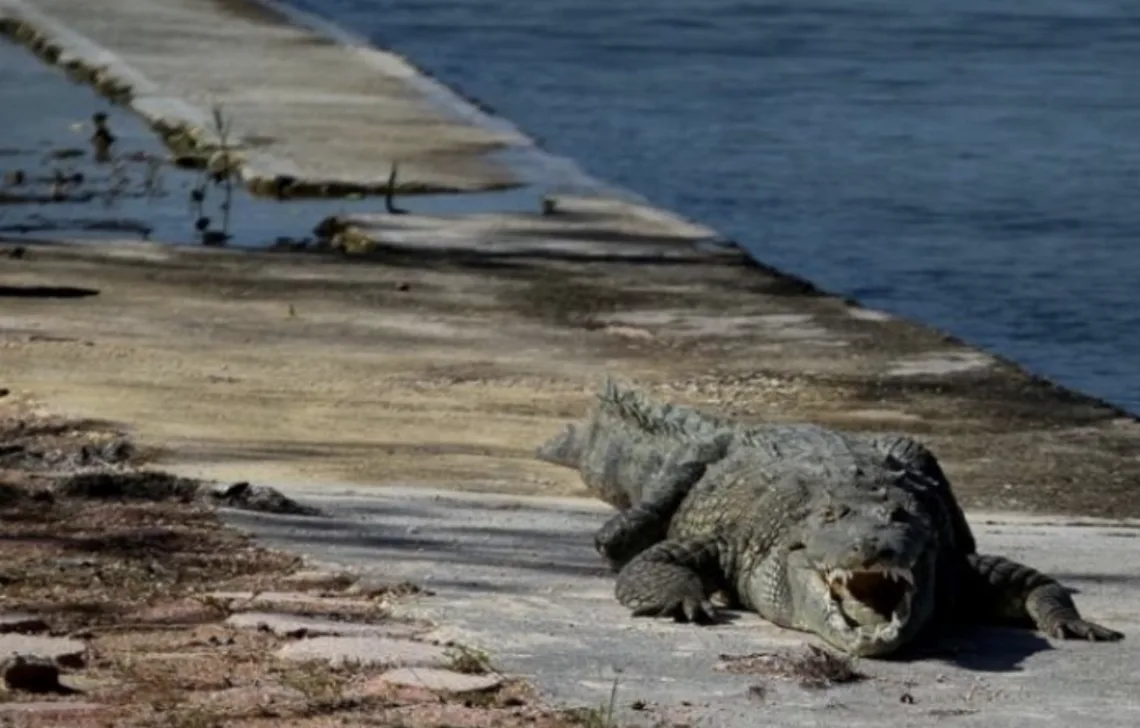
Cancún, Quintana Roo — Biologists and civil protection authorities in Benito Juárez are urging residents and tourists to respect the natural habitat of crocodiles in Cancún, following a rise in sightings near public and commercial areas. Officials stress that the city’s urban infrastructure directly borders the reptiles’ ecosystem.
The Nichupté Lagoon System and mangrove zones in the hotel district are the historic home of two species: the Morelet’s crocodile (Crocodylus moreletii) and the American crocodile (Crocodylus acutus). Experts say the increase in sightings — common near docks, residential canals, and golf courses — is not due to overpopulation or an “invasion” of wildlife, but rather natural cycles of movement for feeding, reproduction, and changes in water levels after rains.
The Danger of Humanizing Wildlife
A major concern for ecology brigades is the harmful practice of some citizens and tour operators feeding crocodiles to photograph them or attract visitors. This behavior drastically alters the animals’ behavior, causing them to associate humans with food and increasing the risk of incidents or defensive attacks.
Authorities reminded the public that crocodiles play a crucial role as top predators in the mangrove ecosystem, controlling populations of other species and maintaining the health of the water body.
Signage and Monitoring Reinforced
Municipal agencies, in coordination with environmental associations, have stepped up the installation of warning signs at the most frequent sighting points in the hotel zone. The Crocodile Protection Committee’s working group continues to implement protocols for relocating specimens that pose an imminent risk in residential areas.
Officials urge citizens to report any crocodile found outside its natural environment by calling the emergency number 911, and to avoid attempting to capture, harm, or interact with the animals.
More Cancun
- Cancún Residents Demand Governor’s Intervention Over Alleged Land Fraudster
- Cancún Taco Festival Aims to Revive Local Economy in Low Season
- Cancún Advances Yaxchilán Revitalization With Pedestrian Corridor to Avenida Nader
- Mexico’s 911 Centers Explore AI to Speed Up Emergency Response
- Quintana Roo Education Official Reported Missing in Cancún, Found Hours Later
