
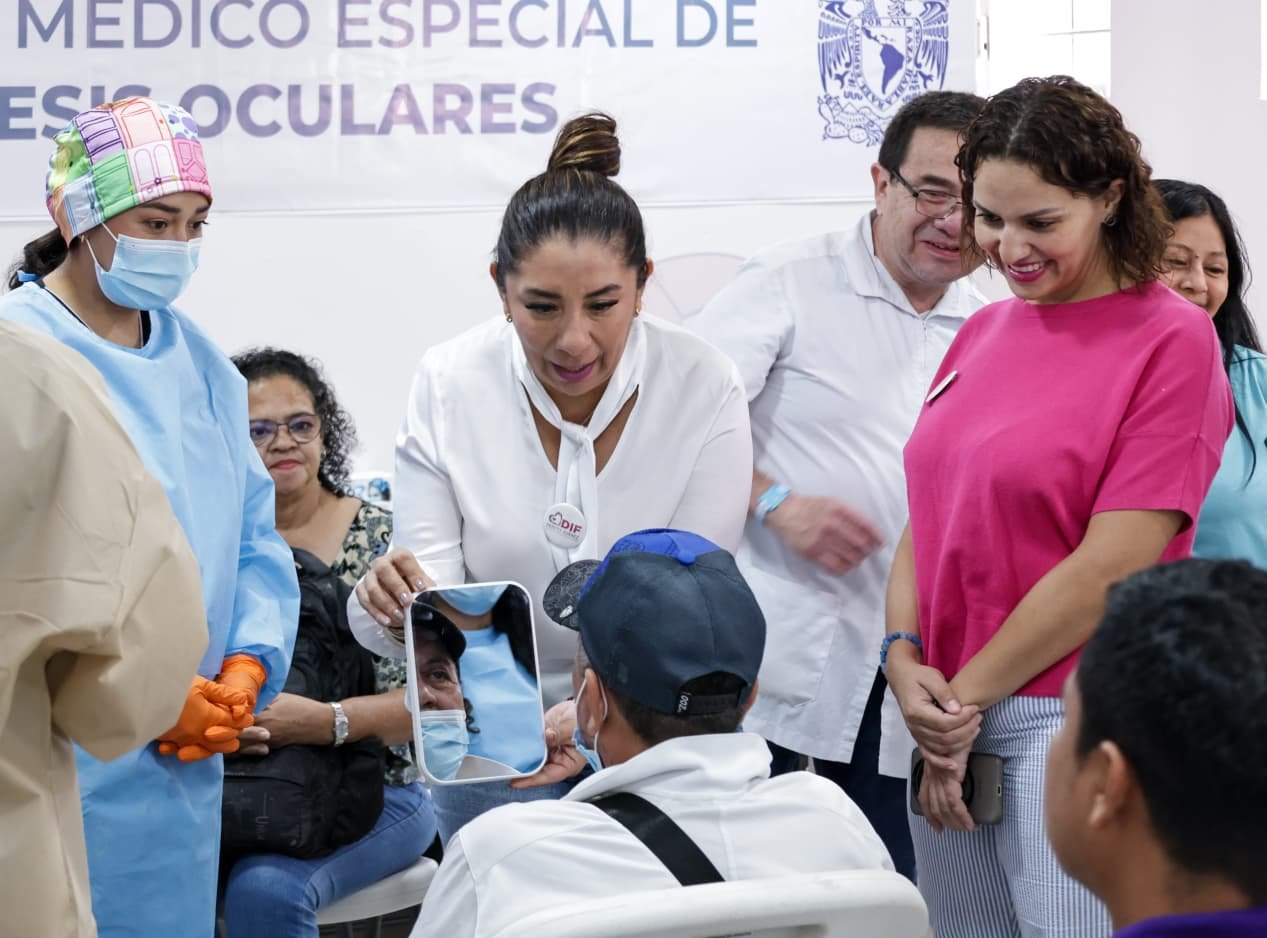
Cancún, Quintana Roo — The Benito Juárez Municipal DIF (Integral Family Development System) has distributed 93 eye prostheses to patients from across Quintana Roo and neighboring states through its specialized medical program.
The delivery took place at the institution’s Family Hall, with DIF General Director Marisol Sendo Rodríguez representing Mayor Ana Paty Peralta. Sendo Rodríguez emphasized that the program, which began in 2000, provides comprehensive care to individuals from newborns to seniors who have lost an eyeball due to congenital conditions, illness, or accidents.
“Today, we’re not just delivering a prosthesis; we’re delivering hope, security, and a new opportunity for each person to look in the mirror with confidence and continue their life with dignity,” Sendo Rodríguez said during a visit to the Eye Prosthesis Clinic.
She acknowledged the work of specialist doctors from the National Autonomous University of Mexico’s (UNAM) Faculty of Dentistry, particularly the Division of Maxillofacial Prosthetics and Postgraduate Studies and Research, as well as universities in Campeche, Hidalgo, and Puebla, who conducted assessments, fabrication, and follow-up for the prostheses.
“This is an effort we make year after year to support low-income individuals, who receive these prostheses free of charge, while they could cost between 25,000 and 30,000 pesos on the market,” she noted.
The program served 89 people this round, delivering 93 prostheses—13 of which were first-time fittings. Beneficiaries came from municipalities including Benito Juárez, Puerto Morelos, Isla Mujeres, Bacalar, Felipe Carrillo Puerto, Tulum, Cozumel, and Playa del Carmen in Quintana Roo, as well as from the states of Yucatán, Tabasco, Ocosingo Chiapas, and Veracruz.
Sendo Rodríguez thanked Natalia Beltrán of the Oasis Foundation for her support, along with the commitment of DIF Medical Services Director María del Carmen Cervantes Martínez and Special Medical Programs Coordinator Emilia Ingrid Schirmann Gaytán.
Over its more than 25-year history in the municipality, the program has benefited over 2,000 people, reflecting its reach and the importance of continuing to provide these specialized services that significantly impact self-esteem, inclusion, and quality of life for those in need.
More Lifestyle
- Measles Cases Surge 1,940% in Mexico’s Yucatan Peninsula
- Mexico Proposes 35% Increase in Migration Fee for Visitors With Paid Work
- Humanoid Robots in Mexico: What They Cost and What They Offer
- Cancún’s Nichupté Bridge Draws 3,500 for Third Puenteando Nichupté Edition
- Cancún Launches Operation to Protect Blue Land Crabs During Migration to the Sea
More Cancun
- Nine Sick Dolphins Stranded in Abandoned Cancún Water Park
- Cancún Protesters Demand Answers on Fate of Big Cats Kept by ‘Pepe Tigre’
- Cancún Street Markets See Customers Return in Sign of Economic Recovery
- Cancún Hotel Zone Projects Must Include Wastewater Pre-Treatment Plants
- MOBI Route 27 in Cancún Ends Free Service Monday as Paid Fares Begin Tuesday
