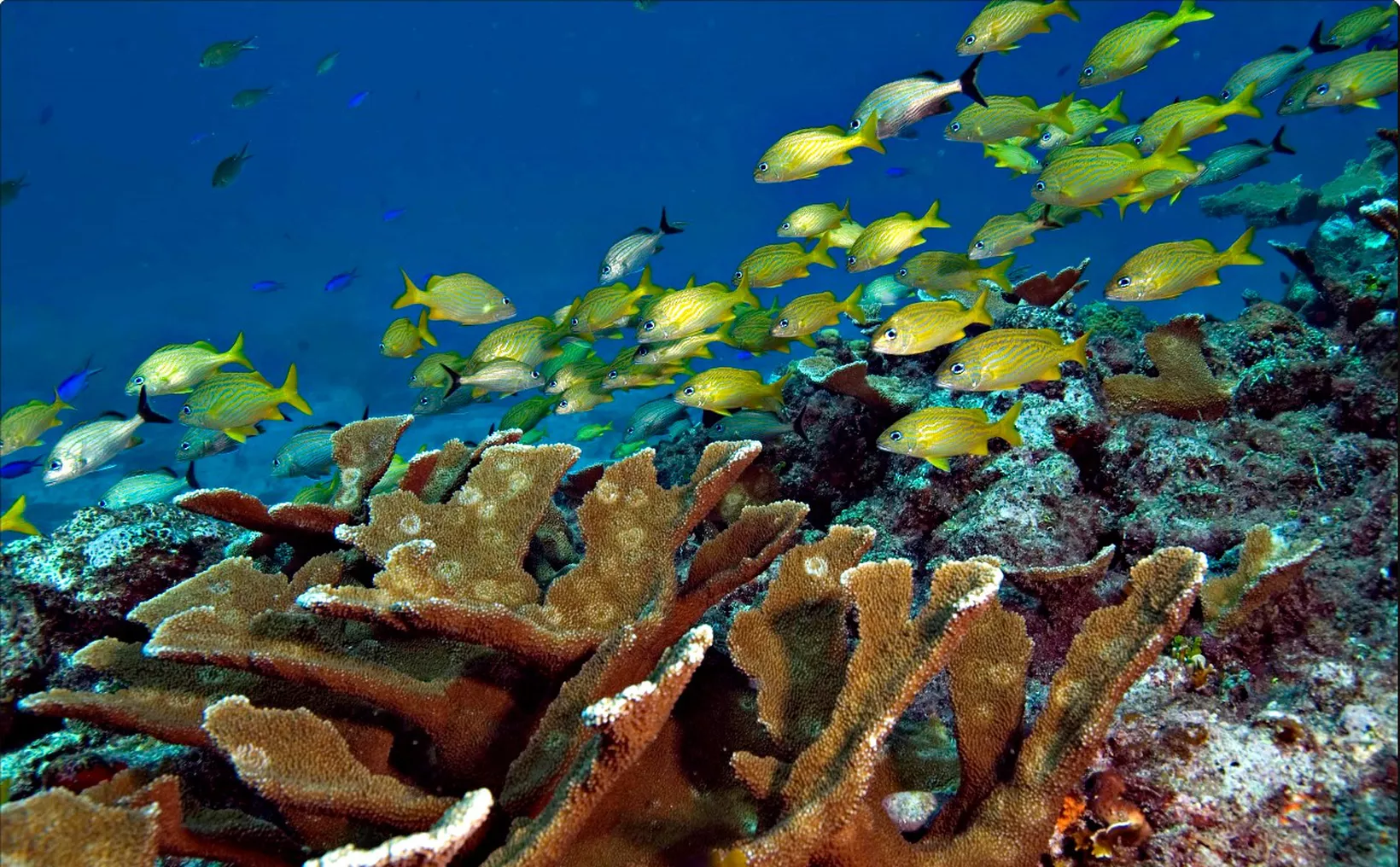
Cancún, Mexico — A coral restoration project at the underwater nursery “Bajo Pepito,” located between Cancún and Isla Mujeres, has achieved a 90% success rate in coral reproduction, with the facility housing over four thousand coral colonies. The project, which involves an investment of one million pesos, brings together researchers, divers, volunteers, and personnel from the National Commission of Natural Protected Areas (Conanp) in vital restoration efforts.
These groups conduct coral planting activities in response to constant threats facing reefs, including bleaching from high temperatures, diseases such as tissue loss syndrome, hurricanes, overfishing, and high tourist visitation.
The nursery maintains at least 15 different species in cultivation, including crucial species like Montastraea cavernosa, Acropora palmata, and A. cervicornis, as well as pillar coral, a specimen no longer found in natural reefs due to habitat extinction.
Claudia Padilla Souza, a researcher and former collaborator with Inapesca, explained that the work of “planting in the sea” requires the collaboration of brigades and volunteers who act as underwater “gardeners.”
“The authorities cannot keep up with the care and reproduction, but this infrastructure of a nursery that can cultivate up to four thousand coral colonies already exists,” explained the doctor of sciences, emphasizing that pruning and planting corals is much more expensive than terrestrial gardening.
The active restoration process involves cultivating corals that have proven to be resilient (having survived stressful situations like bleaching) to propagate them.
“From one colony we can obtain fragments and generate new colonies through them. The idea is to generate more biomass, and although it is a complicated task, it must be carried out because otherwise the reef will disappear,” she emphasized.
The cultivated fragments are subsequently planted to give new life to reefs at key points such as Chitales, Cuevones, Manchones, Sac Bajo, and La Cadenita.
The director of the Costa Occidental de Isla Mujeres, Punta Cancún, and Punta Nizuc National Park reported that approximately one million pesos per year is allocated for monitoring and restoration. This costly project involves specialists from UNAM, environmental organizations, and international agencies.
Regarding the current health of the reefs, the director indicated that after completing the biological monitoring survey, the observed trend is negative, which is why these actions are being carried out to counteract the effects of climate change and sea pollution.
Discover more from Riviera Maya News & Events
Subscribe to get the latest posts sent to your email.