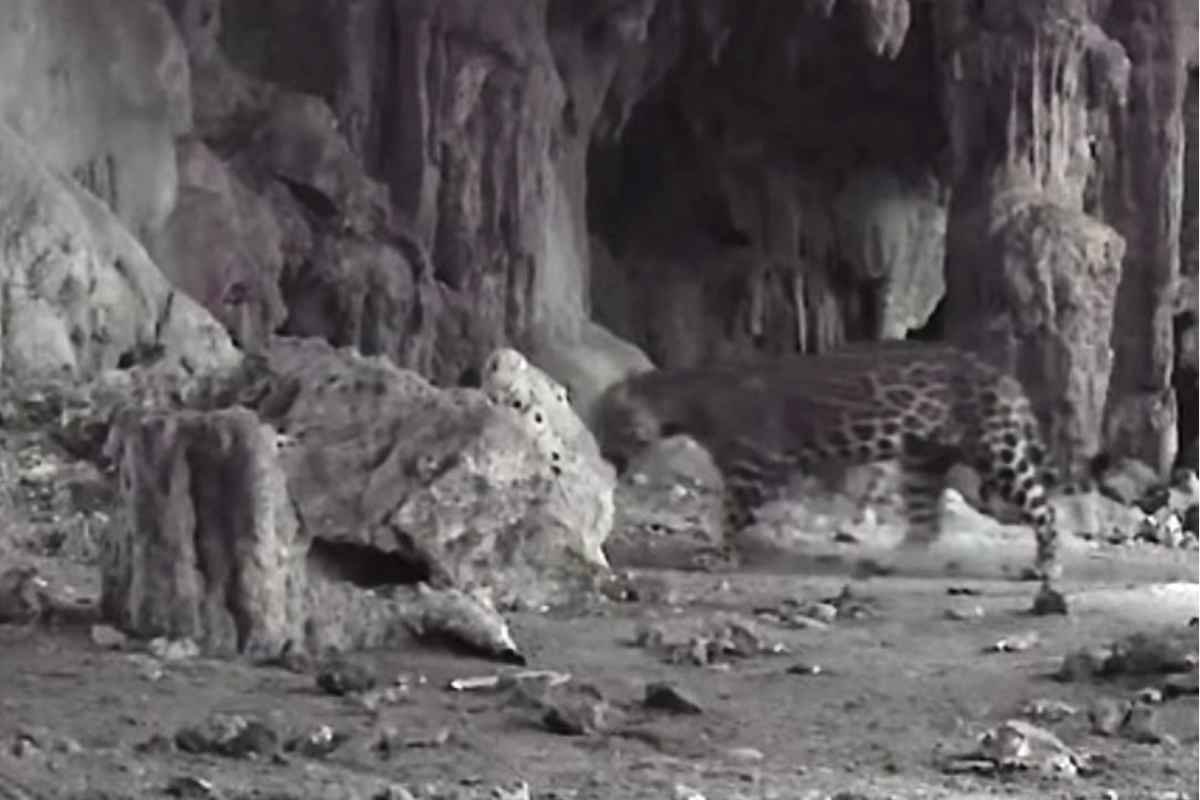
Cancun, Quintana Roo — Far from sunlight and the dense vegetation of the jungle, another world exists where wildlife also finds the conditions to survive. Deep inside a cave on the Yucatan Peninsula, a series of camera traps documented several mammal species passing through, revealing a little-known side of how animals relate to underground ecosystems.
The expedition, carried out in collaboration with Jaguar Wildlife Center A.C., set out to record animal behavior in an area of absolute darkness, where there is no natural light and conditions pose a challenge for many species. Installing the equipment allowed researchers to observe which mammals venture into these spaces and how they move through an environment unlike the surface.
First record of an unidentified male jaguar
One of the most notable findings came during the review of the footage: the cameras captured, for the first time, a male jaguar that the monitoring team had not previously identified. Its presence inside the cave system provided new records of how these big cats use the underground landscape.
The images also revealed behavioral differences between the felines, which are better adapted to moving in low light, and other mammals with daytime habits, whose mobility in complete darkness is a greater challenge. Each recording became a piece in understanding how species explore and use these spaces.
A full day underground, and one chewed camera
Reviewing the cameras required a full day of moving through the underground system. Not every device produced favorable results: some delivered valuable records, others had technical failures, and one ended up damaged by a jaguar bite. Such setbacks are part of the fieldwork involved in studying wild animals in freedom and in hard-to-reach environments.
Beyond the records obtained, the monitoring shows that jungle life on the peninsula does not end where the darkness of a cavern begins. These spaces form part of a connected ecological landscape in which wildlife finds water, food and shelter. Their importance is especially significant in a region where cave and cenote systems are closely tied to the jungle environment.
Documenting the presence of big cats and other mammals in these environments helps broaden knowledge of their movements and habitat needs. It also shows why jungle conservation must take underground connections into account: protecting only what can be seen on the surface would leave out a fundamental part of the spaces that sustain wildlife on the Yucatan Peninsula.
More Environment
- Mexico’s Tourism Ministry to Credential Tourist Service Providers at Parque del Jaguar
- Quintana Roo Launches Hotel Task Force to Tackle Sargassum
- Tulum Cave Photo Makes Time’s Top 100 Photos of 2026
- Quintana Roo Hosts Fourth Climate Action Forum in the Mexican Caribbean
- Aerial Patrols Reveal 12 Vegetation Fires and Illegal Sawmill in Southwest Playa del Carmen