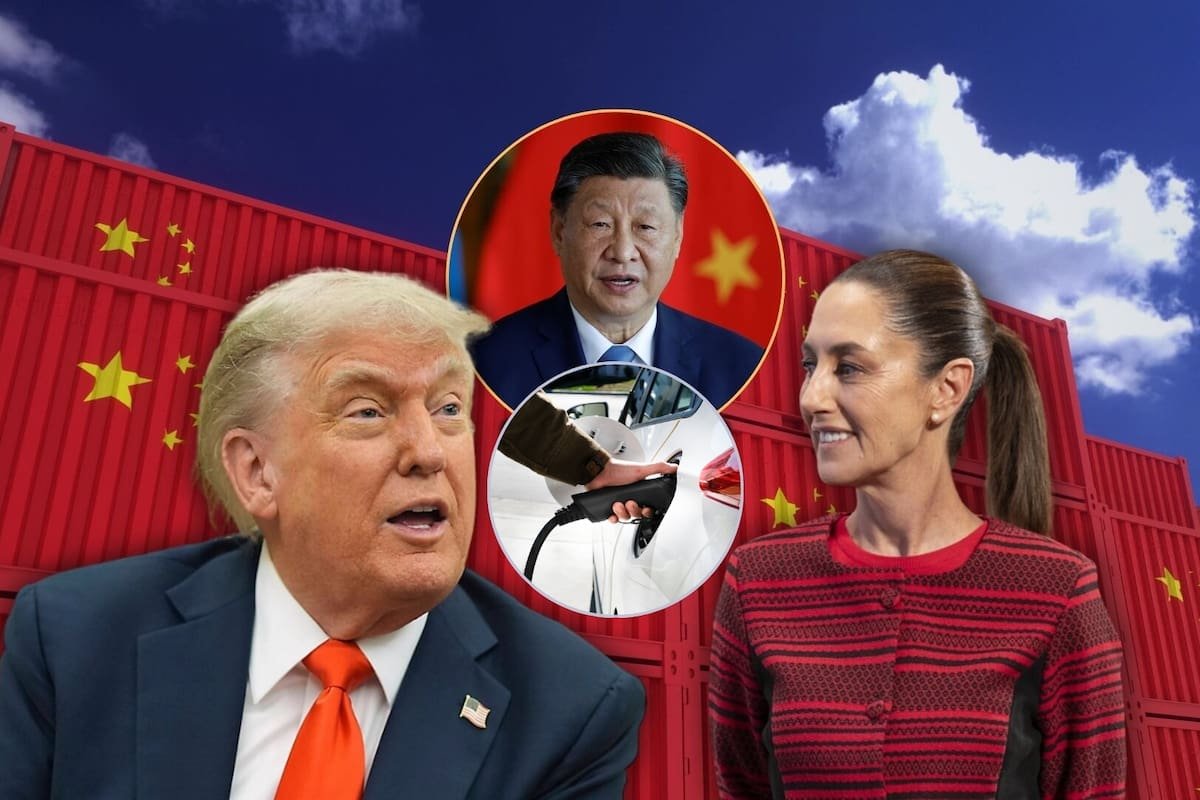
Mexico — The Mexican automotive sector, one of the country's export pillars, has expressed concern over a potential increase in tariffs on goods from China. According to AFP, automakers fear the measure will affect access to key electronic components, particularly the touchscreen displays for dashboards that are now standard in almost all modern models.
Mexican authorities are evaluating this measure within a context marked by commercial tension between Washington and Beijing.
In this scenario, President Claudia Sheinbaum considers that raising tariffs can "boost national manufacturing," although the industry warns of immediate impacts.
Why the Automotive Industry Depends on China
The manufacturing of vehicles in Mexico directly depends on electronic inputs not produced in the country. Among them are:
- Touchscreen displays for dashboards: Used for navigation, controls, and entertainment.
- Electronic systems and specialized modules: Required in practically all current models.
- Electric battery components: Essential for the growth of the electric car market.
Industry representatives indicate that China dominates the production of these systems, leaving Mexico with few immediate alternatives.
Aumovio, a German company that manufactures screens in Guadalajara for Ford, General Motors, and Stellantis, confirmed its concern. Its purchasing director, Carlos Gómez, warned: "We explained to them the dependence we have" on Chinese components. He also emphasized that building an alternative supply network would require years of investment in machinery and training, which would generate an immediate increase in production costs.
What the Specialists Warn
Amapola Grijalva, of the Mexico-China Chamber of Commerce, stated that the risks are broad for a sector that is sustained largely by the USMCA. According to the specialist: "There are components like electric batteries and electronic parts that we believe are very difficult to obtain in other places." She added that: "Nowadays, especially electronics, photovoltaic generation, and batteries for all types of applications come from China because they are truly very efficient."
The possibility of replicating that capacity in other countries — including Mexico — would take several years, according to sector experts.
How This Impacts the USMCA
The United States has insisted that China uses Mexico as a route to send products to the U.S. market without paying tariffs. Within this framework, analysts consider that the plan to increase tariffs seeks to align Mexican policy with Washington's priorities.
The economist Luis de la Calle, who participated in the NAFTA negotiations, maintains that the strategy also attempts to protect the national industry from Chinese competition. Mexico's trade deficit with China reached 120 billion dollars in 2024, which has ignited the debate over the convenience of the current trade flows.
Are There Sectors That Could Benefit?
Although most of the automotive industry fears disruptions, some companies believe a window of opportunity could open. The steel company Kold Roll, for example, sees room to expand its presence: "We see it as an opportunity," stated its general director, Eric González. Changes in inputs and cost structures could boost certain local producers seeking to expand their participation in the value chain.
What Is at Stake for Mexico?
Mexico consolidated itself in 2023 as the United States' main commercial partner, displacing China. More than 80 percent of Mexican exports are destined for the U.S. market and nearly 3 million vehicles cross the border each year, including those assembled by U.S. companies installed in the country.
The central concern of the sector is that, if tariffs raise costs or delay production, Mexico could lose competitiveness in its most important market.
A Complex Balance for Mexico
The country faces a double challenge: aligning commercially with the United States and, at the same time, protecting the operation of an industry that depends on electronic components that today only China can offer on a large scale and with competitive delivery times.
The discussion will continue in Congress, but the industry already anticipates that any change in the rules of the game will have immediate effects on one of the most important production chains for Mexico.
Discover more from Riviera Maya News & Events
Subscribe to get the latest posts sent to your email.