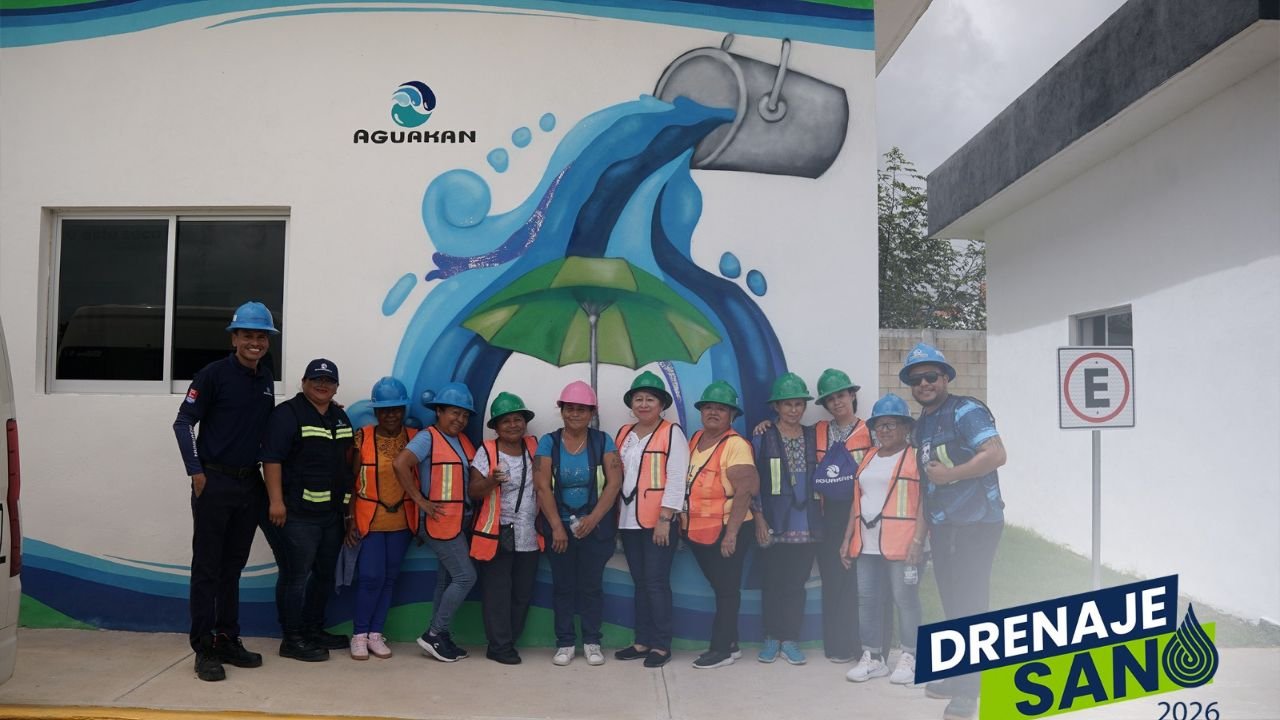
Cancún, Quintana Roo — Aguakan, the water and wastewater concessionaire for northern Quintana Roo, has reactivated its “Drenaje Sano” (Healthy Drain) campaign in the municipalities of Benito Juárez (Cancún), Solidaridad (Playa del Carmen), Puerto Morelos, and Isla Mujeres.
The initiative, launched under the slogan “Every action counts, every gesture adds up,” aims to raise public awareness about the correct use of the sanitary sewer system as the 2026 rainy and hurricane season officially begins. The company said the goal is to protect urban infrastructure and prevent environmental damage.
Understanding the Two Drainage Systems
As part of the campaign, Aguakan is emphasizing the difference between the two drainage networks in the region:
- Stormwater drainage: Operated and maintained by municipal governments, this system captures and channels rainwater into underground networks or retention basins to reduce the risk of street flooding.
- Sanitary sewer system: Managed by Aguakan, this network collects wastewater from homes, businesses, and industries and transports it to treatment plants for processing before safe release into the environment.
Waste Impact on Sewer Network
During heavy rains, improperly disposed solid waste becomes the biggest operational challenge. Items such as plastics, wet wipes, diapers, food scraps, medications, and cooking oils and grease cause severe blockages in pipes. These obstructions can lead to sewage overflows, service collapses, and mobility disruptions during weather emergencies.
Aguakan reports that it removes more than 1,200 cubic meters of waste from the sanitary sewer system each year — the equivalent of hundreds of dump truck loads of debris that should never have entered the drains.
The campaign stresses that simple daily actions — such as not littering streets or storm drains — can drastically reduce flood risks and protect the region’s groundwater aquifers.
More Environment
- Activists File Complaints Over Heavy Machinery on Cancún’s Playa Delfines Dune
- Semarnat Denies Permit for Beach Restoration Project in Puerto Morelos
- Cancún Hoteliers Push to Reactivate Beach Recovery Trust
- Experts Warn of Climate Crisis in Mexican Caribbean, Urge Urgent Action
- Scientists Say Sargassum Must Be Stopped in the Atlantic, Not on Cancún’s Beaches