
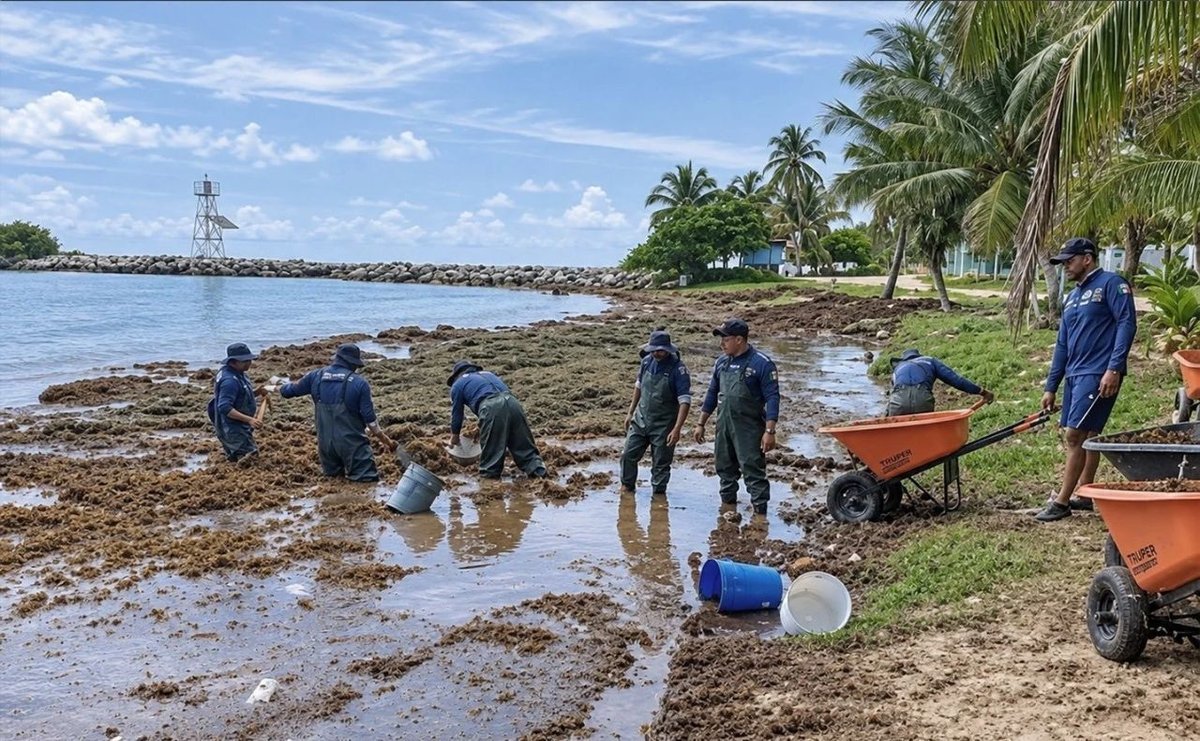
Mexico City — Mexico’s Navy has collected 74,403 tons of sargassum in the Mexican Caribbean so far this year, working alongside civilian volunteers in a strategy that combines technology, containment barriers and cleanup at sea and on the beaches.
The Navy Department (Semar) reported Sunday that naval personnel fly drone reconnaissance missions to detect the seaweed and identify areas where containment and collection efforts need to be reinforced, reducing the impact of the algae on marine ecosystems and tourism.
To keep sargassum from reaching the shore, the Navy has installed more than 13.6 kilometers (about 8.5 miles) of containment barriers at points along the Quintana Roo coastline. Crews inspect, maintain and repair the barriers to keep them working as sea conditions change.
Collection operations rely on coastal and oceangoing sargassum vessels, amphibious units and smaller boats deployed at tourist destinations including Isla Mujeres, Cancún, Puerto Morelos, Playa del Carmen, Puerto Aventuras, Tulum and Mahahual.
On land, Rapid Beach Collection Groups (GREP) work with naval units to remove the seaweed that washes ashore. The Navy reported collecting about 60 tons of sargassum in Puerto Morelos, 25 tons at Playa Tam in Mahahual and another 25 tons in Xcalak, in the municipality of Othón P. Blanco.
More Environment
- Puerto Morelos Installs Committee to Protect Public Beaches and Blue Flag Sites
- Wetland Filled 10 Meters From Protected Mangrove in Playa del Carmen as Environment Office Sits Vacant
- Profepa Shuts Down Construction at Laguna Nichupté and Holbox Over Mangrove Damage
- Cold Fronts Paralyze Octopus Fishing in Chiquilá and Holbox
- Punta Allen Cooks Turn to Seafood Cuisine to Win Back Tourists After Slow Season
More Quintana Roo
- Quintana Roo Launches First Targeted Mpox Vaccination Drive After 333 Cases Since 2022
- Quintana Roo Business Leaders Warn of Fiscal Pressure in 2027
- Quintana Roo Economy to Close 2026 in Slowdown, Accountants Warn
- Quintana Roo Tops Half a Million Tourists in One Week as Costa Mujeres Leads Hotel Occupancy
- Quintana Roo Governor Honors Mexican Navy on Navy Day in Isla Mujeres