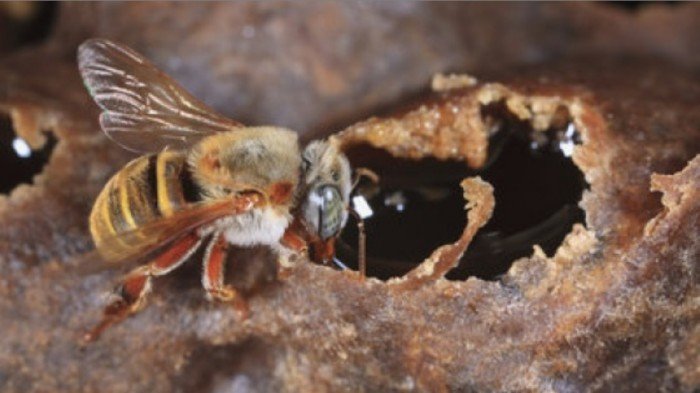
Merida, Yucatan — Yucatan will play a central role in a regional effort to win Geographical Indication (GI) status for melipona honey, a designation that would officially recognize its origin, authenticity, quality and cultural value.
The strategy, presented in the town of Mani on National Bee Day, would expand the initiative from three to 162 municipalities across seven states in southern and southeastern Mexico. Of those, 106 are in Yucatan, meaning the entire state would be covered under the protection plan, according to the federal Agriculture and Rural Development Department (Sader).
The Geographical Indication is intended to prevent products from outside the region from being sold as authentic melipona honey from southeastern Mexico, while also guaranteeing provenance. Officials say the designation would help open doors to higher-value national and international markets, particularly in specialty foods, natural health products and cosmetics, backed by traceability and food safety measures.
Yucatan’s key role reflects the importance of beekeeping in the state. More than 9,000 producers are dedicated to apiculture and meliponiculture, while the state-run Renacimiento Apicola program has provided support to 655 people in 19 municipalities, with an investment of nearly 20 million pesos.
During the event, officials also delivered certificates of good practices for Apis mellifera honey production and kits for managing melipona bees to women producers.
The meeting also confirmed Yucatan’s incorporation into the federal Cosechando Soberania program, which allows agricultural and livestock producers to apply for loans of up to 1.3 million pesos at an annual interest rate of 8.5% for infrastructure, equipment and supplies.
The push for Geographical Indication places Yucatan’s melipona honey in line for protection that goes beyond commercial value, safeguarding the traditional Mayan knowledge tied to the rearing and use of native bees for generations.
More Business
- Mexico Extends Deadline for Electronic Customs Value Declaration to October 31
- Nacional Monte de Piedad to Reopen Chetumal Branches on October 7
- 20 Community Tourism Projects in Quintana Roo Seek to Formalize Their Operations
- Sargassum Influx Triggers Two Types of Wildlife Die-Offs in Quintana Roo
- Quintana Roo Development Agency Inherits Labor Disputes from Defunct Derimaya